

Superfoods
Chia seeds in muesli, goji berries in a smoothie, hemp seeds over salad – superfoods have long since become part of our diet. As a family-run manufacturer from Memmingen, at Vitalplant we specialize in high-quality, natural food supplements, and superfoods are one of our core products. But what is really behind these nutrient-rich foods? Which ingredients and secondary plant compounds make them so special? And how do exotic superfoods differ from local alternatives?
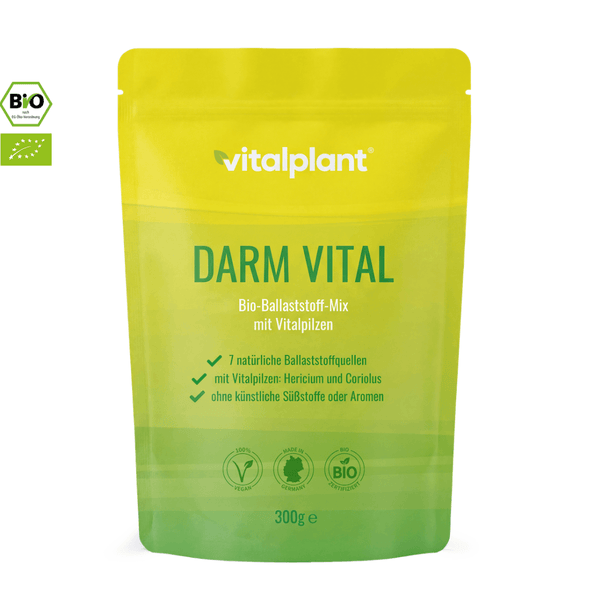
Organic Gut Vital Powder – Premium Fiber Complex with 7 Superfood S...

Organic chia seeds from Mexico – traditional superfood in certified...
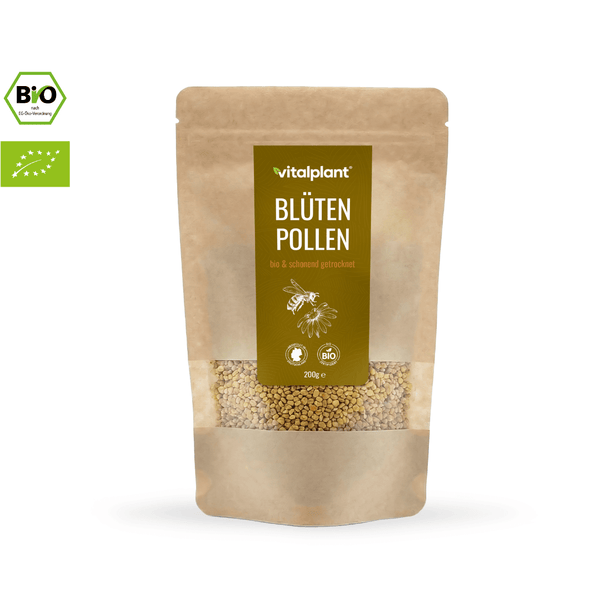
Organic flower pollen from Hungary – Precious natural power from th...

Organic cacao nibs (unroasted) – Intense raw cacao from the Dominic...
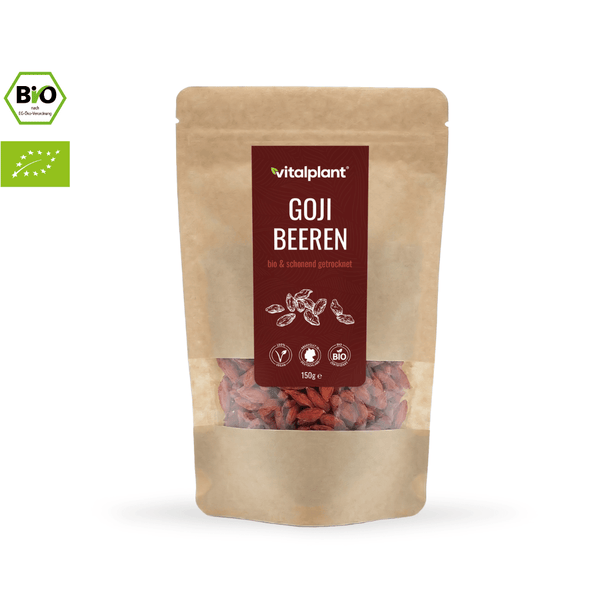
Organic Goji Berries – Naturally Pure Superfruits from China The or...
Organic hemp seeds from Estonia – nutty superfood in certified orga...

Bio Vital Beauty – Premium Superfood Complex with Tremella & Antiox...

Bio Vital Greens – Premium Superfood Complex with 11 Organic Green ...
Organic Psyllium Husks – Pure natural quality from India The organi...
Das solltest du über Superfoods wissen
Alles über Superfoods
Buy superfoods: Exotic and native plant power from Vitalplant
The term “superfood” is not a scientifically protected category, but describes natural foods with an exceptionally high nutrient density. It refers to foods that provide significantly more vitamins, minerals, fatty acids, antioxidants, or secondary plant compounds per serving than average foods.
What makes a real superfood:
- High nutrient density: Lots of valuable nutrients with few calories
- Bioactive compounds: Secondary plant compounds, omega-3 fatty acids, polyphenols
- Natural form: Ideally raw or minimally processed to preserve heat-sensitive nutrients
- Traditional use: Often valued in different cultures for centuries
- Comprehensive nutrient profile: Not just a single nutrient, but complex combinations
Important to understand: Superfoods are not miracle cures and not dietary supplements in the classic sense. Most are whole foods that can sensibly complement a balanced diet, but never replace it. A balanced diet is based on variety – plenty of vegetables, fruit, whole grains, legumes, and high-quality fats form the foundation.
Natural foods such as berries, seeds, or legumes enrich this foundation with a wide range of nutrients and are a fixed part of a balanced, varied diet.
Exotic superfoods: Nutrient-rich foods from around the world
Many of the best-known superfoods come from distant regions – and there are often good reasons for that. Extreme climate conditions, nutrient-rich soils, or centuries of cultivation have produced plants that developed exceptional nutrients.
Chia – The Aztecs' source of omega-3
Chia (Salvia hispanica) comes from Mexico and Guatemala and was a valued staple food among the Aztecs. The Aztec word “Chian” means “oily” – a reference to its exceptionally high fat content, about 60 percent of which consists of alpha-linolenic acid, a plant-based omega-3 fatty acid. Chia seeds are therefore a valuable plant-based source of omega-3 fatty acids.
At the same time, chia seeds provide about 20 percent protein with all nine essential amino acids and an impressive 34 percent fiber. Their unique swelling capacity – they can absorb ten times their own weight in liquid – makes them the perfect ingredient for puddings, as a natural thickener, or as an egg substitute in baking. In addition to macronutrients, chia seeds provide a range of important minerals: calcium is needed to maintain normal bones, magnesium contributes to normal muscle function – and they also contain phosphorus, zinc, and iron.
Studies today are examining what the Aztecs knew intuitively: the importance of omega-3 fatty acids as part of a balanced diet – with DHA and EPA contributing to normal heart function –, the role of fiber in healthy digestion, and the importance of protein, which contributes to growth and the maintenance of muscle mass.
At Vitalplant: Our chia seeds come from controlled cultivation in South America and are completely natural. They are gently cleaned and packaged without any additives – ideal for muesli, smoothies, chia pudding, or as a nutrient-rich baking ingredient.
Goji berries – Nutrient-rich berries from traditional Chinese medicine
Goji berries (Lycium barbarum), also known as wolfberries, have been valued in traditional Chinese medicine for over 2,000 years. The bright red berries grow wild or cultivated in the highlands of China and Mongolia, where harsh climate conditions produce resilient plants with a high nutrient density. The Ningxia region in particular is known for its exceptionally nutrient-rich soils and therefore for high-quality goji berries.
What makes goji berries so special? With 42 mg of vitamin C per 100 g, they have a high vitamin C content – vitamin C contributes to normal immune system function. At the same time, goji berries provide plant-based iron, and because vitamin C increases iron absorption (an approved health claim), this is a rare and practical combination. They also contain zeaxanthin and beta-carotene, two carotenoids, as well as various polysaccharides and other secondary plant compounds. Their sweet-tart flavor, reminiscent of a mix of cranberries and cherries, makes dried goji berries a popular snack or a colorful addition to muesli.
At Vitalplant: Our goji berries are harvested in traditional growing regions in Asia and gently dried at low temperatures to preserve their natural vitamin and mineral content. No added sugar, no preservatives – just the pure power of nature.
Hemp seeds – The underrated protein source without THC
Hemp seeds (Cannabis sativa) have a history as a food source dating back thousands of years. They were cultivated and valued in China as early as 3,000 BC. Modern industrial hemp varieties are specially bred for their high nutrient content and low THC content – the seeds contain no psychoactive substances and are completely legal.
What distinguishes hemp seeds nutritionally is their protein content of about 30 percent – with all nine essential amino acids, an unusual trait among plant foods. Protein contributes to the maintenance and growth of muscle mass, which makes them equally interesting for vegans, vegetarians, and athletes. They also have an omega-3 to omega-6 fatty acid ratio of about 1:3. Unlike soy, hemp seeds naturally contain no trypsin inhibitors – a feature of their natural composition that sets them apart from soy.
Their mild, nutty flavor works perfectly on salads, in smoothie bowls, over muesli, or as a protein-rich topping on almost any dish. In addition to protein and fatty acids, hemp seeds provide plenty of magnesium and iron, zinc, phosphorus, vitamin E, and various B vitamins.
At Vitalplant: Our hemp seeds are hulled, ready to eat, and completely natural. They come from controlled cultivation and are carefully cleaned – perfect for anyone who wants to enrich their diet with plant protein that contributes to the maintenance of normal muscle mass.
Cacao – Raw plant compounds of the Maya
Cacao (Theobroma cacao) – the botanical name means “food of the gods” – was so valuable among the Olmecs, Maya, and Aztecs that cacao beans were used as currency. The cacao beans grow in tropical regions and undergo a fermentation process after harvest that develops their characteristic aromas. While roasted cacao forms the basis of chocolate, raw cacao nibs – that is, unroasted cacao beans broken into pieces – remain natural and therefore preserve more heat-sensitive plant compounds.
Raw cacao naturally contains a remarkable variety of flavanols, a subgroup of polyphenols. At the same time, cacao nibs are rich in magnesium – with about 500 milligrams per 100 grams, with magnesium contributing to normal protein synthesis – as well as iron, zinc, and fiber. Theobromine, a mild caffeine-like compound, is naturally present in cacao and contributes to its characteristic flavor. Unlike chocolate, raw cacao nibs contain no added sugar, which makes their taste intensely chocolatey but noticeably more bitter – perfect for anyone who appreciates pure, unadulterated cacao flavor.
At Vitalplant: Our cacao nibs stay raw and unroasted to preserve all their natural nutrients. They come from sustainable cultivation and are processed without any additives – ideal as a crunchy topping for smoothie bowls, muesli, porridge, or as a special ingredient in homemade energy balls.
Pollen – A natural treasure collected by bees
Flower pollen is collected by bees, mixed with nectar and saliva, and formed into small pellets. These pellets are harvested by beekeepers in small quantities without endangering the bee colonies. Flower pollen was already valued in ancient Greece and in traditional Chinese medicine.
What makes flower pollen so extraordinary is its natural variety: it contains protein with essential amino acids as well as vitamins B1, B2, B6, folic acid, vitamin C, and provitamin A. It also provides the minerals potassium, calcium, and iron – and zinc and magnesium contribute to normal energy metabolism. In addition, it contains natural enzymes that are preserved through gentle processing. The taste is mildly sweet with a floral note and works perfectly as a topping over muesli, yogurt, or smoothie bowls.
At Vitalplant: Our flower pollen comes from responsible beekeeping and is gently dried to preserve its natural nutrients. It is all-natural, with no additives – a true natural product for anyone who values bee products.
Native superfoods: The underrated regional alternatives
Not every superfood has to come from far away. Many local foods offer comparable nutrient profiles – often cheaper, fresher, and with a better environmental footprint. While exotic superfoods have their place, it is worth looking at regional alternatives.
Native superfoods compared to exotic ones:
- Flaxseed instead of chia seeds: Flaxseed is an excellent source of omega-3 fatty acids (alpha-linolenic acid) and grows right in our regions – a true local alternative to chia seeds. However, it should be eaten ground so the nutrients are optimally available.
- Black currants instead of goji berries: Black currants are an excellent source of vitamin C and provide more vitamin C per 100 g than the same amount of goji berries – and are also available fresh in summer. Vitamin C contributes to normal immune system function. They also contain plenty of anthocyanins, secondary plant compounds.
- Blueberries as a native berry: Native blueberries naturally contain plenty of anthocyanins – the secondary plant compounds responsible for their dark blue color. They can be enjoyed fresh or frozen all year round.
- Kale as a true native winter vegetable: Kale contains vitamin K, which contributes to the maintenance of normal bones, as well as vitamin C, calcium, and iron – and is available regionally in winter, especially nutrient-rich after the first frost.
- Millet instead of quinoa: Millet, an ancient cereal grain, contains magnesium and iron and can serve as a local alternative to quinoa. Regionally grown and gluten-free.
The truth lies in variety: Native and exotic superfoods are the perfect complement to each other. While flaxseed contains a high proportion of polyunsaturated fatty acids – including omega-3 fatty acids –, chia seeds offer other practical benefits through their unique swelling capacity. Fresh blueberries are unbeatable in summer, while dried goji berries are available all year round and have a long shelf life. The recommendation is: include a variety of native and exotic superfoods in your diet. More regional and fresh in summer, supplemented in winter by shelf-stable, dried superfoods from around the world.
Native vs. exotic superfoods compared
| Nutrient | Exotic superfood | Native alternative |
|---|---|---|
| Omega-3 | Chia seeds (60% ALA) | Flaxseed (even higher!) |
| Vitamin C | Goji berries (42 mg/100 g) | Black currants (180 mg/100 g) |
| Antioxidants | Goji berries | Blueberries, elderberries |
| Vitamin K | Matcha | Kale |
| Protein | Quinoa | Millet, lupin |
| Iron | Goji berries | Nettles, kale |
Nutrients and secondary plant compounds: What really makes superfoods special
Primary nutrients: The foundation
Superfoods first of all provide classic nutrients in high concentration. Among the macronutrients, hemp seeds and chia seeds stand out in particular with 20 to 30 percent protein, while chia seeds, flaxseed, and hemp seeds are valuable sources of alpha-linolenic acid (ALA) – ALA contributes to the maintenance of normal blood cholesterol levels, with a beneficial effect achieved with a daily intake of 2 g ALA. Complex carbohydrates, especially fiber, make up an impressive 34 percent in chia seeds.
Among the micronutrients, goji berries contain vitamin C, flower pollen provides B vitamins, cacao is a natural source of magnesium, and various superfoods contribute iron, calcium, zinc, selenium, and manganese. This broad range of nutrients in concentrated form is characteristic of superfoods.
Secondary plant compounds: The real stars
What makes superfoods stand out beyond their nutrient content are bioactive compounds – so-called secondary plant compounds. These are not essential nutrients in the classic sense, but they are the reason certain foods have been valued traditionally for centuries and are now being intensively studied.
The most important groups of secondary plant compounds:
- Polyphenols: A large group of bioactive compounds. Cacao is particularly rich in flavanols, a subgroup of polyphenols. Goji berries and flower pollen also contain various polyphenols. Anthocyanins, responsible for the dark color of blueberries, also belong to the polyphenols.
- Carotenoids: Fat-soluble pigments. Goji berries are particularly rich in zeaxanthin and beta-carotene.
- Omega-3 fatty acids: Alpha-linolenic acid (ALA) is an essential fatty acid that the body cannot produce on its own. It is abundant in chia seeds, hemp seeds, and flaxseed.
- Fiber: Chia seeds contain both soluble (swelling) and insoluble fiber.
- Phytosterols: Plant compounds with a cholesterol-like structure that occur naturally in hemp seeds, flaxseed, and nuts.
Looking at individual nutrients in isolation is too narrow. The combination of different nutrients in a natural food can create synergies. Vitamin C, for example, contributes to the normal absorption of iron – an interaction that shows why the whole package of a food matters. That is why whole foods are often a sensible addition to a balanced diet.
Superfoods: What the research shows – and what it does not
Superfoods are not medicines and cannot cure, treat, or prevent diseases. What studies examine is the role of certain nutrients within a balanced diet – not the healing effect of individual foods. This distinction is important to set realistic expectations and not fall for exaggerated marketing promises.
For some of the nutrients contained in superfoods, there are approved EU health claims: vitamin C contributes to normal immune system function during and after intense physical exercise. Magnesium contributes to normal nervous system function and normal muscle function. Protein contributes to the maintenance and increase of muscle mass. Iron contributes to the reduction of tiredness and fatigue. These statements apply to the respective nutrients – not to the superfoods as a whole.
When superfoods can make sense
- As part of a balanced diet with plenty of vegetables, fruit, whole grains, and high-quality fats
- To specifically supplement increased needs (e.g. plant-based omega-3 sources for vegans)
- For more variety and diversity in your meals
- When fresh, nutrient-rich foods are not always available, such as in winter
- As a nutrient-rich addition in the case of an unbalanced diet
What superfoods cannot do
- They cannot cure diseases
- They are no substitute for medical treatment
- They cannot work miracles
- They do little in an otherwise unhealthy diet – context matters
Raw or processed: what does that mean for superfoods?
The term “raw” for superfoods usually means that the food was not heated above 42 degrees Celsius. The advantage: heat-sensitive vitamins such as vitamin C and B vitamins as well as natural enzymes are largely preserved. Raw cacao nibs, for example, are unroasted pieces of cacao beans that preserve more heat-sensitive plant compounds than roasted cacao. Goji berries are sometimes eaten fresh in Asia, but here they usually arrive gently dried. Chia seeds are naturally raw and are not heated at all.
However, “raw” is not always better. Some nutrients, such as lycopene in tomatoes, become more available through heating. Dried superfoods like goji berries have a much longer shelf life than fresh berries. And ultimately, taste is also a matter of preference – roasted cacao beans taste different from raw ones.
Most classic superfoods such as chia seeds, goji berries, hemp seeds, or flower pollen are foods, not dietary supplements in the legal sense. They can be used normally as ingredients in the kitchen without any special dosage recommendation being necessary. By contrast, concentrated extracts, powders, or capsules such as spirulina tablets or acerola extract fall into the category of dietary supplements and are subject to stricter legal requirements.
Superfoods in everyday life: Practical use
Chia seeds are best used in an amount of one to two tablespoons per day. More can lead to digestive discomfort due to their high fiber content, so it is important to always combine them with enough liquid. Goji berries are best enjoyed in an amount of ten to thirty grams per day, about one handful.
Hemp seeds are ideally dosed at two to three tablespoons per day, cacao nibs at ten to twenty grams, keeping in mind that they taste more intense and bitter when raw than chocolate. Flower pollen should first be introduced cautiously at one to two teaspoons per day, especially if you have a known pollen allergy.
Superfood dosage & use at a glance
| Superfood | Recommended daily amount | Ideal use | Special feature |
|---|---|---|---|
| Chia seeds | 1–2 tbsp (15–30 g) | Muesli, pudding, smoothie | Always with liquid! Swelling capacity |
| Goji berries | 10–30 g (1 handful) | Snack, muesli, salad | Sweet-tart flavor |
| Hemp seeds | 2–3 tbsp (30 g) | Salad, smoothie bowl, topping | Complete protein |
| Cacao nibs | 10–20 g | Smoothie, muesli, energy balls | Bitter, intense |
| Flower pollen | 1–2 tsp (5–10 g) | Muesli, yogurt | Introduce slowly |
Simple recipe ideas
Chia pudding is a classic: Mix three tablespoons of chia seeds with 200 milliliters of plant-based milk or cow's milk, optionally refine with a little sweetness, vanilla, or cacao, and let it soak overnight in the fridge. Top with fresh fruit in the morning.
Nutrient-rich smoothie: One banana, a handful of spinach, one tablespoon of chia seeds, one tablespoon of hemp seeds, one teaspoon of cacao nibs, and 300 milliliters of water or plant-based milk – optionally topped with goji berries.
Superfood muesli: Oats as the base, one tablespoon of chia seeds, one tablespoon of hemp seeds, a handful of goji berries, fresh fruit such as blueberries in summer, and nuts of your choice.
Useful combinations with dietary supplements
Superfoods can also be combined well with classic dietary supplements. Chia seeds provide ALA (plant-based omega-3 fatty acid), while Omega-3 Vegan from algae oil provides the forms DHA and EPA – DHA contributes to the maintenance of normal brain function (approved health claim). Vitamin D3+ is a popular addition, since vitamin D contributes to normal calcium absorption (approved health claim). After exercise, hemp seeds can be combined well with magnesium citrate – magnesium contributes to normal muscle function (approved health claim).
Our superfoods at a glance
At Vitalplant you will find a carefully selected range of superfoods that meet the highest quality standards. Each product comes from traditional growing regions, is gently processed, and packaged without unnecessary additives.
Chia seeds
Rich in ALA (alpha-linolenic acid), a plant-based omega-3 fatty acid from South America – ALA contributes to the maintenance of normal blood cholesterol levels.*
*With a daily intake of 2 g ALA.
- Rich in protein (20 g/100 g) · High fiber content (34 g/100 g) · Source of ALA (alpha-linolenic acid), an omega-3 fatty acid
- From controlled organic cultivation
- Natural, without additives
- Perfect for muesli, smoothies, pudding
Goji berries
The berry from Asia – rich in vitamin C and iron.
- Natural source of vitamin C and iron – vitamin C contributes to normal immune system function, iron contributes to normal formation of red blood cells and hemoglobin.
- Gently dried at low temperatures
- No added sugar
- Ideal as a snack or in muesli
Hemp seeds
Protein with all 9 essential amino acids that contributes to the maintenance of muscle mass.
- 30 g protein per 100 g – proteins contribute to the maintenance of muscle mass.
- Hulled and ready to eat
- No THC
- Popular with athletes and vegans
Cacao nibs
Raw cacao experience.
- Contains magnesium – contributes to normal nervous system function and the maintenance of normal bones – as well as natural cacao nutrients
- Unroasted for maximum nutrients
- No sugar
- Ideal as a topping or in energy balls
Flower pollen
Natural flower pollen from responsible beekeeping.
- Rich in natural nutrients – gently processed from responsible beekeeping
- From responsible beekeeping
- Gently processed
- Perfect over muesli or yogurt
What sets Vitalplant apart
- Careful selection: raw materials from traditional growing regions with a centuries-long history
- Lab-tested quality: every batch is checked for purity and contaminants
- Gentle processing: low temperatures for maximum nutrients, raw cacao nibs remain unroasted
- No unnecessary additives: no fillers, flavors, or preservatives
- Transparency: you know exactly what is inside and where it comes from
- Family-run manufactory from Memmingen with years of experience in natural food supplements
- Free shipping from €60 directly to your home
Conclusion: Superfoods with common sense
Superfoods are neither miracle cures nor unnecessary hype. They are nutrient-rich foods that can sensibly complement a balanced diet – if used with realistic expectations and solid knowledge. Variety makes the difference. Combine native and exotic superfoods, focus on quality over quantity, and remember that they can complement a balanced diet, but never replace it.
At Vitalplant, you will find carefully selected superfoods in premium quality – without marketing promises, but with transparency, lab testing, and the expertise of a family-run manufactory from Memmingen. Chia seeds as a plant-based source of omega-3, goji berries with vitamin C and iron, hemp seeds with a complete amino acid profile, cacao nibs as a natural source of magnesium, and flower pollen for nutrient variety – all with the best raw materials from nature.
