organic chia seeds

Organic chia seeds contain 31.4 g of fiber and 21.2 g of protein per 100 g. The whole organic seeds are ideal soaked for yogurt, porridge, snacks, or baking. 250 g in a stand-up pouch. Made in the Apotheker-Manufaktur Memmingen.

€6,90

€27,60 kg
Tax included.
Shipping calculated at checkout.

In stock - Arrives in 2-3 working days!

Size: 250g

Pay securely with PayPal Klarna Visa Mastercard Apple Pay Google Pay American Express

All payment methods

  • PayPalPayPal
  • KlarnaKlarna
  • Visa Visa
  • Mastercard Mastercard
  • Apple Pay Apple Pay
  • Google Pay Google Pay
  • American Express American Express
  • BizumBizum
  • EPS eps
  • iDEAL WeroIdeal
  • MaestroMaestro
  • Shop Pay Shop Pay
  • Union PayUnionPay

Payment is SSL encrypted via Shopify Checkout.

Organic chia seeds with 31 g fiber per 100 g

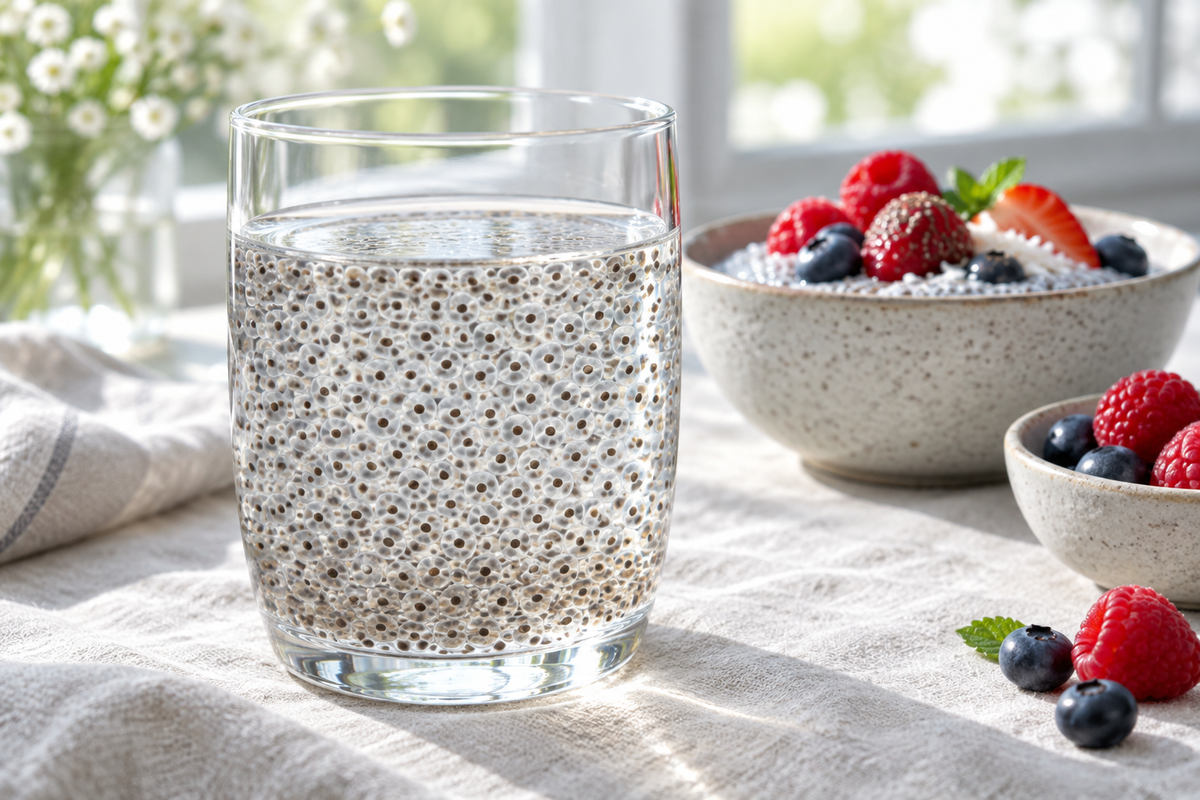
Chia seeds swell in water to ten times their volume and form a gel in the process. This makes them versatile in the kitchen and explains why they have established themselves as a superfood.

Where chia comes from

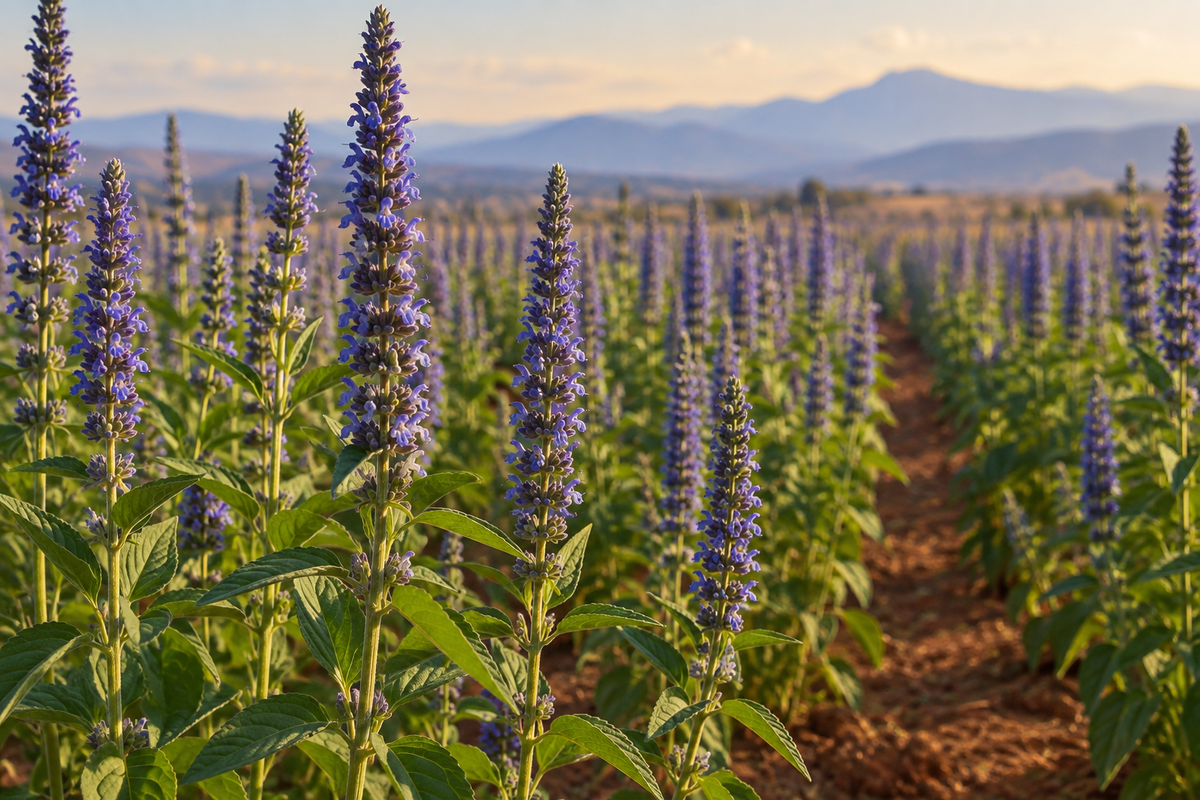
Salvia hispanica belongs to the sage family, so it is related to culinary sage. The plant comes from Mexico and Guatemala, where it was cultivated long before the Spanish conquest. The name chia is derived from the Nahuatl word for oily.

The gel is formed by soluble fiber. It binds water and forms a coating around the seed. That is exactly why chia pudding works without a binding agent.

Our chia seeds come from Mexico and controlled organic cultivation, certified according to the EU Organic Regulation, inspection body number DE-ÖKO-039.

Nutritional values and use

Per 100 g, the seeds contain 31.4 g fiber, 21.2 g protein, 31.1 g fat and only 0.8 g sugar. The caloric value is 1,832 kJ, or 444 kcal.

With 31.4 g fiber per 100 g, the content is five times the EU threshold for the claim high fiber content, which starts at 6 g per 100 g.

Before consumption, the seeds should be soaked in water or milk. They are suitable as a pudding, as a topping for yogurt and porridge, or as an ingredient in baking.

Organic chia seeds: origin and quality

One single ingredient: organic chia seeds, whole and untreated. After harvesting, they are gently cleaned. Packed in a resealable stand-up pouch. Every batch is tested for heavy metals by an independent laboratory.

Behind Vitalplant is Christian Lazar, a licensed pharmacist with over 35 years of professional experience at Stern Apotheke.

Inhalte zuletzt geprüft am

Chia seeds*.

*From organically controlled cultivation.

Recommended use: Soak in water or milk before consumption. Ideal as a snack, topping for yogurt and porridge, or for baking.

Allergens: May contain traces of gluten.

Storage: Store in a cool, dry place, do not freeze, and protect from direct sunlight.

Botanically, they are not seeds at all

Salvia hispanica is an annual mint family plant that grows up to one and a half metres tall and bears its flowers in false whorls around the square stem. Each flower produces four tiny fruitlets, botanically known as nutlets.

So what comes in a bag as chia seeds are, strictly speaking, small nuts, as with all mint family plants. The species name is also misleading: hispanica means Spanish, although the plant comes from Mesoamerica and only reached Europe via Spanish collections.

Why the seed is wrapped in gel

The outermost cell layer of the seed coat is filled with mucilage polysaccharides. When water is added, these cells swell, burst open, and push fine filaments outward that combine into a transparent coating.

In nature, this is a survival strategy for dry soils: the gel sticks the seed to the ground, retains moisture for germination, and protects it from being blown away. In the kitchen, it is exactly this same property that makes chia pudding work without a thickener.

Novel food with approval

In Europe, chia is legally considered a novel food because it was not consumed to any significant extent here before 1997. Such products require formal approval, which also specifies which foods they may be used in and in what quantities.

Chia received this approval in 2009, at first only for bread and in a very limited proportion. Only after several extensions is the whole seed itself and broader use allowed today. The bag on the shelf is therefore newer than the plant's reputation might suggest.

Black, white, whole or ground

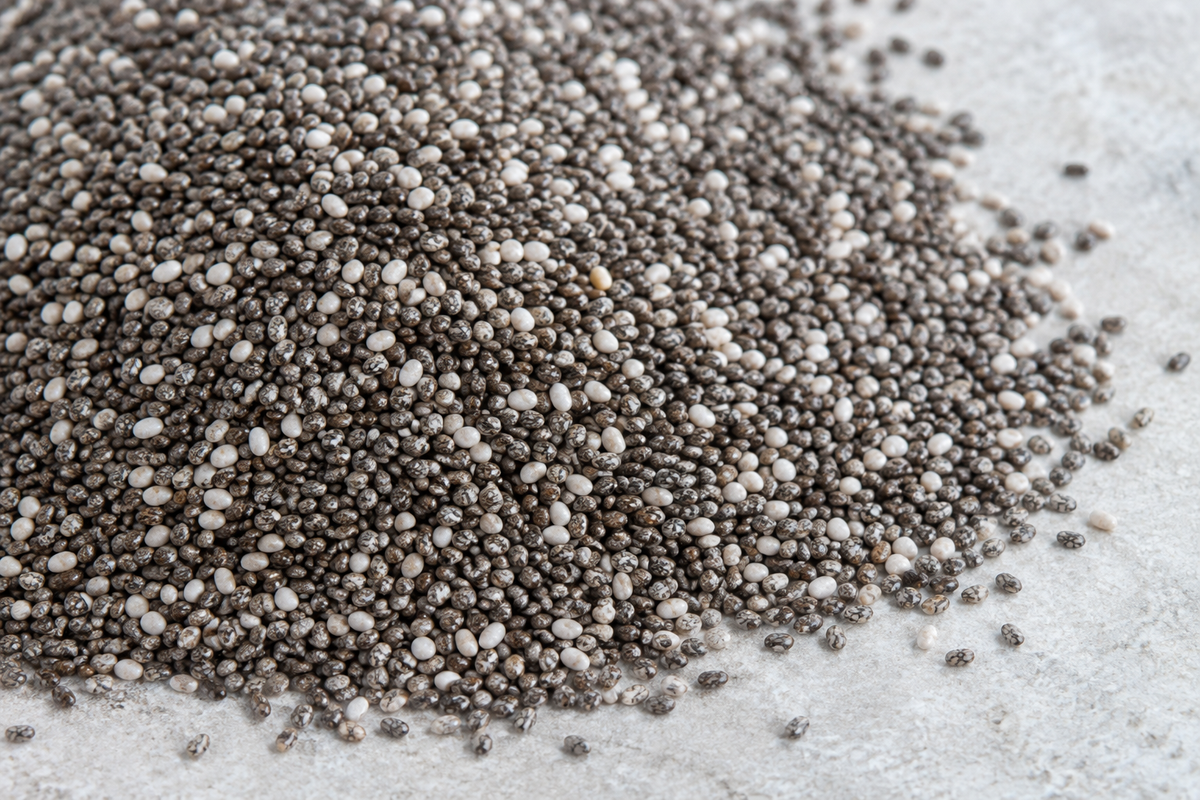
Chia seeds come in dark and white varieties. Both come from the same species and differ only in the pigment of the shell; in terms of composition, there is no real difference.

There is, however, a real difference between whole and ground. The intact shell keeps the fat away from atmospheric oxygen, and this fat consists mainly of triple-unsaturated alpha-linolenic acid, which is sensitive to oxidation. Whole seeds therefore keep for a long time, ground seeds much less so. If you grind them, you should grind them fresh.

✔ Lab analysis - coming soon...
✔
Product specification - Download here!

Organic chia seeds from Mexico in eco-friendly packaging by Vitalplant.

€6,90

€27,60 kg

€6,90

€27,60 kg

Origin and Use

  • Salvia hispanica aus Mexiko, Bio Chiasamen

    Salvia hispanica from Mexico

  • 31 g Ballaststoffe je 100 g, Bio Chiasamen

    31 g fibre per 100 g

  • Quellen auf das Zehnfache, Bio Chiasamen

    Multiply sources by ten

Product reviews

Aus eigener Herstellung

  • Christian Lazar, Apotheker bei Vitalplant
    Vom Apotheker entwickelt Christian Lazar stellt jede Rezeptur selbst zusammen.
  • Pulver wird von Hand über die Kapselplatte abgestrichen
    Von Hand abgefüllt Kleine Chargen, jede Platte einzeln abgestrichen.
  • Kapselfüllgerät in der Herstellung
    Mechanisch dosiert Gleiche Menge in jeder einzelnen Kapsel.
  • Ohne künstliche ZusätzeKeine künstlichen Süßstoffe, Aromen oder Farbstoffe.
  • Geprüfte RohstoffeUnabhängig laborgeprüft, Analysenzertifikat auf jeder Seite.
  • Lichtgeschützt verpacktBraunglas oder blickdichter Beutel, je nach Produkt.
  • Kurze ZutatenlisteWas nicht hineingehört, steht auch nicht drin.

Frequently Asked Questions

Soak in water or milk before consumption. As a pudding, as a topping for yogurt and porridge, or as an ingredient in baking. For chia pudding, you would typically use about one part seeds to six parts liquid and let it soak for a few hours or overnight.

Because they absorb ten times their volume in water, somewhere. Eaten dry and washed down with too little liquid, they only swell up in the body. That is why soaking is explicitly stated in the serving suggestion. Soaked, on the other hand, they are easy to handle.

Thanks to soluble fiber in the seed coat. It binds water and forms a layer around the seed. That is exactly why chia pudding works without any binding agent, and exactly why chia seeds can be used as an egg substitute in baking.

Per 100 g, they contain 31.4 g of fiber, 21.2 g of protein, 31.1 g of fat, and only 0.8 g of sugar, at 1,832 kJ, or 444 kcal. With 31.4 g of fiber, the content is five times the EU threshold for the claim “high fiber content,” which starts at 6 g per 100 g.

Salvia hispanica belongs to the sage family and is therefore related to culinary sage. The plant originates from Mexico and Guatemala, where it was already cultivated before the Spanish conquest. The name chia is derived from the Nahuatl word for oily.

Practically neutral, with a very subtle nutty note. That is exactly what makes them so versatile: They take on the flavor of whatever they are soaked in. Chia pudding tastes like the milk, cocoa, or fruit it is made with.

Yes, from Mexico and organically grown, certified according to the EU organic regulation with the inspection body number DE-ÖKO-039. A single ingredient: organic chia seeds, whole and untreated. After harvest, they are gently cleaned.

Store in a dry, cool place and keep tightly sealed in the resealable stand-up pouch. Dry is the key word here: chia seeds react to any moisture and will otherwise clump together. Once prepared, chia pudding belongs in the refrigerator and should be eaten within a few days.

General ratings from our customers