Organic Breathing Tea

Organic breathing tea is a loose herbal tea blend with rosehip, lemongrass, hibiscus, mint, sage, thyme, and other organic herbs for your daily tea routine. 100 g makes 30 servings. Made in the Apothecary Manufactory Memmingen.

€9,90

€99,00 kg
Tax included.
Shipping calculated at checkout.

In stock - Arrives in 2-3 working days!

Size: 100g / 30 servings

Pay securely with PayPal Klarna Visa Mastercard Apple Pay Google Pay American Express

All payment methods

  • PayPalPayPal
  • KlarnaKlarna
  • Visa Visa
  • Mastercard Mastercard
  • Apple Pay Apple Pay
  • Google Pay Google Pay
  • American Express American Express
  • BizumBizum
  • EPS eps
  • iDEAL WeroIdeal
  • MaestroMaestro
  • Shop Pay Shop Pay
  • Union PayUnionPay

Payment is SSL encrypted via Shopify Checkout.

Fourteen ingredients with rosemary and mint oil

Vitalplant’s organic breath tea is the most complex blend in our tea range: fourteen ingredients, including two essential oils, which give the infusion its distinctive freshness.

The herbal blend

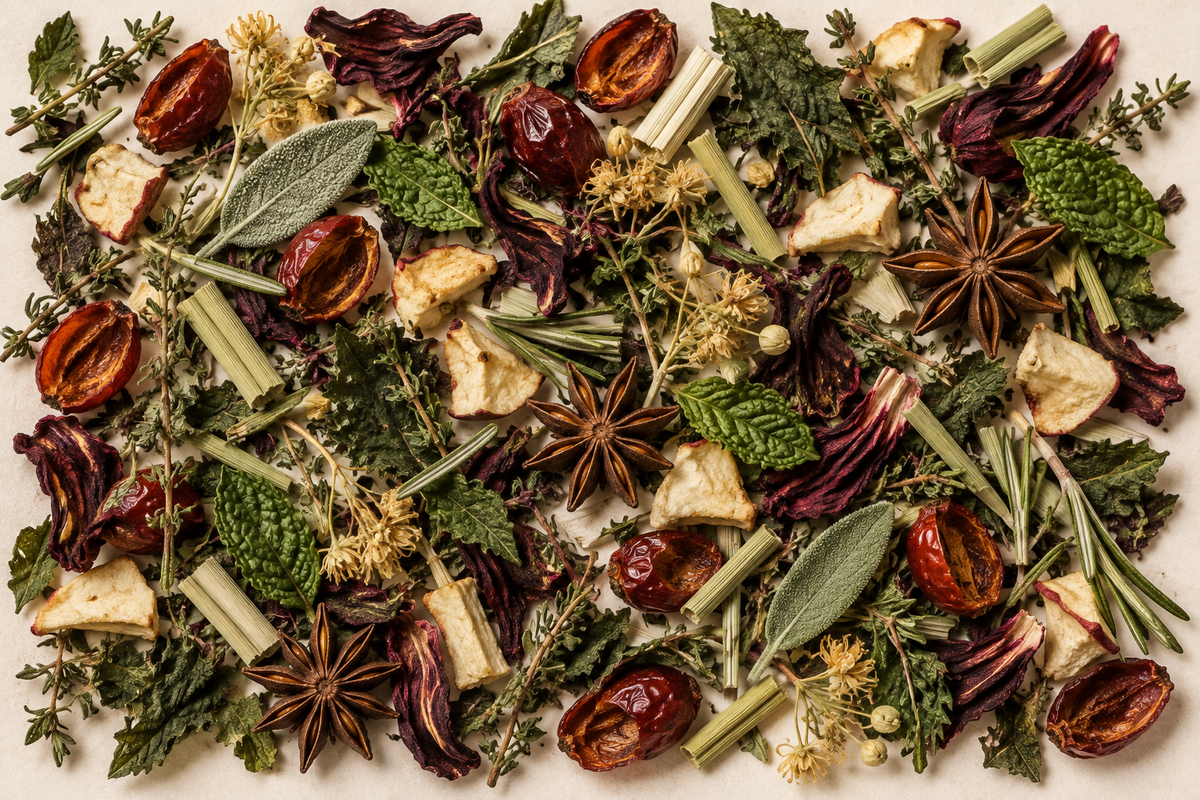
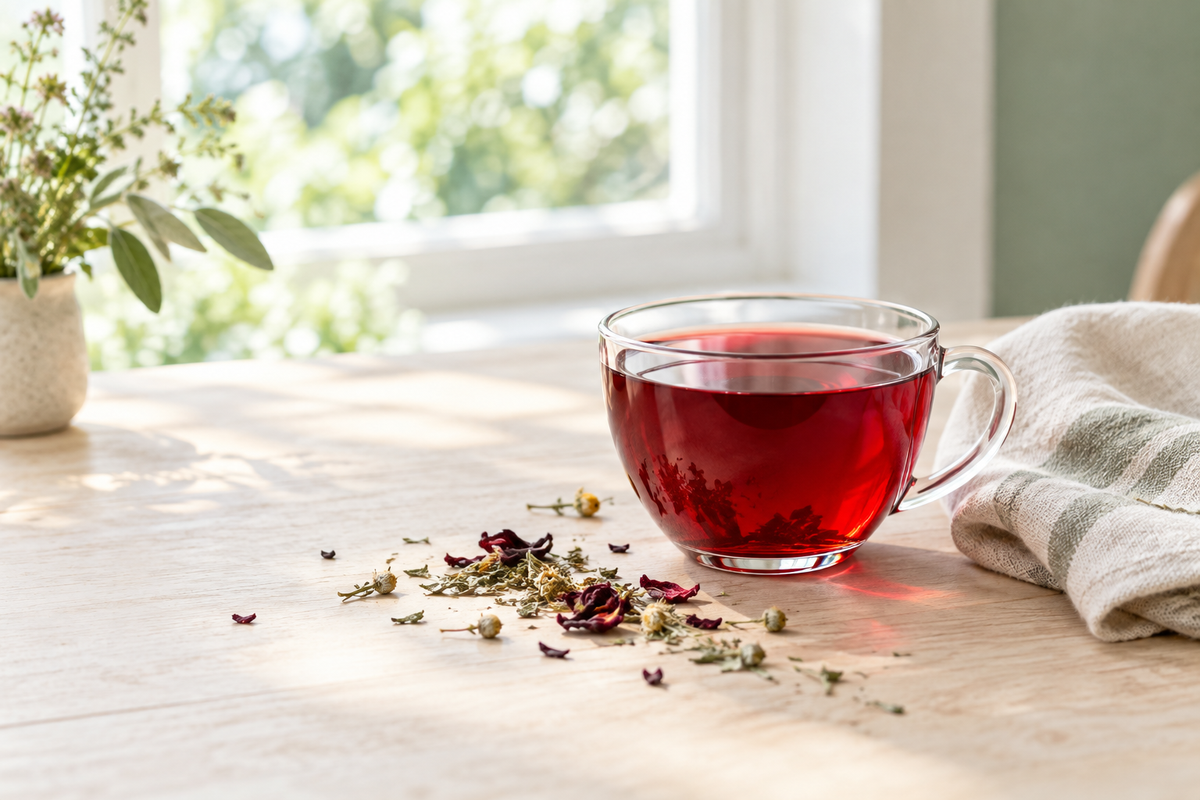
Rosehip peel and apple pieces form the base and provide a fruity-tart underlying note. Hibiscus flowers intensify the acidity and give the infusion a deep red color.

Lemongrass and star anise add the aromatic accents, one citrusy, the other sweetly spicy thanks to its anethole.

Five mint family herbs shape the herbal component: curly mint, sage, rosemary, peppermint, and thyme. Add to that nettle leaves and linden blossoms.

Rosemary oil and mint oil are added as essential oils. They make all the difference from a pure leaf blend, because they dissolve immediately when steeped.

Preparation and taste

Pour 200 ml of boiling water over 3 g of tea and let it steep for 5 to 8 minutes. The infusion is distinctly fresh and herbal, with the fruity notes becoming more pronounced the longer it steeps.

The tea is naturally caffeine-free and suitable for any time of day. If you prefer the essential oils more intensely, cover the cup while steeping.

Organic breath tea: origin and quality

100 g of loose tea yields around 30 servings. The ingredients come from certified organic cultivation, certified according to EU organic regulations, inspection body number DE-ÖKO-039, origin EU and non-EU agriculture. No added sugar. Packed in a resealable stand-up pouch.

Behind Vitalplant is Christian Lazar, a licensed pharmacist with over 35 years of professional experience at the Stern Pharmacy.

Inhalte zuletzt geprüft am

Rosehip peel*, apple pieces*, lemongrass*, hibiscus flowers*, star anise*, spearmint leaves*, sage*, nettle leaves*, rosemary*, peppermint leaves*, linden blossoms*, thyme*, rosemary oil*, mint oil.

*From controlled organic cultivation.

Directions: Pour 200 ml of boiling water over 3 g of tea and let it steep for 5-8 minutes.

Allergens: According to the raw material specification, it contains no allergens requiring labeling in accordance with Annex II of Regulation (EU) No. 1169/2011.

Storage: Store in a cool, dry place, do not freeze, and protect from direct sunlight.

Why oil is added to a blend

In a herb leaf, the essential oil is stored in tiny glands on the surface. When it is brewed, it is released only gradually, and some remains in the leaf. An added oil, by contrast, is freely available and passes into the infusion immediately.

That is why this blend tastes fresh from the very first minute, while a pure leaf blend takes several minutes. The amounts are very small; essential oils are highly concentrated. And because they are volatile, they rise with the steam: a covered cup keeps in the tea what would otherwise end up in the room.

Five mint-family herbs, five different oils

Spearmint, peppermint, sage, rosemary, and thyme all belong to the same plant family. The reason mint-family herbs appear so often in tea blends is simple: hardly any other family stores so much essential oil so accessibly on the leaf surface.

But the oils differ significantly. Peppermint is shaped by menthol, while spearmint is defined by carvone, which is why it tastes milder and more caraway-like. Thyme brings thymol, while rosemary and sage contribute cineole and camphor. Five relatives therefore do not create repetition, but five layers.

Hibiscus adds color and acidity

With hibiscus, it is not the petals that are used, but the fleshy calyces that remain after the flower falls off and quickly open up. Their color comes from anthocyanins, the pigments that react to acidity.

A splash of lemon therefore makes the infusion noticeably brighter red, while hard, alkaline water turns it a dull violet. The acidity itself comes from organic fruit acids, not from an additive.

Star anise is not related to anise

Anise is an umbellifer and is related to carrot and fennel. Star anise, by contrast, is the fruit of an evergreen tree from southern China and belongs to a completely different, very ancient plant group. The reason both taste similar is the same aromatic compound: anethole.

Species purity is important. Japanese star anise looks almost identical to the real thing, but it is not suitable for consumption. The goods are therefore botanically checked before they go into a blend. For star anise, origin control is not a quality detail, but a basic requirement.

✔ Lab test - coming soon...
✔
Product specifications - Download here!

Organic breath tea – soothing organic herbs for refreshing enjoyment from organic farming.

€9,90

€99,00 kg

€9,90

€99,00 kg

From the plant to the cup

  • Zwölf Kräuter und zwei Öle, Bio Atem Tee

    Fourteen ingredients, two oils

  • Hibiskus färbt tiefrot, Bio Atem Tee

    Hibiscus turns deep red

  • Für jede Tageszeit, Bio Atem Tee

    For any time of day

Product reviews

Aus eigener Herstellung

  • Christian Lazar, Apotheker bei Vitalplant
    Vom Apotheker entwickelt Christian Lazar stellt jede Rezeptur selbst zusammen.
  • Pulver wird von Hand über die Kapselplatte abgestrichen
    Von Hand abgefüllt Kleine Chargen, jede Platte einzeln abgestrichen.
  • Kapselfüllgerät in der Herstellung
    Mechanisch dosiert Gleiche Menge in jeder einzelnen Kapsel.
  • Ohne künstliche ZusätzeKeine künstlichen Süßstoffe, Aromen oder Farbstoffe.
  • Geprüfte RohstoffeUnabhängig laborgeprüft, Analysenzertifikat auf jeder Seite.
  • Lichtgeschützt verpacktBraunglas oder blickdichter Beutel, je nach Produkt.
  • Kurze ZutatenlisteWas nicht hineingehört, steht auch nicht drin.

Frequently Asked Questions

Pour 200 ml of boiling water over 3 g of tea and let it steep for 5 to 8 minutes, about a heaping teaspoon per cup. Cover the cup while it steeps: this blend contains added rosemary oil and mint oil, which would otherwise evaporate with the steam.

Fourteen, making this the most complex blend in our tea range. Rosehip peel and apple pieces form the base, along with hibiscus blossoms, lemongrass, and star anise. Five mint family herbs define the herbal note: spearmint, sage, rosemary, peppermint, and thyme. Also included are nettle leaves, linden blossoms, as well as rosemary oil and mint oil as essential oils.

Sie machen den Unterschied zu einer reinen Blattmischung aus. Während Öle aus getrockneten Blättern erst langsam austreten, lösen sich zugesetzte Öle beim Aufgießen sofort. Der Aufguss wirkt dadurch von der ersten Minute an deutlich frischer. Rosmarinöl stammt aus kontrolliert biologischem Anbau, das Minzöl trägt diese Kennzeichnung nicht.

Distinctly fresh and herbal, with a fruity-tart base note of rosehip, apple, and hibiscus. The hibiscus gives the infusion a deep red color. With a longer steeping time, the fruit notes come forward more strongly; with a shorter one, the mint stays in the foreground.

No, not by nature. Caffeine is found in the tea plant Camellia sinensis, from which black and green tea are made. This blend is made from entirely different plants and is therefore caffeine-free, without anything having to be removed from it.

100 g of loose tea yields around 30 servings at 3 g per cup, so one month with one cup a day. The tea is loosely packed, so you will need a strainer or a tea filter.

Yes. Prepare it hot as usual, let it cool, and chill it. Thanks to rosehip, apple, and hibiscus, this blend has enough acidity to taste well-rounded even when cold. By contrast, a cold-brew infusion should steep in the refrigerator and be consumed within a day.

Dry, dark, and sealed airtight; the resealable stand-up pouch already takes care of that. This is especially important for a blend with essential oils, because they dissipate over time. Keep it away from strongly scented foods, because dried herbs can absorb foreign odors.

General ratings from our customers