Organic Comb Honey

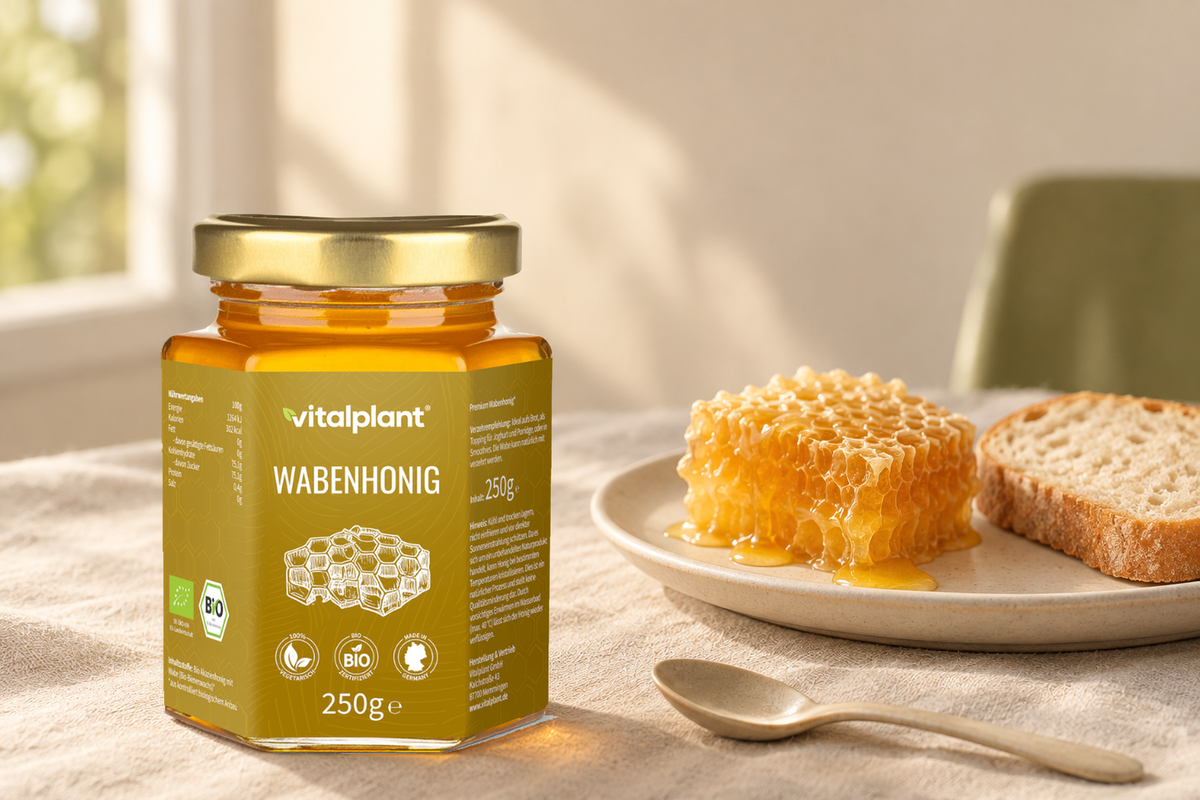
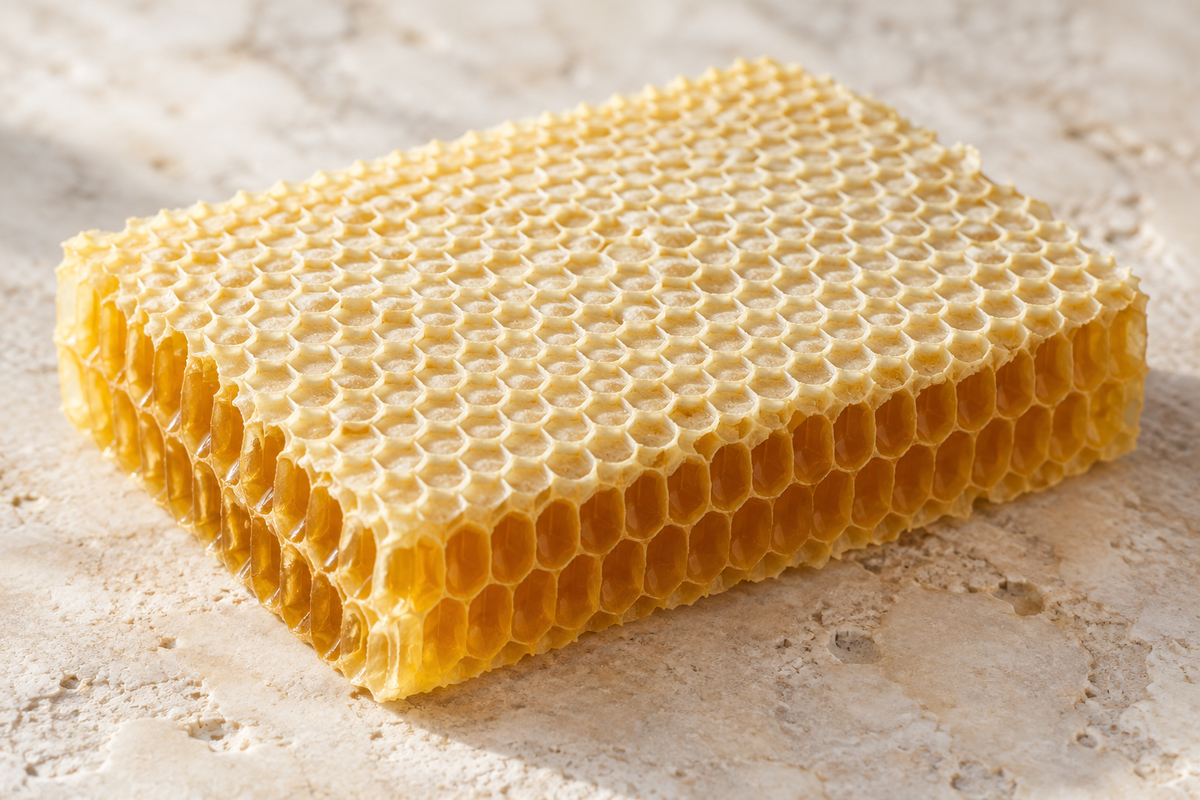
Organic comb honey is unprocessed organic acacia honey with whole comb made from organic beeswax (DE-ÖKO-039, EU agriculture). The comb can be eaten. 250 g in a jar.

€12,90

€51,60 kg
Tax included.
Shipping calculated at checkout.

In stock - Arrives in 2-3 working days!

Size: 250g

Pay securely with PayPal Klarna Visa Mastercard Apple Pay Google Pay American Express

All payment methods

  • PayPalPayPal
  • KlarnaKlarna
  • Visa Visa
  • Mastercard Mastercard
  • Apple Pay Apple Pay
  • Google Pay Google Pay
  • American Express American Express
  • BizumBizum
  • EPS eps
  • iDEAL WeroIdeal
  • MaestroMaestro
  • SatispaySatispay
  • Shop Pay Shop Pay
  • Union PayUnionPay

Payment is SSL encrypted via Shopify Checkout.

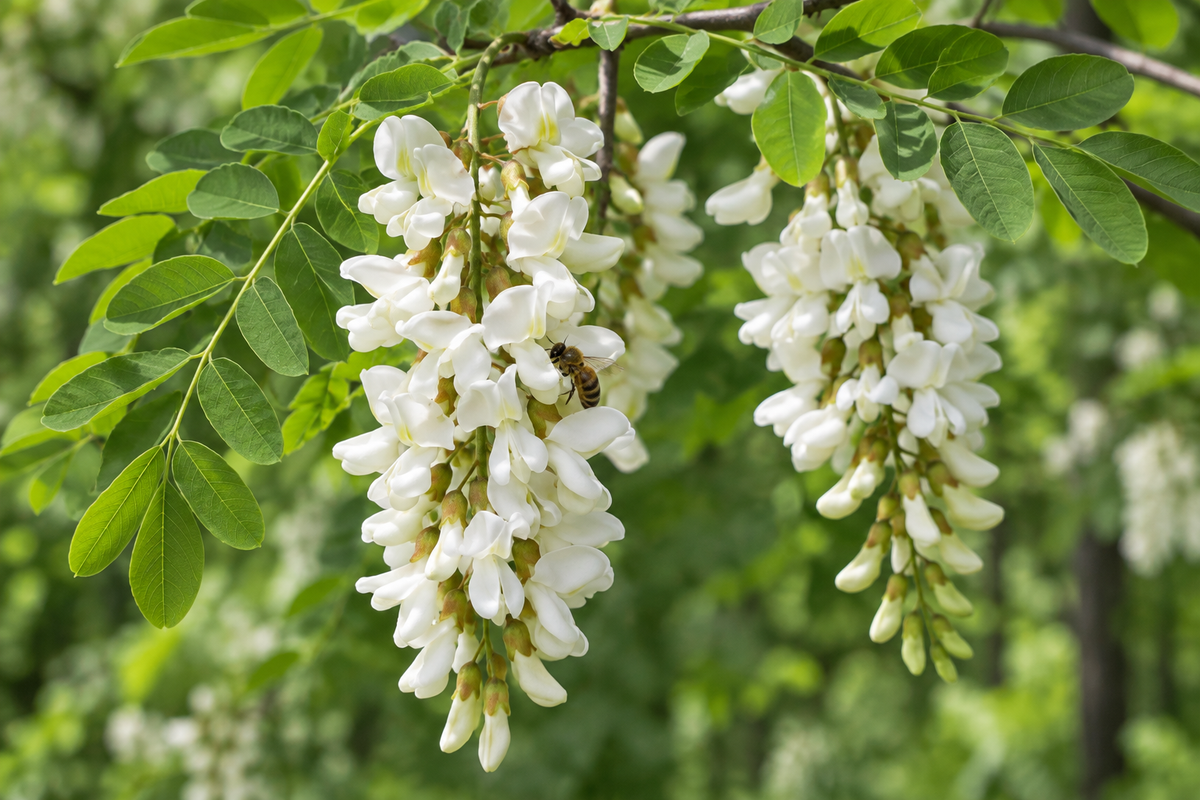
Acacia honey doesn’t actually come from the acacia tree

What is sold in Europe as acacia honey is collected by bees from the black locust, botanically Robinia pseudoacacia. The name pseudoacacia already says it all: it looks similar to the acacia, but it isn’t one.

Black locust instead of acacia

The black locust is a member of the pea family and originally comes from eastern North America. It arrived in Europe in the 17th century and spread widely here. True acacias, by contrast, grow in Africa and Australia and play no role in European honey.

Its flowering period is short, usually only two to three weeks in May or June. If it rains throughout, the harvest that year is small. That is why acacia honey is reliably more expensive than blossom honey from mixed forage.

Why comb honey is not spun

Regular honey is spun out of the combs, strained, and bottled. The comb stays in the hive and is reused. With comb honey, this step is completely eliminated: the comb section is cut out and placed in the jar exactly as the bees built and capped it.

This also means no blending, no heating, and no filtering. You can see what you are buying. The beeswax in the comb is produced by the bees themselves, from glands on the underside of the abdomen, and it requires many times its weight in honey. It can be chewed along with the honey; it is not digested and leaves the body unchanged.

Why it stays liquid, and what’s in it

Honey crystallizes because glucose crystallizes. Fructose does not. Acacia honey contains significantly more fructose than glucose and therefore stays unusually clear and liquid for a very long time, often for years.

There is nothing to sugarcoat when it comes to nutritional value: 100 g contain 75.1 g of sugar, exclusively from the honey itself, plus 0.4 g of protein and practically no fat. That adds up to 1,264 kJ, or 302 kcal. Honey is a sweetener that tastes good, and we sell it exactly as that.

Origin and processing

The honey comes from certified organic beekeeping in the Balkan Mountains, certified according to EU organic regulations, control body number DE-ÖKO-039. Organic beekeeping means, among other things, rules on the location of the hives, the material of the hive boxes, and the avoidance of synthetic treatment agents.

Each comb is unique and looks different. If the honey does crystallize, that is a natural process and not a defect.

Behind Vitalplant stands Christian Lazar, a licensed pharmacist with more than 35 years of professional experience at the Stern Pharmacy.

Inhalte zuletzt geprüft am

Organic acacia honey with comb (organic beeswax)*.

*From organically controlled cultivation.

Nährwerte

header: Nutritional informationper 100 g
Energy1,264 kJ / 302 kcal
Fat0 g
of which saturated fatty acids0 g
Carbohydrates75.1 g
of which sugars75.1 g
Protein0.4 g
Salt0 g

Recommended use: Ideal on bread, as a topping for yogurt and porridge, or in smoothies. The comb can of course be eaten as well.

Allergens: According to the raw material specification, it contains no allergens subject to labelling requirements pursuant to Annex II of Regulation (EU) No. 1169/2011.

Storage: Store in a cool, dry place, do not freeze, and protect from direct sunlight. As this is an untreated natural product, the honey may crystallize at certain temperatures. This is a natural process and does not indicate any loss of quality. Gentle warming in a water bath (max. 40 °C) will liquefy the honey again.

How Nectar Becomes Honey

Nectar is first and foremost water: 70 to 80 percent is typical. For it to become honey, that content has to drop below 20 percent. Bees pass it from animal to animal repeatedly, spread it in thin films in the cells, and fan air through the hive with their wings.

At the same time, the sugar changes. An enzyme from the bee gland, invertase, breaks down the nectar’s sucrose into glucose and fructose. Only when the water content is right do the bees cap the cell with wax. This capping is their own sign of ripeness, and it is still visible in comb honey.

Why the Cell Is Hexagonal

Of all the shapes that can fill a surface without gaps, the regular hexagon requires the least wall length per area. It was long suspected that no arrangement could be more economical, and it was not mathematically proven until 1999.

The bees do not calculate this. They first build round cells; the still-soft wax flows together at the points of contact and settles into the most stable shape. The walls are only fractions of a millimeter thick, yet they still support many times their own weight.

What Must Be on a Honey Label

Honey is one of the most tightly regulated foods there is. Under the Honey Ordinance, nothing may be added to it or removed from it, not even water or pollen.

The country-of-origin rules have recently changed: in the past, for blends it was enough to state whether the honey came from EU countries or not. Now all countries of origin must be listed, in descending order of their share. With comb honey, that is unnecessary anyway, because a comb cannot be mixed.

Why Honey Does Not Spoil

Microorganisms need free water. In honey, practically all the water is bound to sugar, and there is also a low pH value of around four. Under these conditions, nothing simply grows, which is why honey remains stable for years.

The reverse is also true, however: honey draws moisture from the air. An open jar absorbs water, and then it can start to ferment. That is why the lid goes on, and the wet spoon stays out.

✔ Laboratory analysis - to follow...
✔
Product specification - Download here!

Organic comb honey from Vitalplant in a jar with organic seal, 250g, unfiltered natural product.

€12,90

€51,60 kg

€12,90

€51,60 kg

Origin and use

  • Bio Wabenhonig - Von der Robinie, nicht der Akazie

    From the black locust, not the acacia

  • Bio Wabenhonig - Nicht geschleudert, ganze Wabe

    Unspun, whole honeycomb

  • Bio Wabenhonig - Wabe und Honig zusammen essen

    Eat the honeycomb and honey together
Product reviews

Aus eigener Herstellung

  • Christian Lazar, Apotheker bei Vitalplant
    Vom Apotheker entwickelt Christian Lazar stellt jede Rezeptur selbst zusammen.
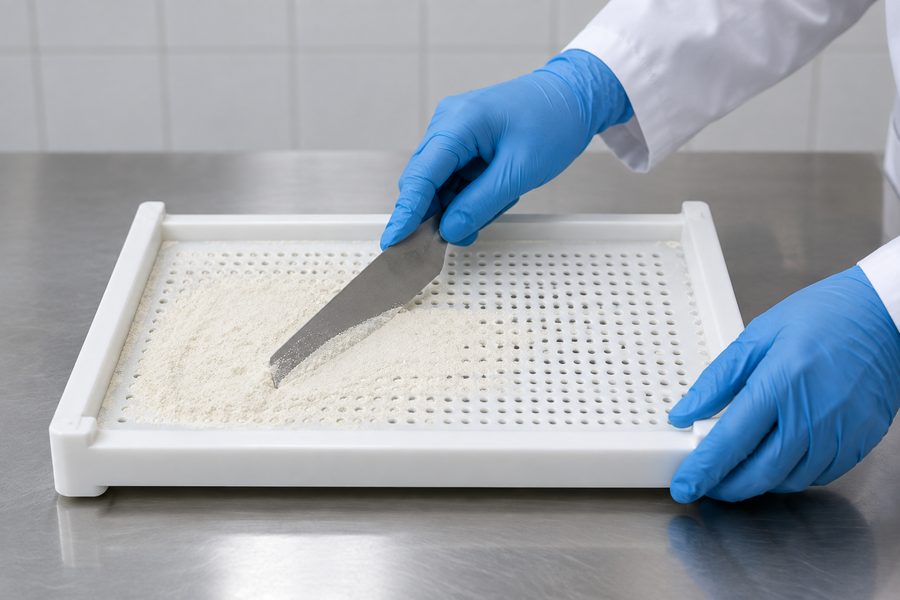
  • Pulver wird von Hand über die Kapselplatte abgestrichen
    Von Hand abgefüllt Kleine Chargen, jede Platte einzeln abgestrichen.
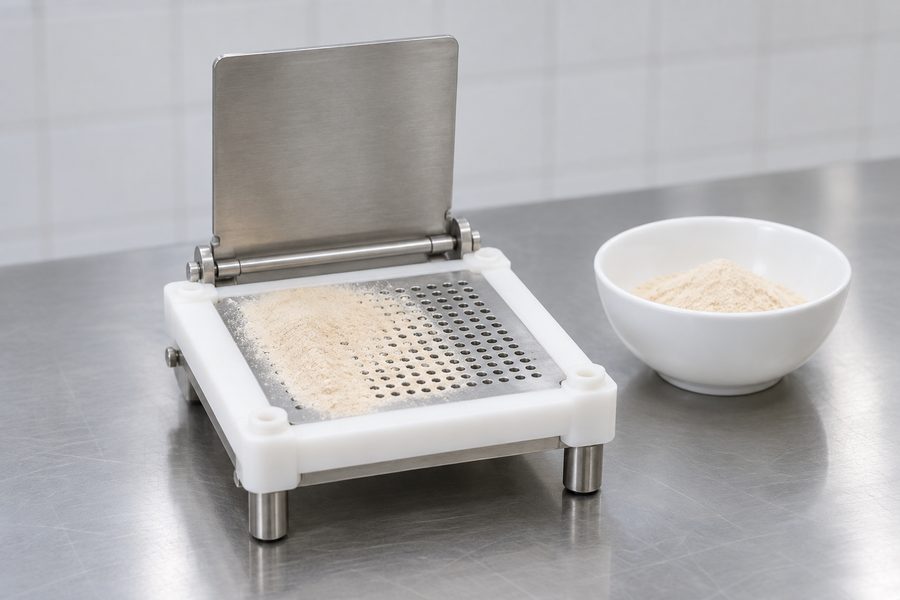
  • Kapselfüllgerät in der Herstellung
    Mechanisch dosiert Gleiche Menge in jeder einzelnen Kapsel.
  • Ohne künstliche ZusätzeKeine künstlichen Süßstoffe, Aromen oder Farbstoffe.
  • Geprüfte RohstoffeUnabhängig laborgeprüft, Analysenzertifikat auf jeder Seite.
  • Lichtgeschützt verpacktBraunglas oder blickdichter Beutel, je nach Produkt.
  • Kurze ZutatenlisteWas nicht hineingehört, steht auch nicht drin.

Frequently Asked Questions

Cut off a piece with a knife and place it on bread, on yogurt, or with mild cheese. The comb can be eaten too. In warm tea, the honey dissolves, while the wax remains.

Yes. Beeswax is harmless, but it is not digested and leaves the body unchanged. Some people chew it like gum and spit it out afterward, while others swallow it. Both are fine; it is purely a matter of personal preference.

No. What is sold in Europe as acacia honey is collected by bees from the black locust tree, botanically Robinia pseudoacacia. The addition pseudoacacia already says it: it looks similar to acacia, but it is not one. True acacias grow in Africa and Australia and play no role in European honey.

Honey crystallizes because glucose crystallizes out. Fructose does not. Acacia honey contains significantly more fructose than glucose and therefore remains unusually clear and liquid for a long time, often for years. If it does crystallize, that is a natural process and not a defect.

Because that is the point of this form of presentation. Conventional honey is spun out of the comb, strained, and bottled, while the comb stays in the hive. With comb honey, the piece is cut out and placed in the jar exactly as the bees built and capped it. This means there is no mixing, no heating, and no filtering.

75,1 g je 100 g, und das ist zugleich der gesamte Kohlenhydratanteil. Dazu kommen 0,4 g Protein und praktisch kein Fett, bei 1.264 kJ, also 302 kcal je 100 g. Honig ist ein Süßungsmittel, das gut schmeckt, und wir verkaufen ihn genau als das.

For children under one year old, honey is generally not recommended. This is not a special feature of our product, but applies to honey in general and regardless of quality. If you have any questions about this, please contact your pediatrician.

250 g in a jar, each comb is unique. Store in a cool, dry place protected from direct sunlight; do not freeze. If the honey crystallizes, it can be liquefied again in a water bath at no more than 40 degrees; it should not be exposed to higher temperatures. Organic beekeeping with control body number DE-ÖKO-039.

General ratings from our customers