organic flower pollen

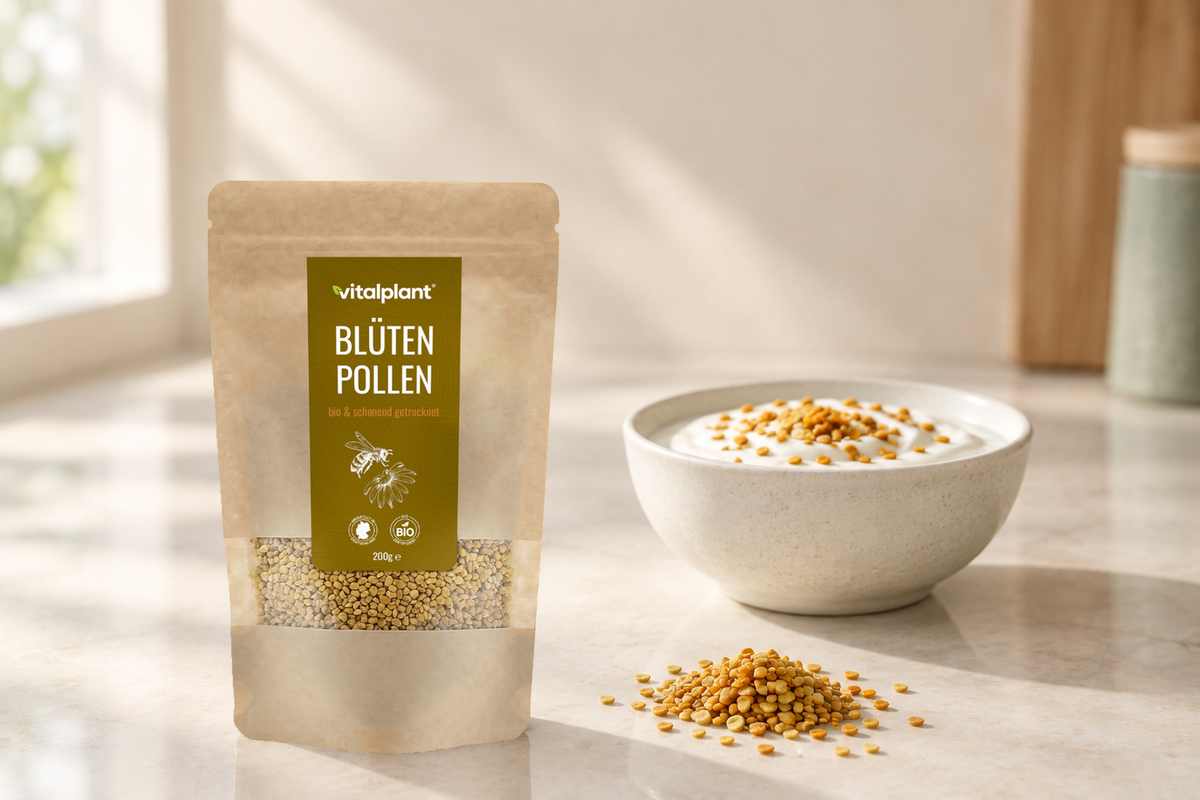
Organic flower pollen from Vitalplant is natural flower pollen from controlled organic cultivation. It is ideal as a topping for yogurt, porridge, or smoothies. 200 g in a stand-up pouch. Made in the Apotheker-Manufaktur Memmingen.

€14,90

€74,50 kg
Tax included.
Shipping calculated at checkout.

In stock - Arrives in 2-3 working days!

Size: 200g

Pay securely with PayPal Klarna Visa Mastercard Apple Pay Google Pay American Express

All payment methods

  • PayPalPayPal
  • KlarnaKlarna
  • Visa Visa
  • Mastercard Mastercard
  • Apple Pay Apple Pay
  • Google Pay Google Pay
  • American Express American Express
  • BizumBizum
  • EPS eps
  • iDEAL WeroIdeal
  • MaestroMaestro
  • Shop Pay Shop Pay
  • Union PayUnionPay

Payment is SSL encrypted via Shopify Checkout.

Organic flower pollen with 20 g protein per 100 g

Flower pollen is not a bee product in the sense of honey, but collected plant material. Bees carry it in as food for their brood, and beekeepers harvest a small portion of it.

How flower pollen is harvested

On their foraging flights, bees brush off pollen and shape it with their hind legs into small pellets, the pollen baskets. At the hive entrance, a pollen trap removes part of it.

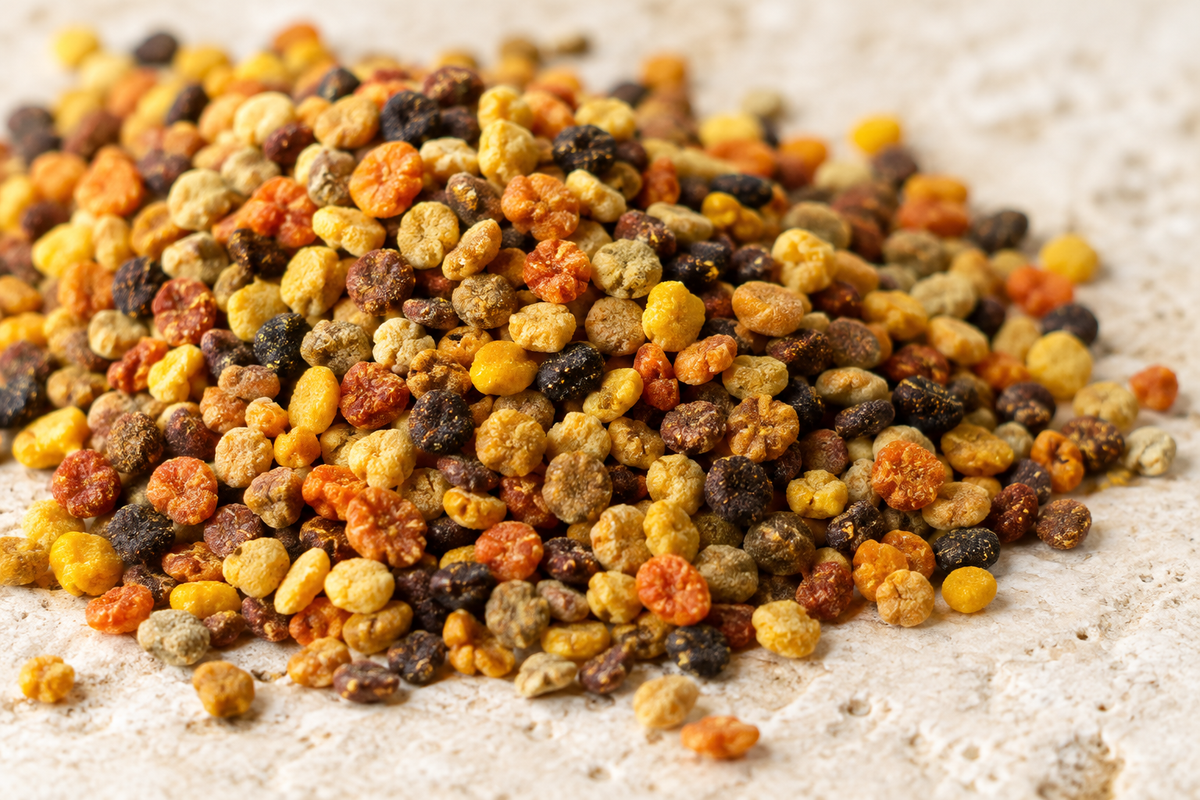
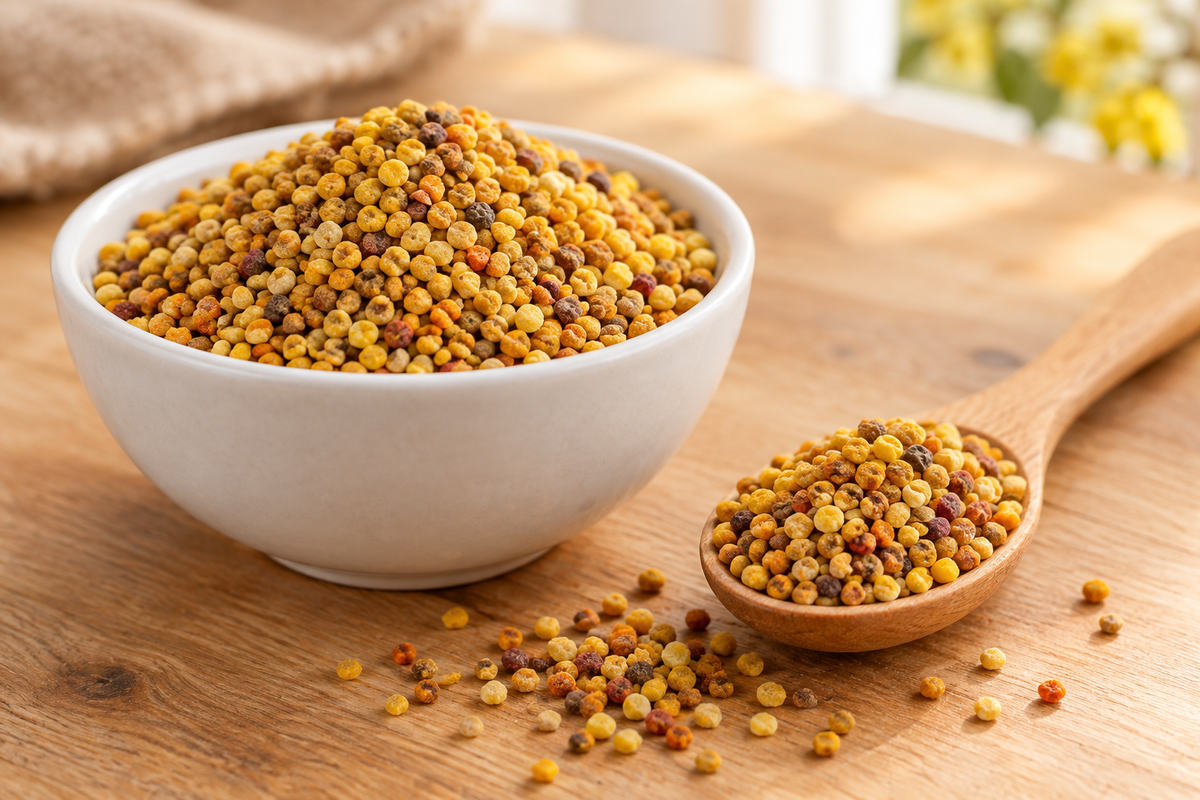
The color reveals the plant. Flower pollen is never monochrome. Yellow often comes from rapeseed, orange from dandelion, and gray to black from poppy. A bag therefore always contains a mosaic of colors.

After harvesting, the pollen is gently dried and cleaned. Our pollen comes from EU agriculture and certified organic beekeeping, certified according to the EU organic regulation, inspection body number DE-ÖKO-039.

Nutritional values and use

Per 100 g, flower pollen contains 19.8 g protein, 62.4 g carbohydrates and 9.29 g fat. The energy value is 1.405 kJ, or 333 kcal.

That means around 24 percent of the energy value comes from protein. The EU threshold for claiming a high protein content is 20 percent.

Depending on the source plant, flower pollen tastes floral to slightly bitter. A teaspoon over yogurt, porridge or in a smoothie is common. If you find the taste unfamiliar at first, start with small amounts.

Organic flower pollen: origin and quality

One ingredient only: organic flower pollen, dried. No additives, no added sugar. Packed in a resealable stand-up pouch. Every batch is tested for heavy metals by an independent laboratory.

Behind Vitalplant is Christian Lazar, a licensed pharmacist with over 35 years of professional experience at the Stern Apotheke.

Inhalte zuletzt geprüft am

Pollen*.

*From organically controlled cultivation.

Recommended use: Ideal as a topping for yogurt and porridge or in smoothies.

Allergens: According to the raw material specification, it contains no allergens requiring labeling under Annex II of Regulation (EU) No. 1169/2011. However, flower pollen is plant pollen: anyone allergic to pollen or bee products should seek medical advice before consumption.

Storage: Store in a cool, dry place, do not freeze, and protect from direct sunlight.

What pollen grain actually is

A pollen grain is the male part of plant reproduction, packaged in a two-layer shell. The outer layer, the exine, consists of sporopollenin, one of the most resilient biopolymers there is: it survives acids, alkalis, and thousands of years in the soil.

That is the basis of an entire field of research. Because each plant species has its own surface structure and pollen is preserved in bogs and lake sediments, entire vegetation histories can be reconstructed from drill cores. That same durability is also the reason bees cannot simply use pollen as food.

Pollen pellets and bee bread

When collecting, the bee moistens the pollen with a little nectar and glandular secretion so it actually sticks together and can be formed into little balls. In the hive, it packs it into cells and seals it with honey.

There, lactic acid fermentation begins, and over the course of weeks the pollen becomes the so-called bee bread, also sold as perga. It tastes more acidic and is a different product. What is in this bag is harvested before that step: the fresh pollen as the bee brought it in.

Why pure-variety pollen is rarely found

A bee colony flies to whatever is blooming within a radius of a few kilometres, and that changes from week to week. Pure variety, as with some honeys, is therefore practically never available with pollen.

Within a single trip, however, the forager usually stays with one plant species. This flower constancy is why each individual pellet is a single color, while the bag looks colourful. Anyone who looks closely can read the sequence of blooms in a landscape from it.

Drying and storing

Freshly collected pollen contains a lot of water and would mould within a few days. It therefore has to be processed quickly, either by freezing or by gentle drying at a low temperature.

Once dried, it keeps at room temperature, but it absorbs moisture and then clumps together. The bag should therefore be kept tightly sealed in a dry, dark place, not next to the stove or sink.

✔ Laboratory test - to follow...
✔
Product specifications - Download here!

Bio flower pollen by Vitalplant, pure and natural from Hungary, packaged in organic quality.

€14,90

€74,50 kg

€14,90

€74,50 kg

Origin and Use

  • Bio Blütenpollen - Pflanzenmaterial, kein Honig

    Pflanzenmaterial, kein Honig

  • Bio Blütenpollen - 20 g Protein je 100 g

    20 g Protein je 100 g

  • Bio Blütenpollen - Auf Joghurt oder ins Müsli

    Auf Joghurt oder ins Müsli

Product reviews

Aus eigener Herstellung

  • Christian Lazar, Apotheker bei Vitalplant
    Vom Apotheker entwickelt Christian Lazar stellt jede Rezeptur selbst zusammen.
  • Pulver wird von Hand über die Kapselplatte abgestrichen
    Von Hand abgefüllt Kleine Chargen, jede Platte einzeln abgestrichen.
  • Kapselfüllgerät in der Herstellung
    Mechanisch dosiert Gleiche Menge in jeder einzelnen Kapsel.
  • Ohne künstliche ZusätzeKeine künstlichen Süßstoffe, Aromen oder Farbstoffe.
  • Geprüfte RohstoffeUnabhängig laborgeprüft, Analysenzertifikat auf jeder Seite.
  • Lichtgeschützt verpacktBraunglas oder blickdichter Beutel, je nach Produkt.
  • Kurze ZutatenlisteWas nicht hineingehört, steht auch nicht drin.

Frequently Asked Questions

As a topping for yogurt and porridge, or in a smoothie. A teaspoon is the usual amount. If you find the taste unfamiliar at first, start with a smaller amount and gradually increase it.

This question belongs in expert hands. Flower pollen is plant pollen, and anyone who reacts to pollen or bee products should seek medical advice before consuming it. You can find the full details in the Application and Important Information tab.

On their foraging flights, bees brush off pollen and shape it into small pellets on their hind legs, known as pollen baskets. At the hive entrance, a pollen trap removes some of it. The pollen is then gently dried and cleaned. It is therefore collected plant material, not a bee product in the sense of honey.

Because each forage plant brings its own color. Yellow often comes from rapeseed, orange from dandelion, and gray to black from poppy. A bag therefore always contains a mosaic of colors, and the composition varies depending on location and season. Uniformly colored pollen would be more of a warning sign than a quality feature.

Floral to slightly bitter, depending on the nectar source plant. The granules are dry and slightly crumbly. Anyone who stirs them into yogurt or a smoothie will perceive their own flavor much less than when eaten on their own.

Per 100 g, they contain 19.8 g of protein, 62.4 g of carbohydrates, and 9.29 g of fat, with an energy value of 1,405 kJ, or 333 kcal. That means around 24 percent of the energy comes from protein; the EU threshold for claiming a high protein content is 20 percent.

Yes, from certified organic beekeeping, certified according to the EU Organic Regulation with the inspection body number DE-ÖKO-039 and the origin designation EU agriculture. Organic beekeeping means, among other things, requirements for the location of the colonies, the material of the hives, and the avoidance of synthetic treatments.

200 g in a resealable stand-up pouch. Store in a cool, dry, and dark place and seal the pouch tightly after each use: flower pollen draws moisture from the air and then becomes sticky. The ingredients list has exactly one ingredient, with no additives and no added sugar.

General ratings from our customers