Organic Psyllium Husk

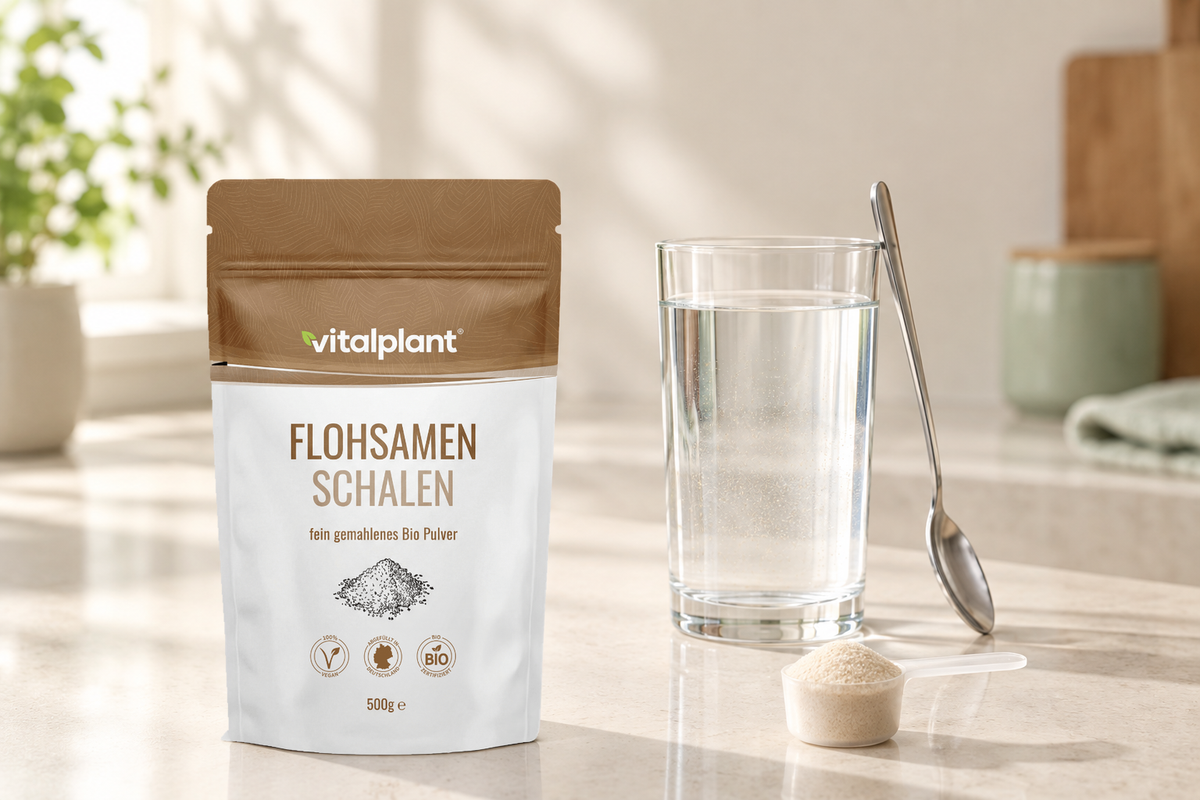
Organic psyllium husk powder is made from 100% psyllium husks from certified organic farming (DE-ÖKO-039) and provides 4.4 g of fiber per serving. Stir 5 g into 250 ml of water daily. 500 g makes 100 servings. Lab-tested from the Apotheker-Manufaktur Memmingen.

€19,90

€187,38 kg
Tax included.
Shipping calculated at checkout.

In stock - Arrives in 2-3 working days!

Size: 500g

Pay securely with PayPal Klarna Visa Mastercard Apple Pay Google Pay American Express

All payment methods

  • PayPalPayPal
  • KlarnaKlarna
  • Visa Visa
  • Mastercard Mastercard
  • Apple Pay Apple Pay
  • Google Pay Google Pay
  • American Express American Express
  • BizumBizum
  • EPS eps
  • iDEAL WeroIdeal
  • MaestroMaestro
  • SatispaySatispay
  • Shop Pay Shop Pay
  • Union PayUnionPay

Payment is SSL encrypted via Shopify Checkout.

88 grams of fiber per 100 grams

Hardly any other product comes close to this value. Organic psyllium husks from Vitalplant consist almost entirely of fiber, and the reason for that lies in which part of the plant is used at all.

Only the husk, not the seed

Plantago ovata is a plantain and is therefore related to the ribwort plantain that grows in Central European meadows. The species is cultivated mainly in India and Pakistan, where it copes well with dry soils.

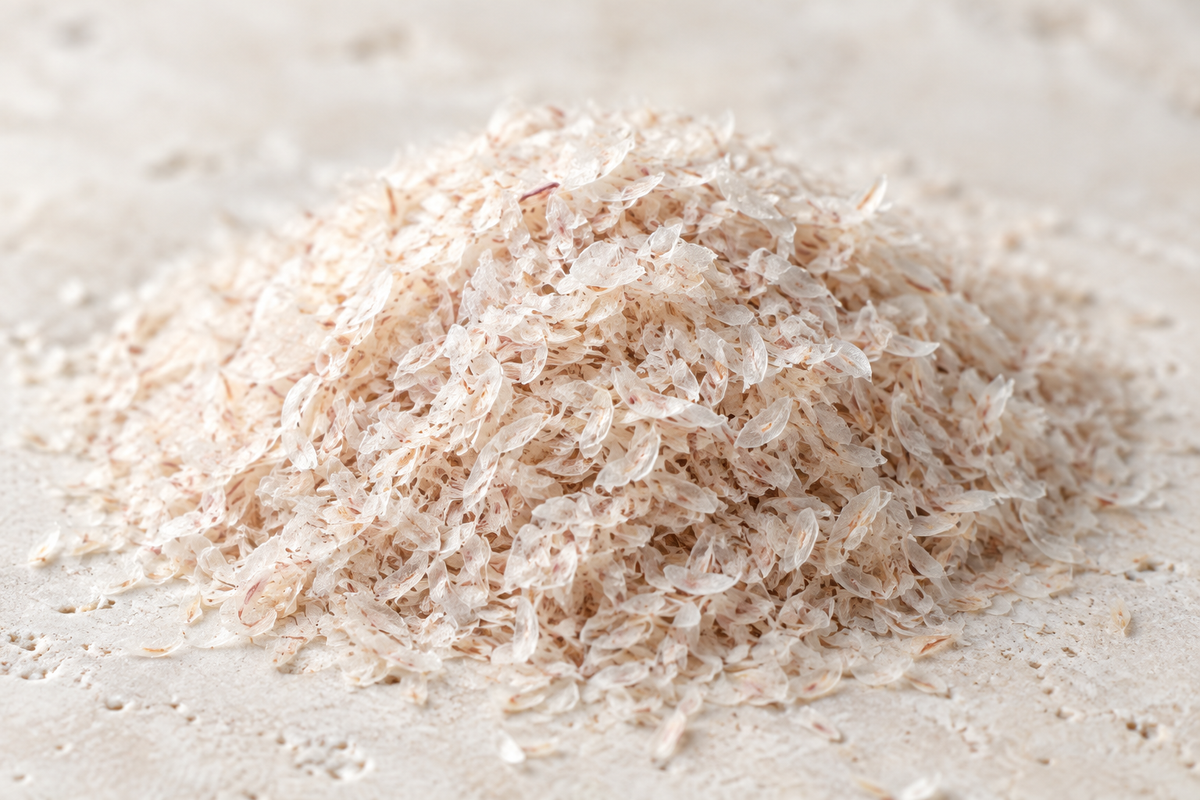
The German name is descriptive: the tiny, dark, elongated seeds look like fleas. However, the whole seed is not processed, but only its outer husk. The seed kernel contains oil and protein, while the husk contains almost only mucilage.

These mucilage substances are arabinoxylans. They bind many times their own weight in water and form a gel in the process. That is exactly what happens in the glass when you stir in the powder: after one to two minutes, the liquid is visibly thicker.

What the nutritional values show

At 88.25 g of fiber per 100 g, the content is almost fifteen times the EU threshold for the claim high fiber content, which starts at 6 g.

Aside from that, there is practically nothing else in it: 0.24 g sugar and 0.24 g fat per 100 g. This also makes the powder meet the conditions for low sugar and low fat. The energy value is 808 kJ, or 193 kcal per 100 g, and this comes almost entirely from fiber, of which the body only uses a small portion.

Grind, origin, and quality

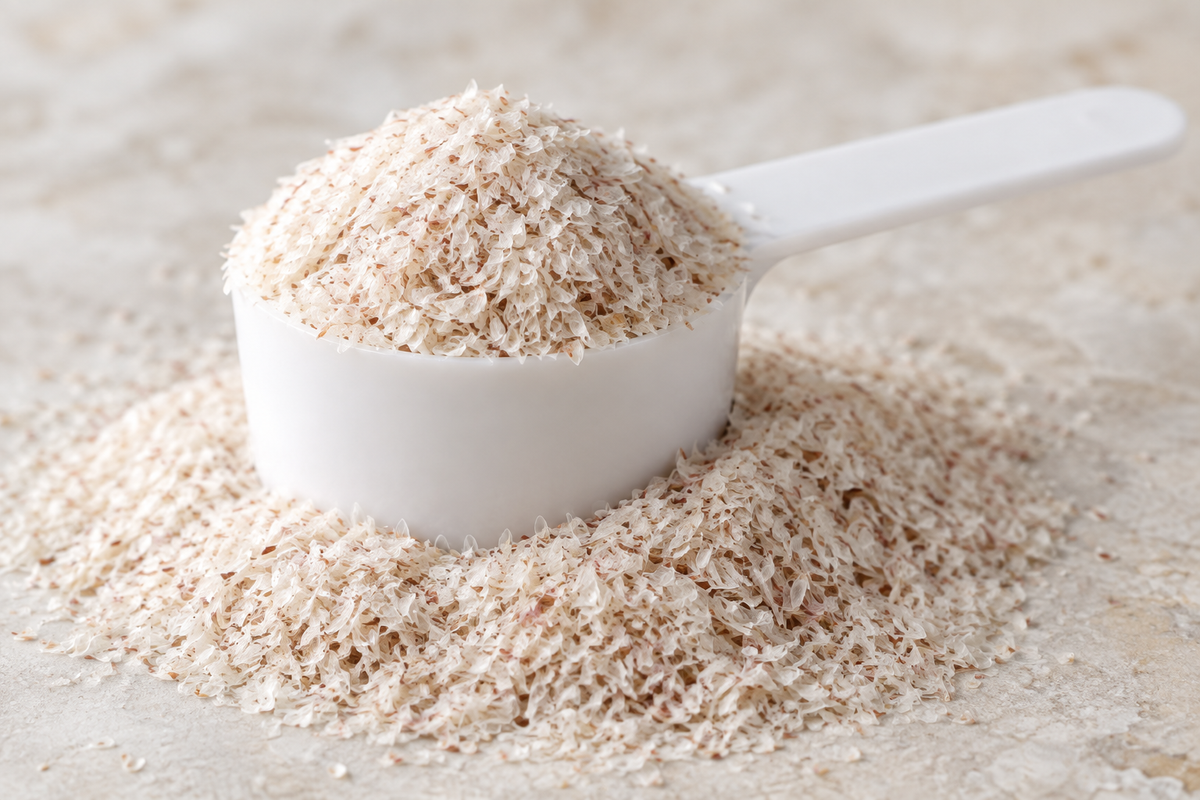
Our husks are ground, not whole. That makes a noticeable difference: powder swells faster and more evenly, distributes without residue, and can also be worked into dough. Whole husks, by contrast, remain grainy and take longer.

Because the powder binds liquid, enough of it should be used. If you stir it in, you should drink it quickly before the gel sets.

A single ingredient, from certified organic cultivation, control body number DE-ÖKO-039, origin non-EU agriculture. No additives, no flavorings, naturally neutral in taste. Packed in a resealable stand-up pouch.

Behind Vitalplant is Christian Lazar, licensed pharmacist with over 35 years of professional experience at Stern Apotheke.

Inhalte zuletzt geprüft am

Organic psyllium husk powder*.

*From organically controlled cultivation.

Nährwerte

Header: Nutritional informationper 100 g
Energy808 kJ / 193 kcal
Fat0,24 g
of which saturates0 g
Carbohydrates2,2 g
of which sugars0,24 g
Fibre88,25 g
Protein1,5 g
Salt0,12 g

Recommended use: Stir 5 g (1 measuring spoon) into 250 ml of water daily and consume immediately.

Important notes: Food supplements are not a substitute for a balanced and varied diet and lifestyle. Do not exceed the stated recommended daily intake. Keep out of reach of young children.

Allergens: May contain traces of mustard and sesame.

Storage: Store in a cool, dry place, do not freeze, and protect from direct sunlight.

Two Types, Two Trade Names

In trade, two plantain species are sold under the name psyllium. Plantago ovata provides the light husks, known in international trade as ispaghula or blond psyllium. Plantago afra, by contrast, produces dark seeds and is called black psyllium.

For husks, Plantago ovata is used almost exclusively because its seed coat can be cleanly removed and swells particularly strongly. The yield is modest: only about a quarter of the seed weight is husk. That explains why husks cost several times more than whole psyllium seeds.

Why the raw material comes from India

It is grown mainly in Gujarat and Rajasthan, on sandy, dry soils where other crops do poorly. It is a winter crop: sowing takes place after the monsoon, and harvesting is in spring.

Rain shortly before harvest is the biggest risk, because the husk swells on the stalk and then becomes unusable. After threshing, the husk is separated from the kernel in several grinding and sieving passes, with air currents separating the light husk from the heavier fragments.

Swelling index and purity

Two key figures describe quality in trade. Purity indicates what percentage of the powder is actually husk; the rest consists of kernel fragments. Common trade goods range between 95 and 99 percent, and the higher the value, the lighter the powder.

The swelling index describes what volume one gram of material occupies after swelling. The two values are related, because only the husk swells. If you are comparing two products, these figures are more useful than the gram weight on the package.

What fiber means in the legal sense

Under food law, fiber is defined as carbohydrate polymers made up of at least three units that are neither digested nor absorbed in the small intestine. So this is a definition based on behavior, not chemical structure, which is why very different substances fall under it.

For calorific value, the EU uses a flat rate of 8 kilojoules per gram, compared with 17 for sugar and starch. The 193 kcal per 100 g on this package therefore are not comparable with the calories from flour or sugar: they are a calculated flat value for a substance that passes through the small intestine largely unchanged.

Our organic psyllium husks are manufactured to the highest quality standards and independently tested for heavy metals.

✔
Laboratory analysis - Download here!
✔ Product specification - Download here!

Bio psyllium husks from Vitalplant, purely organic product in 500g packaging.

€19,90

€187,38 kg

€19,90

€187,38 kg

Mix and drink

  • Bio Flohsamenschalen - Nur die Schale, nicht der Samen

    Only the husk, not the seed

  • Bio Flohsamenschalen - 88 g Ballaststoffe je 100 g

    88 g fiber per 100 g

  • Bio Flohsamenschalen - 5 g in 250 ml, sofort trinken

    5 g in 250 ml, drink immediately

Product reviews

Aus eigener Herstellung

  • Christian Lazar, Apotheker bei Vitalplant
    Vom Apotheker entwickelt Christian Lazar stellt jede Rezeptur selbst zusammen.
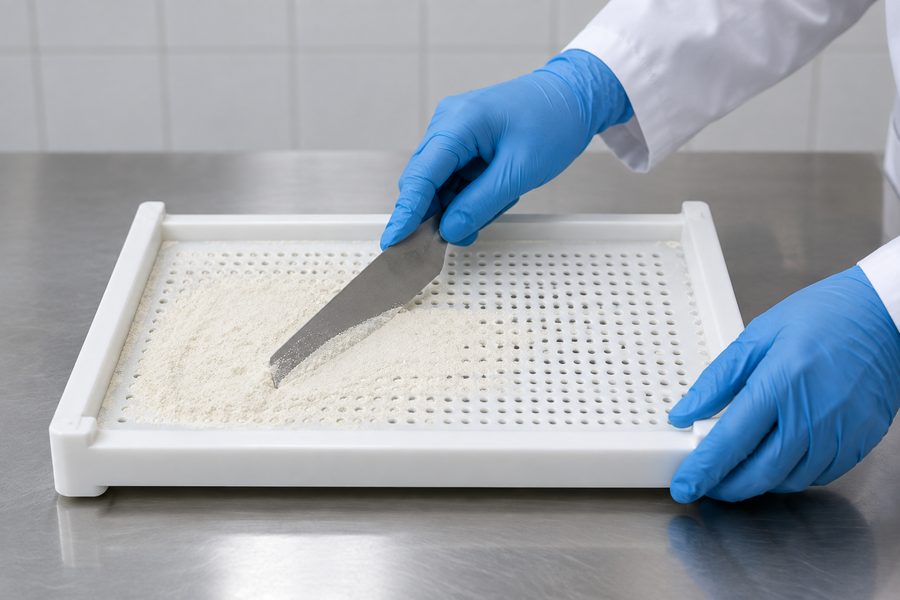
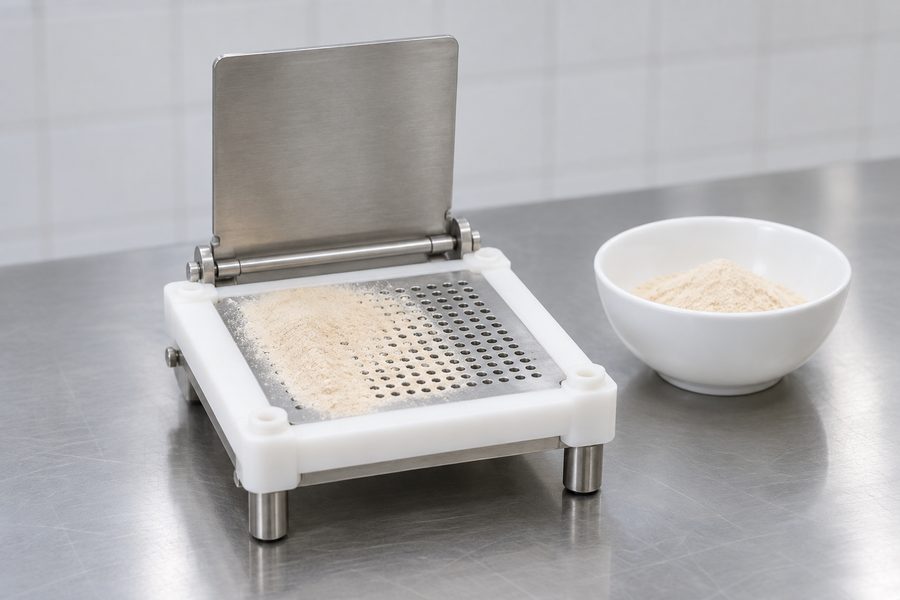
  • Pulver wird von Hand über die Kapselplatte abgestrichen
    Von Hand abgefüllt Kleine Chargen, jede Platte einzeln abgestrichen.
  • Kapselfüllgerät in der Herstellung
    Mechanisch dosiert Gleiche Menge in jeder einzelnen Kapsel.
  • Ohne künstliche ZusätzeKeine künstlichen Süßstoffe, Aromen oder Farbstoffe.
  • Geprüfte RohstoffeUnabhängig laborgeprüft, Analysenzertifikat auf jeder Seite.
  • Lichtgeschützt verpacktBraunglas oder blickdichter Beutel, je nach Produkt.
  • Kurze ZutatenlisteWas nicht hineingehört, steht auch nicht drin.

Frequently Asked Questions

Take 5 g daily, i.e. one measuring spoon, stir into 250 ml of water and consume immediately. Immediately means exactly that here: the powder binds liquid, and after one to two minutes the glass becomes noticeably thicker. Then drink another glass of water afterward.

Because psyllium husks bind many times their own weight in water, and they have to take that water from somewhere. Taken with plenty of liquid, they swell in the glass and on the way down; with too little, they do so in the wrong place. That is why the recommended serving includes 250 ml, and ideally you should drink another glass as well.

4.41 g per 5 g serving. The powder consists of 88.25 g dietary fiber per 100 g. That puts the content at almost fifteen times the EU threshold for the claim of high fiber content, which starts at 6 g per 100 g. Aside from that, there is practically nothing in it: 0.24 g sugar and 0.24 g fat per 100 g.

Weil die Schleimstoffe ausschließlich in der Samenschale sitzen. Der Samenkern enthält dagegen Öl und Eiweiß. Genau deshalb kommt dieses Pulver auf 88 g Ballaststoffe je 100 g, während ganze Flohsamen deutlich darunter liegen würden. Die Schleimstoffe selbst sind Arabinoxylane.

Our shells are ground. That makes a noticeable difference: powder swells faster and more evenly, distributes without leaving residue, and can also be worked into doughs. Whole shells, on the other hand, remain grainy and take longer to fully swell.

A plantain, related to ribwort plantain, that grows in Central European meadows. The species is mainly cultivated in India and Pakistan, where it can cope with dry soils. The German name Flohsamen is a simple description: the tiny, dark, elongated seeds look like fleas.

Psyllium husks are the purist product: one ingredient, 88 g of fiber per 100 g, and neutral in taste. Bio Darm Vital distributes its 59 g of fiber across nine ingredients and also includes fruit powder and two mushroom extracts. In short: psyllium husks for pure fiber, Darm Vital for the combination.

The bag contains 500 g and, at 5 g per day, provides 100 servings, so it lasts a good three months. A single ingredient from certified organic farming, control body number DE-ÖKO-039, origin: non-EU agriculture. No additives, no flavors, neutral in taste. Store in a cool, dry place.

General ratings from our customers