

Vitamins & Minerals
Understanding micronutrients: which nutrient for what, in which form
Vitamins and minerals are the smallest nutrient group with the broadest reach: the daily requirement is in the milligram or microgram range, and yet hardly any metabolic pathway in the body can run without them. This page is the entry point to both groups. It explains which nutrient contributes to which bodily function — in the wording of the EU Union list — why the form of the compound is often more important than the milligram amount on the package, and which nutrients reinforce or inhibit one another. The subpages go into more depth on the individual groups.



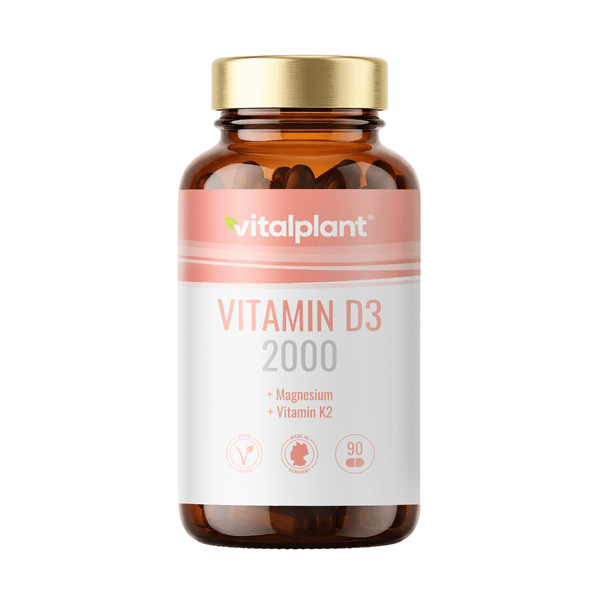


Three magnesium compounds with 100 percent of the nutrient referenc...
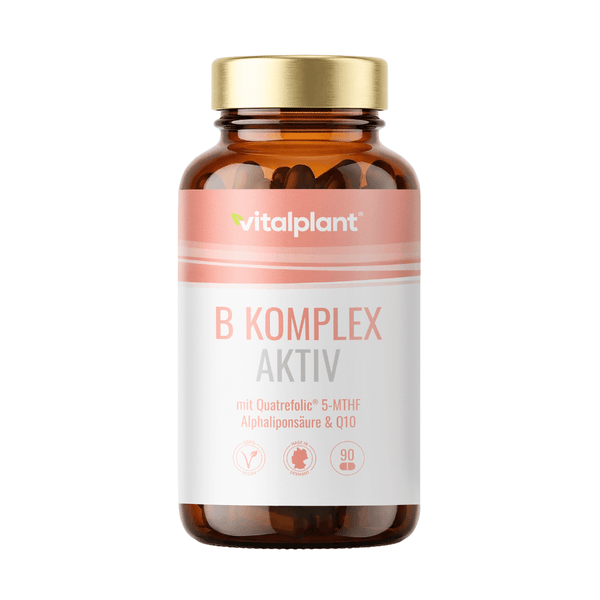
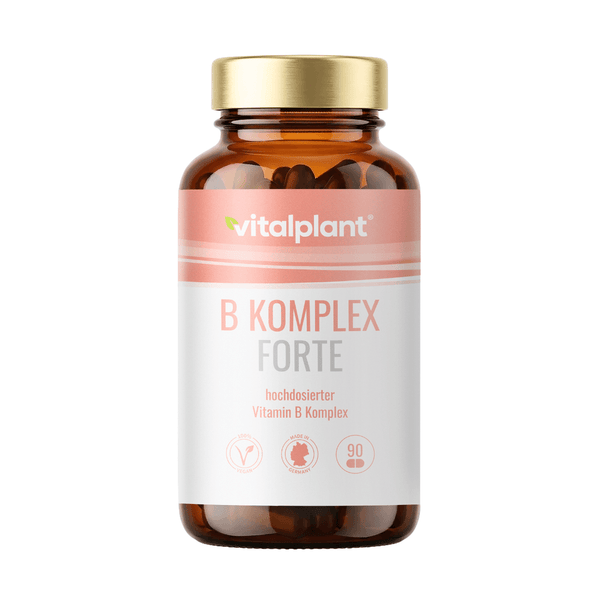
B vitamins in activated form with five accompanying ingredients

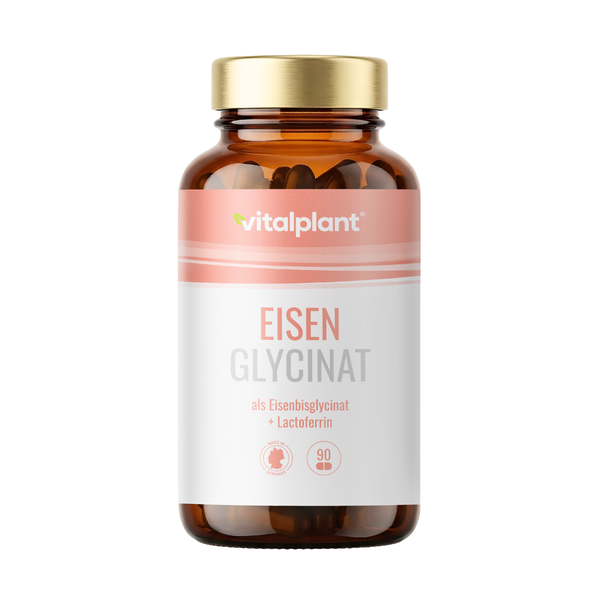
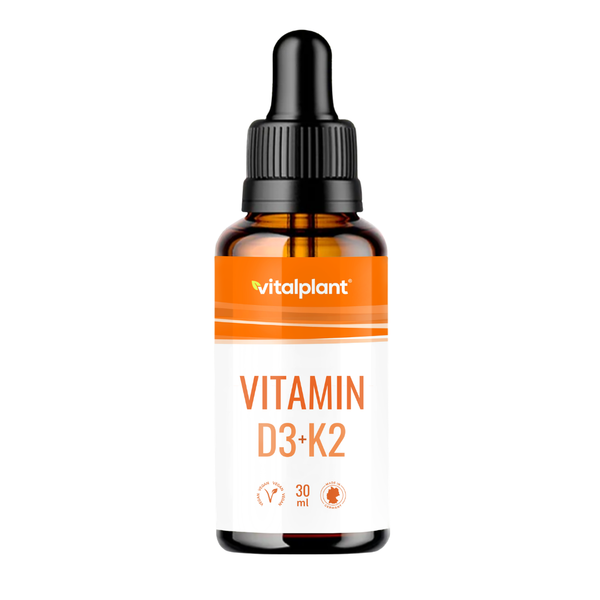
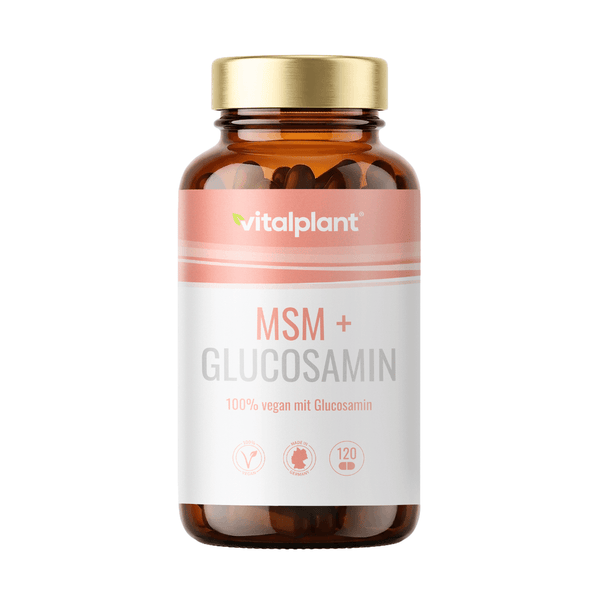
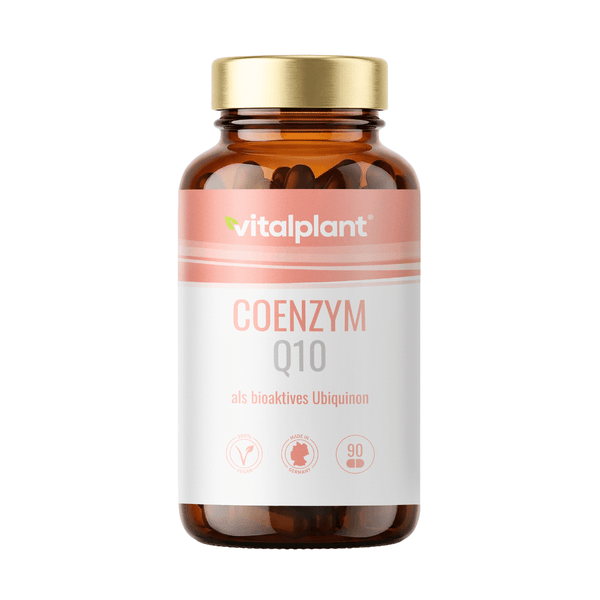
From our magazine: knowledge about vitamins and minerals
Understanding Micronutrients: Forms, Functions, Requirements
What micronutrients are — and why “essential” is meant literally
Nutrition is divided into two classes. Macronutrients — protein, fat, carbohydrates — provide energy and are measured in grams. Micronutrients provide no energy. They are tools: components of enzymes, carriers in metabolic chains, signaling substances, building material. They are measured in milligrams and micrograms.
Vitamin B12 makes these tiny amounts easy to picture: the EU reference amount is 2.5 micrograms per day — 2.5 millionths of a gram. A person's entire yearly requirement fits on the tip of a pin. If this amount is missing long term, blood formation falls out of step and the nervous system is damaged.
“Essential” is not a marketing word here, but a chemical fact: the body cannot produce these substances itself — at least not in sufficient amounts. They must come from outside, every day or at least regularly. Two exceptions prove the rule:
- Vitamin D is produced by the skin itself under UV-B radiation. Between October and March, however, the sun is too low in Germany — during this time, the body's own production practically comes to a halt.
- Niacin (Vitamin B3) can be made by the body to a limited extent from the amino acid tryptophan. About 1 milligram of niacin is formed from 60 milligrams of tryptophan — an elaborate detour that does not cover the full requirement on its own.
The map: 13 vitamins, around 15 minerals
Anyone wanting an overview quickly runs into a sorting problem: vitamins carry letters with gaps, minerals are sometimes called bulk elements, sometimes trace elements. The system behind them is simpler than it looks.
The 13 vitamins
| Group | Vitamins | Common feature |
|---|---|---|
| Fat-soluble | A, D, E, K | Stored in the body, need fat for absorption |
| Water-soluble | C plus B1, B2, B3, B5, B6, B7, B9, B12 | Barely stored, excess is excreted |
The gaps in the B series — B4, B8, B10, B11 are missing — are historical. These substances were at one time considered vitamins, but later lost that status: either the body can make them itself, or they turned out to be compounds already known under a new name. The page B vitamins explains the eight remaining B vitamins individually.
Bulk elements and trace elements
The dividing line is purely quantitative and is around 50 milligrams of daily requirement. It says nothing else — iodine is a trace element and still indispensable for the thyroid.
| Group | Elements | Daily requirement |
|---|---|---|
| Bulk elements | Calcium, magnesium, potassium, sodium, chloride, phosphorus, sulfur | over 50 mg |
| Trace elements | Iron, zinc, iodine, selenium, copper, manganese, chromium, molybdenum, fluoride | under 50 mg |
The page Minerals covers the group as a whole; the most searched individual element has its own page: Magnesium.
What does not belong
For completeness, because it is often mixed up: omega-3 fatty acids, coenzyme Q10, collagen, plant substances such as OPC or curcumin, and amino acids are not vitamins or minerals. They can be useful — Q10 is produced by the body itself, and omega-3 is chemically classed as fat. We carry these products, but classify them correctly elsewhere.
Water-soluble or fat-soluble — the distinction that explains almost everything
This one property answers most everyday questions: why some supplements should be taken with meals, why urine turns yellow, why overdosing is possible with some vitamins but hardly with others.
| Water-soluble (C, all B) | Fat-soluble (A, D, E, K) | |
|---|---|---|
| Storage | Hardly any — exception: B12, which the liver stores for years | Yes, in the liver and fatty tissue; a reserve for weeks to months |
| Absorption | Independent of fat | Needs fat in the meal |
| Intake | Regularly, ideally daily | Fluctuations are balanced by the reserve |
| Excess | Excreted through the kidneys | Builds up — observe maximum amounts |
| When cooking | Leaches into cooking water, sensitive to heat | Largely stable, goes into the frying fat |
Vitamin D drops are therefore dissolved in oil and belong with a meal — ideally one with some fat. A B-complex, by contrast, works regardless; many people take it in the morning. Larger amounts of vitamin C are more effective when spread throughout the day, because absorption in the intestine drops proportionally at high single doses.
Which nutrient for which function? The overview
In everyday life the question is rarely “What does zinc do?”, but rather “What supports my immune system?”. This table therefore reverses the usual direction: it starts from the body function and names each nutrient for which European food law has approved a corresponding claim. The basis is the Union list in Regulation (EU) No 432/2012 — the binding catalog of all health claims that may be used in the EU.
| Body function (wording from the Union list) | Nutrients with approved claim |
|---|---|
| Normal function of the immune system | Vitamin A, C, D, B6, B12, folate · zinc, selenium, iron, copper |
| Reduction of tiredness and fatigue | Vitamin C, B2, B3, B5, B6, B12, folate · iron, magnesium |
| Normal energy metabolism | Vitamin B1, B2, B3, B5, B6, B7, B12, C · magnesium, iron, copper, iodine, manganese, phosphorus, calcium |
| Normal function of the nervous system | Vitamin B1, B2, B3, B6, B7, B12, C · magnesium, potassium, copper, iodine |
| Normal psychological function | Vitamin B1, B3, B6, B7, B12, folate, C · magnesium |
| Protection of cells from oxidative stress | Vitamin C, E, B2 · zinc, selenium, copper, manganese |
| Maintenance of normal bones | Vitamin D, K, C · calcium, magnesium, zinc, manganese, phosphorus |
| Normal muscle function | Vitamin D · calcium, magnesium, potassium |
| Maintenance of normal skin | Vitamin A, B2, B3, B7, C · zinc, iodine |
| Maintenance of normal hair and nails | Vitamin B7 (hair) · zinc, selenium |
| Maintenance of normal vision | Vitamin A, B2 · zinc |
| Normal formation of red blood cells | Vitamin B6, B12, folate · iron, copper |
| Normal homocysteine metabolism | Vitamin B6, B12, folate |
| Normal thyroid function | Iodine, selenium |
| Normal cognitive function | Iodine, zinc, iron |
| Normal collagen formation (skin, bones, cartilage, gums, blood vessels) | Vitamin C |
| Maintenance of normal connective tissue | Copper, manganese |
| Normal cell division | Folate, zinc |
| Normal testosterone levels in the blood | Zinc |
| Normal fertility and reproduction | Zinc · selenium (normal sperm formation) |
| Maintenance of normal blood pressure | Potassium |
| Maintenance of normal blood glucose levels | Chromium |
| Normal absorption and utilization of calcium | Vitamin D |
| Increase in iron absorption | Vitamin C |
A product may only carry such a claim if a daily portion provides at least 15 percent of the EU reference amount of that nutrient. So a supplement with a trace of zinc may not advertise immune support. Conversely, the claims describe maintenance of normal body functions — they are not a promise of healing or improved performance. If you are already adequately supplied, more does not add anything.
The three most common concerns in detail
Immune system. According to the Union list, ten nutrients contribute to the normal function of the immune system — the largest group by far. That is because immune defense is not a single process, but an interaction of barriers (skin, mucous membranes: vitamin A), cell division (folate, zinc), signal transmission, and antioxidant protection (vitamin C, selenium). A single high-dose nutrient cannot replace this chain.
Fatigue. Nine nutrients contribute to reducing tiredness and fatigue. Notable are the clustering around the B vitamins and iron — both are involved in the same place: energy production in the mitochondria and oxygen transport in the blood. Persistent fatigue, however, is a nonspecific sign with many possible causes and should be medically evaluated before turning to supplements.
Bones. Calcium is the building material, but by itself it is not enough: vitamin D contributes to the normal absorption and utilization of calcium, vitamin K to the maintenance of normal bones, as do magnesium and zinc. That is why vitamin D3 in our products is combined with K2 — and a good example of what the next section covers.
What the percentage on the package really says
On every label, the nutrient amount is followed by a percentage, usually abbreviated NRV — Nutrient Reference Value, in German reference amount. This figure is often misunderstood.
The NRV is a standard EU-wide labeling value. It is meant to make products comparable, not to reflect individual needs. Specifically, it means:
- No differentiation. One value applies to all adults — regardless of age, sex, body weight, pregnancy, or athletic activity.
- Partly outdated. The values come from a 2008 directive and have not been updated since. For vitamin D, the NRV is 5 micrograms, while the German Nutrition Society cites 20 micrograms as an estimated value.
- 100 percent is not a goal. The NRV describes an amount that prevents deficiency in most people — not the amount that would be optimal.
What this means in practice is shown by the comparison:
| Nutrient | EU reference amount | A supplement with … | shows on the label |
|---|---|---|---|
| Vitamin D | 5 µg | 20 µg (the DGE estimated value) | 400 % |
| Vitamin B12 | 2.5 µg | 1.25 µg (basic supply) | 50 % |
| Vitamin C | 80 mg | 1,000 mg | 1,250 % |
| Magnesium | 375 mg | 300 mg | 80 % |
The 400 percent for vitamin D looks alarming, but exactly matches what the specialist society recommends. The 50 percent for B12 sounds too low, but for daily basic supply it covers exactly what is intended. The percentage alone therefore says little — you need to know what it refers to.
Compound form instead of milligrams: why chemistry decides
This is where the biggest quality difference between supplements lies — and it appears in the fine print, not on the front.
For minerals
Minerals never occur in nature in pure form, but always as compounds. Which compound it is determines solubility, intestinal absorption, and tolerance:
| Form | Principle | Properties |
|---|---|---|
| Oxide (e.g. magnesium oxide) | Inorganic salt | High proportion of elemental mineral, but poorly water-soluble; may have a laxative effect in larger amounts |
| Citrate (e.g. magnesium citrate) | Bound to citric acid | Well soluble, quick absorption; the standard form for fast availability |
| Bisglycinate (e.g. zinc bisglycinate) | Bound to the amino acid glycine | Absorbed via the amino acid pathway, making it gentle on the stomach and independent of stomach acid |
“500 mg magnesium citrate” is not the same as “500 mg magnesium.” In citrate, around 16 percent of the weight is elemental magnesium — so 500 mg of compound contains about 80 mg of the mineral. Reputable labels list both. If only the compound amount is given without the elemental content, caution is warranted.
For vitamins
- Vitamin B12: methylcobalamin and adenosylcobalamin are the active forms in the body. Cyanocobalamin is more stable and cheaper, but must first be converted.
- Folate: The natural form can be used directly. Synthetic folic acid goes through several conversion steps — and a share of the population carries genetic variants that make this slower.
- Vitamin D: D3 (cholecalciferol) corresponds to the form the skin produces itself and raises blood levels more reliably than D2.
- Vitamin E: The natural form RRR-alpha-tocopherol is utilized much better by the body than the synthetic mixture all-rac-alpha-tocopherol, which contains eight variants, only one of which matches the natural form.
Interaction: synergies and antagonists
Hardly any micronutrient works alone. Some reinforce each other, others compete for the same transport pathways in the intestine. Knowing this helps you get more out of the same amount.
What belongs together
| Combination | Why |
|---|---|
| Vitamin D3 + K2 | Vitamin D contributes to the normal absorption and utilization of calcium, vitamin K to the maintenance of normal bones. The combination is therefore standard in good supplements. |
| Iron + vitamin C | Vitamin C increases iron absorption — an explicitly approved claim. Especially relevant for plant-based iron, which the body uses less efficiently than animal iron. |
| Magnesium + vitamin B6 | Both contribute to the normal function of the nervous system and to normal psychological function and are involved in the same metabolic pathways. |
| Iodine + selenium | Both contribute to normal thyroid function — iodine as a building block of hormones, selenium for the enzymes that convert them. |
| Calcium + vitamin D + K + magnesium | The four nutrients of bone metabolism: building material, absorption, incorporation, structure. |
What gets in the way
| Constellation | What happens | Practical solution |
|---|---|---|
| Zinc ↔ copper | High-dose zinc over months can reduce copper absorption — both use the same transport route | If taking high amounts of zinc long term, watch copper intake; in complexes both are usually balanced |
| Calcium ↔ iron and zinc | Calcium significantly inhibits the absorption of both minerals | Separate in time: iron in the morning on an empty stomach, calcium with dinner |
| Iron ↔ coffee and tea | Polyphenols and tannins bind iron in the intestine; absorption can fall by up to 60 percent | Keep about one hour between coffee/tea and iron intake |
| Minerals ↔ whole grains and legumes | Phytates bind iron, zinc, and calcium | Soaking, sprouting, or sourdough fermentation largely breaks down phytates |
It is enough to keep two things in mind: take iron preferably on its own and on an empty stomach, ideally with a glass of orange juice. Everything else is fine with a meal. Making it more complicated usually means people do not stick with it — and consistency matters more than perfect timing.
Single nutrient or complex?
Both have their place, and the choice is easier when you know the purpose.
| Single nutrient | Complex | |
|---|---|---|
| Useful for | Proven deficiency (blood value available), targeted higher dosing, known intolerance to other ingredients | Nutrient groups that work together (such as the B vitamins), general coverage without a specific suspicion |
| Advantage | Full control over amount and form | Balanced ratios, fewer capsules, lower risk of one-sided imbalance |
| Disadvantage | A high single dose can upset the balance — see zinc and copper | The amount of the individual nutrient is fixed |
A supplement with forty ingredients looks impressive on the label. But if you do the math, most of them provide only a few percent of the reference amount — too little to be allowed to carry any health claim at all. Fewer ingredients in an effective amount are worth more than a long list in trace amounts.
Who has increased needs
For most people, a varied diet covers the need. But there are life situations in which that becomes harder:
| Group | Particularly watch |
|---|---|
| Vegan diet | Vitamin B12 (found practically only in animal foods), iron, zinc, iodine, selenium, vitamin D |
| Pregnancy and trying to conceive | Folate (already before conception), iron, iodine. Vitamin A, however, only after medical advice |
| Age 60+ | Vitamin B12 (absorption via the intrinsic factor declines), vitamin D (the skin produces less), calcium |
| Intense sport | Magnesium and sodium (loss through sweat), iron (especially in endurance sports), B vitamins due to higher energy turnover |
| Little daylight | Vitamin D — with shift work, office life, or in the winter half-year |
| Heavy menstruation, blood donation | Iron |
| Long-term medication | Acid blockers affect B12 and magnesium, metformin affects B12, diuretics affect potassium and magnesium. This should be discussed with a doctor or pharmacist |
| Regular alcohol consumption | B vitamins, above all B1, folate, and magnesium |
Measure instead of guess: which blood values are useful
Before supplementing long term, it is worth looking at actual values. Not every test is equally informative:
| Nutrient | Meaningful value | Note |
|---|---|---|
| Vitamin D | 25-OH vitamin D in serum | The established standard value; useful when measured at the end of winter |
| Iron | Ferritin, together with CRP | Ferritin shows storage. With inflammation it rises regardless of iron status — therefore always assess together with CRP |
| Vitamin B12 | Holo-transcobalamin or methylmalonic acid | Total serum B12 often remains normal even when the active form is already low |
| Magnesium | Whole blood instead of serum | In serum, less than one percent of body magnesium circulates; the value often stays unremarkable for a long time |
| Zinc | Whole blood | For the same reason as with magnesium |
| Folate | Erythrocyte folate | Reflects supply over the last weeks, not the last meal |
Hair mineral analyses are often marketed as an all-round check. Scientifically, their value for the current supply status is considered unproven — hair levels depend, among other things, on washing habits, hair color, and environmental influences. They are not a basis for deciding on supplementation.
How to recognize quality
Seven points that can be checked on the label and in the product information — regardless of the provider:
- Compound form stated. Does it say “magnesium” without an additive, or “magnesium citrate, of which 80 mg magnesium”? Only the second statement can be assessed.
- Batch laboratory testing. Tested for content, heavy metals, germs, and pesticide residues. This is especially important for mineral raw materials and algae products.
- Short ingredient list. Anti-caking agents and fillers are often technically unnecessary. Titanium dioxide as a whitening agent has not been permitted in food in the EU since 2022 anyway.
- Capsule shell. Plant cellulose (HPMC) instead of gelatin — relevant for vegan and vegetarian diets.
- Light protection. Riboflavin, folate, and B12 break down measurably under light. For these nutrients, amber glass is not a design choice but a requirement for stable content over shelf life.
- Traceable origin. Where does the raw material come from, who makes it, is there a brand name with specification?
- Honest dosing. Neither trace amounts that may not be declared, nor maximum amounts without a clear reason.
Plant-based or synthetic — what the difference really is
A lot is claimed here, so let’s go step by step.
Chemically speaking, ascorbic acid is ascorbic acid — whether it comes from acerola cherries or was produced in a fermenter does not change the molecule. Anyone claiming otherwise is overreaching.
The difference lies in the accompanying matrix. An acerola extract provides not only vitamin C but also bioflavonoids and other plant substances from the fruit. Whether these accompanying substances change the effect of the vitamin is not yet scientifically settled; there are no approved health claims for them. What can be said is: you get more than the isolated substance, and the origin is traceable.
For some nutrients there is no meaningful plant source. Vitamin B12 comes neither from plants nor animals, but from microorganisms — even in supplements it is obtained by fermentation. That is not “synthetic” in a negative sense, but the only viable route. We prefer saying that rather than claiming something that is not true.
Taking them in everyday life
| Nutrient | When | Why |
|---|---|---|
| Vitamin D, A, E, K | With a meal containing some fat | Fat-soluble — without fat, absorption drops |
| B vitamins | In the morning, with a meal | Several contribute to normal energy metabolism; easier on the stomach with food |
| Vitamin C | Spread throughout the day | At high single doses, the absorbed share drops |
| Magnesium | In the evening or split | Many people find it more comfortable in the evening; splitting improves tolerance |
| Iron | On an empty stomach, with vitamin C | Calcium, coffee, and tea significantly inhibit absorption |
| Zinc | Separated from calcium and iron | Competition for the same transport pathways |
More important than any detail is consistency. Micronutrients do not work as a one-off dose, but through supply status — and that builds up over weeks. A perfectly timed supplement forgotten three times a week helps less than a simple one taken daily.
Our range: from group to product
All supplements in this category are lab-tested, vegan, free from unnecessary additives, and made in Germany. The subpages go deeper into each group:
| Area | What is there | Products |
|---|---|---|
| Vitamins | All 13 vitamins, fat-soluble and water-soluble, with forms and requirements | Vitamin D3+, D3 + K2 drops, Vitamin C 1000 |
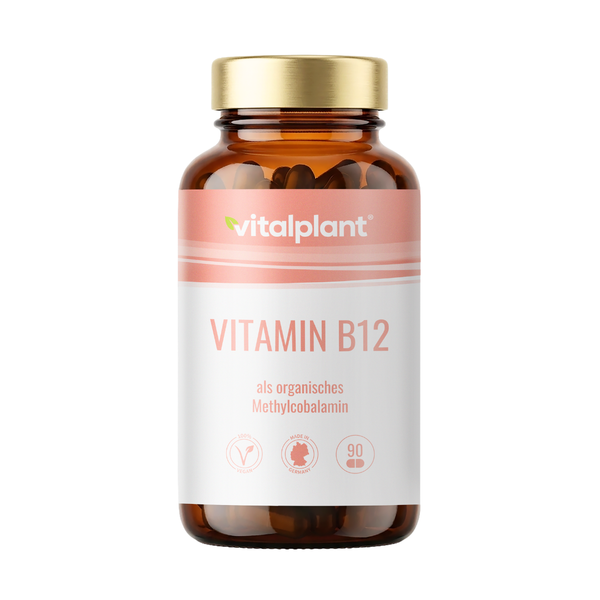
| B vitamins | All eight B vitamins individually, with the full approved claims | B Complex Forte, B Complex Active, Vitamin B12 |
| Minerals | Bulk and trace elements, compound forms, bioavailability | Zinc 25, Zinc + C, Selenium, Iron Glycinate |
| Magnesium | Citrate, bisglycinate, or complex — which form for what | Magnesium Citrate, Magnesium Glycinate, Magnesium Complex |
We also offer, in this category, nutrients that strictly speaking are neither vitamins nor minerals, but are often searched for together: Omega 3 from algae oil, Coenzyme Q10 and MSM & Glucosamine.
Safety: maximum amounts and when to ask a doctor
Dietary supplements are foods, not medicines. Used correctly, they are safe — but there are nutrients where care is needed:
- Vitamin A in pregnancy: high amounts of retinol are considered problematic for the unborn child. Supplement only after medical advice.
- Iron without proven deficiency: the body has no active way to excrete iron. Supplement only when a blood value shows the need.
- Vitamin B6 in high long-term doses can strain the nervous system. The Federal Institute for Risk Assessment recommends a daily maximum amount for supplements.
- Iodine with thyroid disease: both over- and underactivity require medical coordination before iodine is supplemented.
- High-dose folic acid can hide a vitamin B12 deficiency in blood tests while it progresses in the nervous system — a reason to consider both in relation to each other.
Drug interactions are the second point to discuss with a doctor or pharmacist. Vitamin K affects anticoagulant medicines of the coumarin type. Calcium and magnesium can reduce the absorption of certain antibiotics and thyroid hormones — here, even a few hours' separation helps.
Dietary supplements do not replace a varied diet or medical treatment. They close gaps where the diet leaves them open — if symptoms persist, the cause should be clarified before supplementing.
In short
Vitamins and minerals are not a selection you pick from by intuition, but a system with clear rules. The solubility property explains intake and storage. The Union list says exactly which nutrient contributes to which body function. The compound form often decides utilization more than the milligram amount. And a few nutrients in effective amounts are worth more than long lists in traces.
If you know what you are looking for, you will find it on the subpages: Vitamins and B vitamins for one group, Minerals and Magnesium for the other.
