

Few markets are as confusing as the one for sports supplements. Powders, capsules and colourful promises everywhere you look. But what do you really need as an athlete, and what is just clever advertising?
I'm Robert Lazar, and I develop food supplements at Vitalplant in Memmingen. For me, sport and nutrition go hand in hand, which is why one thing matters: a capsule is no substitute for training or a balanced diet. Authorised claims always apply to a specific nutrient, not a miracle cure. I stick to that principle throughout this guide.
In this guide, you'll learn whether athletes need extra nutrients at all, which supplements have proven functions - from protein and creatine to magnesium, vitamins, iron and omega-3 - and how to recognise good quality.
Das Wichtigste in Kürze
- A balanced diet, not supplements, is the foundation of sports nutrition.
- Athletes often have higher energy and nutrient needs, which can usually be met through diet.
- Protein contributes to the growth and maintenance of muscle mass, while creatine increases performance during short bursts of intense explosive exercise (from 3 g daily).
- Magnesium, vitamin C, vitamin D and iron have approved benefits for muscles, cell protection and energy metabolism.
- There are no approved performance-related claims for caffeine, L-carnitine or coenzyme Q10.
Do athletes need supplements at all?
The honest answer: usually less than advertising suggests. The German Nutrition Society points out that many recreational athletes can meet their needs through a balanced diet. Supplements make sense when there is a specific need, not as a blanket solution for everyone.
Increased needs due to training
Intensive training increases your energy and nutrient needs. Minerals are lost through sweat, and your metabolism works at full tilt. You can often meet these increased needs through your diet by eating more mindfully. Targeted supplements only come into play if that isn't enough.
When diet alone isn't enough
There are clear situations where your intake may fall short: very high training volumes, intensive training phases, a vegan diet, periods of dieting or a diagnosed deficiency. In these cases, a targeted supplement can fill the gaps. If you suspect a deficiency, it's best to have it checked by a doctor rather than combining supplements on a hunch.

Sports nutrition: macronutrients and micronutrients
Before we discuss individual capsules, it's worth looking at the bigger picture. Sports nutrition rests on two pillars: macronutrients, which provide energy and building blocks, and micronutrients, which make many bodily functions possible.
Macronutrients: carbohydrates, fats and proteins
Carbohydrates, fats and proteins provide energy and building blocks. Their amounts and balance have a greater impact on your progress than any exotic supplement. Getting your diet right is the most effective step you can take.
Micronutrients: vitamins and minerals
You only need vitamins and minerals in small amounts, but they are essential. Many have authorised claims relating to muscles, nerves and energy metabolism. We'll take a closer look at these shortly.

💡 Good to know: The same basic rule applies to athletes as to everyone else: diet first, supplements second. Keeping a food diary for a few days can often quickly reveal what's really missing.
Protein and amino acids for muscle growth
Protein is the classic muscle-building supplement, and for good reason: proteins contribute to the growth and maintenance of muscle mass. This makes protein the nutrient most clearly linked to muscle.
Protein powder and protein requirements
Many athletes choose protein powder because it's convenient. It isn't essential, though, as protein is also found in foods such as quark, eggs, pulses and meat. A powder is most useful if you struggle to meet your needs through regular meals. What matters is your total protein intake throughout the day.
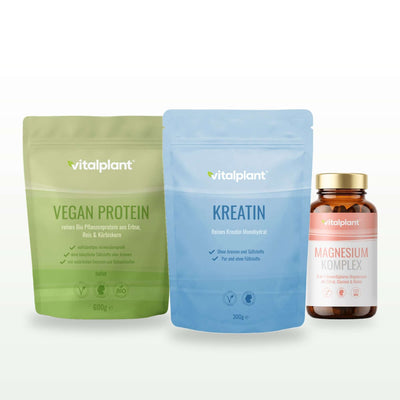
Our Organic Vegan Protein combines organically grown pea, rice and pumpkin seed protein. One serving is 30 g, mixed with about 300 ml of oat or nut milk.

Amino acids and BCAAs
Proteins are made up of amino acids, and some are sold individually, such as BCAAs. There are no authorised health claims for these isolated amino acids. If you eat enough protein, you're already getting the important amino acids.
Creatine: well researched for explosive power
Creatine is one of the most extensively researched supplements and has a clearly authorised claim: creatine increases physical performance in successive bursts of short-term, high-intensity exercise. The beneficial effect is obtained with a daily intake of 3 g of creatine.
An important distinction: this applies to short, intense efforts such as sprints or strength training, not pure endurance sports. The simplest and best-researched form is creatine monohydrate. Don't expect miracles: the effect is real but modest.
Our Creatine Powder is pure creatine monohydrate with no other ingredients. One 5 g scoop provides 4,4 g of creatine, mixed into about 300 ml of water, juice or a protein shake.


Magnesium, calcium and electrolytes
When you exercise, you lose minerals through sweat, especially electrolytes. Two minerals are particularly relevant here.
Magnesium contributes to normal muscle function, electrolyte balance, normal energy metabolism and the reduction of tiredness and fatigue. This makes it the most important individual mineral for many athletes. Calcium is needed for the maintenance of normal bones and also contributes to normal muscle function.
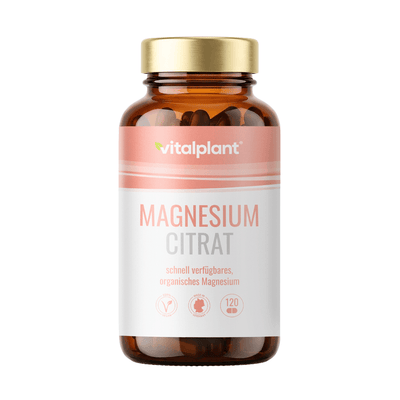
Our Magnesium Citrate provides 123 mg of magnesium per capsule, with two capsules recommended daily. Read more about the different forms and requirements in the Magnesium Guide.
Vitamins for athletes: vitamin C, D and B vitamins
When it comes to vitamins, it's worth looking at a few with clear functions. However, increased needs don't automatically mean more is better.
Vitamin C
Vitamin C contributes to the protection of cells from oxidative stress and to the normal function of the immune system during and after intense physical exercise. Vitamin C also increases iron absorption, which is particularly relevant in endurance sports.
Vitamin D, vitamin E and B vitamins
Vitamin D contributes to the maintenance of normal muscle function and normal bones; many people don't get enough in winter. Vitamin E contributes to the protection of cells from oxidative stress. B vitamins such as B1, B2, B6 and B12 contribute to normal energy metabolism. All eight B vitamins are found in our Vitamin B Complex Forte.
Iron and energy metabolism
Iron is an underrated nutrient, particularly in endurance sports and among female athletes. Iron contributes to normal oxygen transport in the body, normal energy metabolism and the reduction of tiredness and fatigue.
ImportantYou should only take iron supplements if a deficiency has been diagnosed by a doctor. Taking too much can be harmful.
Our Iron Glycinate combines iron bisglycinate with acerola extract as a source of vitamin C and lactoferrin. As the lactoferrin comes from milk, it is not vegan. For a vegan diet, we offer our Vegan Iron Capsules.
Omega-3 fatty acids
Omega-3 fatty acids aren't typical performance supplements, but they are relevant to overall nutrition. The omega-3 fatty acids EPA and DHA contribute to normal heart function; the beneficial effect is obtained with a daily intake of 250 mg of EPA and DHA. People who eat little fish, including those on a vegan diet, can use algae oil. Our Vegan Omega 3 Capsules contain algae oil from Schizochytrium microalgae, plus vitamin D3.
Caffeine, L-carnitine and coenzyme Q10
Now for three supplements that are frequently advertised, but about which I have to be honest: there are no authorised sports-related health claims for them.
Caffeine is a well-known stimulant and is widely used in sport. According to the European Food Safety Authority, up to about 400 mg of caffeine over the course of a day and single doses of up to 200 mg are safe for healthy adults. More isn't better, and caffeine can disrupt sleep if taken in the evening.
L-carnitine is often promoted for fat burning, but there is no corresponding authorised claim. Coenzyme Q10 is a substance produced by the body that is involved in energy production in the mitochondria and is being studied in research. Our Coenzyme Q10 Capsules contain 100 mg of Q10 and vitamin C (PureWay-C®); vitamin C contributes to normal energy metabolism.
Recovery and timing around training
It's not just what you take that matters, but when. Around training and competition, two things are particularly important: recovery and replacing lost fluids and minerals.
After intense exercise, include protein and carbohydrates in your meal. Carbohydrates contribute to the recovery of normal muscle function after highly intensive and long-lasting physical exercise. You should replace fluids and electrolytes such as sodium and magnesium lost through sweat. Supplement use should be based on your individual needs, not a rigid schedule.
Quality: what to look for in supplements
Finally, here are a few criteria for recognising good products, regardless of the brand:
- Appropriate dosage: Nutrients in amounts suited to your needs, not simply as high as possible.
- Clear labelling: Transparent information per serving, without claims to cure conditions.
- Laboratory testing: Purity and content independently tested.
- Competitive sport: Products tested for doping substances, for example through the Cologne List.
- Purity: Few ingredients, with no unnecessary additives.
💡 Good to know: The Cologne List is a public database of food supplements that have been tested for doping substances. If you compete and are subject to testing, you should check it.
Conclusion: needs first, supplements second
Supplements for athletes can be useful, but they are rarely the deciding factor. The foundation remains a balanced diet that meets your increased energy and nutrient needs. Protein, creatine, magnesium, vitamin C, vitamin D and iron have proven, authorised functions and are useful where there is a genuine need. Many advertised products, on the other hand, lack proven benefits. Taking this approach saves money and protects your health.
Related topics
- Magnesium: the complete guide
- Understand your muscles better
- L-citrulline: what this amino acid is
- Staying mobile: what really matters
Food supplement noticeFood supplements are not a substitute for a varied and balanced diet and a healthy lifestyle. Do not exceed the recommended daily intake. Keep out of reach of young children. If you have a medical condition or are taking medication, consult a doctor before use.