Organic Vegan Protein Powder

Vegan Protein Powder combines pea protein, rice protein, pumpkin seed protein, acacia fiber, and bromelain. One serving provides 21.23 g protein and 2.73 g fiber. Protein helps maintain muscle mass. 600 g for 20 servings. Lab-tested from the Memmingen pharmacist's manufactory.

€39,90 €29,90
Tax included.
Shipping calculated at checkout.

In stock - Arrives in 2-3 working days!

size: 600g

Pay securely with PayPal Klarna Visa Mastercard Apple Pay Google Pay American Express

All payment methods

  • PayPalPayPal
  • KlarnaKlarna
  • Visa Visa
  • Mastercard Mastercard
  • Apple Pay Apple Pay
  • Google Pay Google Pay
  • American Express American Express
  • BizumBizum
  • EPS eps
  • iDEAL WeroIdeal
  • MaestroMaestro
  • SatispaySatispay
  • Shop Pay Shop Pay
  • Union PayUnionPay

Payment is SSL encrypted via Shopify Checkout.

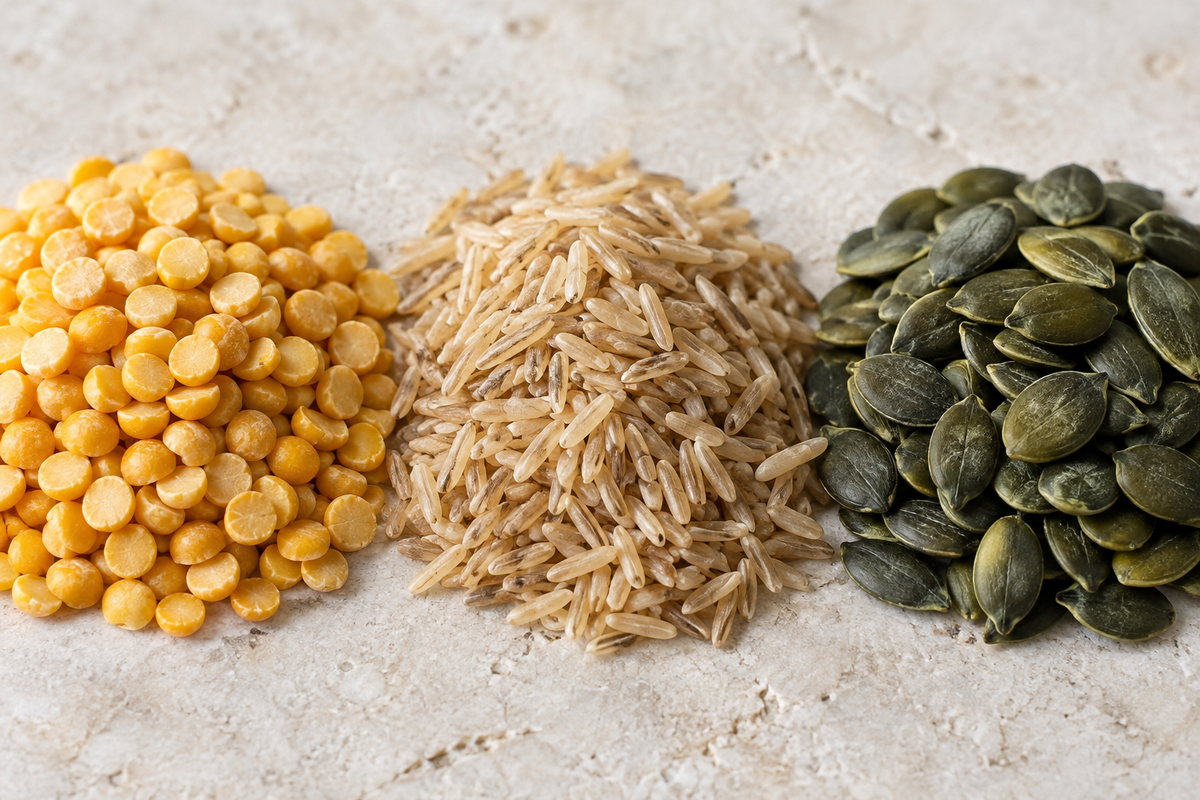
Pea, rice and pumpkin seed in a 50 : 25 : 15 ratio

Bio Vegan Protein from Vitalplant is not a blend with unknown proportions. The three protein sources are declared with their percentages, and the order is not a matter of taste.

Why pea and rice belong together

Pea protein is rich in lysine and comparatively low in the sulfur-containing amino acids methionine and cysteine. Rice protein is the opposite: plenty of methionine, little lysine.

So the two balance each other out where the other source falls short. That is why they form the base of this formula, complemented by pumpkin seed protein, which adds a slightly nutty note.

Acacia fiber is a soluble source of fiber and explains why the powder, despite its high protein concentration, provides 9,1 g of fiber per 100 g. Bromelain is a mixture of enzymes derived from pineapple.

What the nutritional values deliver

With 70,75 g protein per 100 g, around three quarters of the powder’s energy comes from protein. This clearly meets the conditions for the claim high protein content, as well as those for high fiber content. With 0,37 g sugar per 100 g, it is also low in sugar.

Approved claims are linked to this: protein contributes to an increase in muscle mass, protein contributes to the maintenance of muscle mass, and protein contributes to the maintenance of normal bones.

These claims apply to protein as a nutrient, regardless of whether it comes from plants or animals.

Organic raw materials and processing

The protein sources and the acacia fiber come from controlled organic cultivation. The powder contains no flavorings, no sweeteners and no thickeners, which is why it tastes mild and distinctly plant-based. Mixed into oat or nut drink, it comes across as rounder than in water.

Purely plant-based and therefore vegan. Store in a cool, dry place, do not freeze.

Behind Vitalplant is Christian Lazar, licensed pharmacist with over 35 years of professional experience at Stern Apotheke.

Inhalte zuletzt geprüft am

Pea protein isolate (50%), rice protein isolate (25%), pumpkin seed protein (15%), acacia fiber, bromelain (from pineapple).

Nährwerte

header: Nutritional informationper 100 g
Energy1.602,41 kJ / 380,50 kcal
Fat7,78 g
of which saturates0,89 g
Carbohydrates2,37 g
of which sugars0,37 g
Fibre9,10 g
Protein70,75 g
Salt0,78 g

Recommended use: Mix 30 g powder (2 scoops) with 300 ml liquid. We recommend oat or nut milk for a full-bodied taste. Also suitable for making smoothies and for cooking and baking.

Important notes: Food supplements are not a substitute for a balanced and varied diet and lifestyle. The stated recommended daily intake must not be exceeded. Keep out of reach of small children.

Allergens: According to the raw material specification, it contains no allergens requiring declaration in accordance with Annex II of Regulation (EU) No. 1169/2011.

Storage: Store in a cool, dry place, do not freeze, and protect from direct sunlight.

Concentrate or Isolate

Protein powder is made from a yellow field pea in two very different ways. In dry fractionation, the flour is finely milled and separated in an airstream: the lighter protein particles travel farther than the heavier starch granules. This produces a concentrate with about fifty to sixty percent protein.

In the wet process, the protein is dissolved in slightly alkaline water and then selectively precipitated by lowering the pH, because proteins lose solubility at their isoelectric point. It is then washed, neutralized, and spray-dried. This creates isolates with eighty percent and more, as required for a powder with over seventy percent total protein.

How protein quality is assessed

The interplay of pea and rice is based on a familiar evaluation principle. You compare the amino acid pattern of a food with a requirement pattern and factor in how digestible the individual building blocks are. The most important factor is always the most limited amino acid, the so-called limiting amino acid.

In pea protein, that is methionine; in rice protein, lysine. When you combine the two, each one offsets the other's weak spot, and the overall pattern comes closer to the requirement pattern. This principle is not something invented for sports nutrition: lentils with rice, beans with corn, and pea soup with bread are all based on the same relationship worldwide.

Acacia fiber comes from the Sahel

What is called acacia fiber here is gum arabic, the hardened resin of acacia species. It is harvested in the Sahel, especially in Sudan and Chad, by scoring the bark and hand-collecting the exuding secretion a few weeks later. For countless small farmers, it is an important source of income.

As a food additive, the same substance carries the number E 414. Here it appears not as an additive but as a source of fiber, and the reason is its unobtrusiveness: unlike psyllium husk or inulin, it binds hardly any water, does not thicken, and has no taste.

Why plant protein tastes different

The typical pea-like aftertaste has been well studied. It comes mainly from breakdown products of plant fats formed during milling, and from saponins, which provide the slightly bitter finish. Both are part of the legume and cannot be processed away without removing other things as well.

Common products mask this with flavors, sweeteners, and thickeners, which together can easily make up a tenth of the powder. Those who forgo that get more protein per spoonful and a taste that is reminiscent of pea and pumpkin seed. In oat or nut drink, it feels rounder than in water, because the fat in the drink buffers the bitter notes.

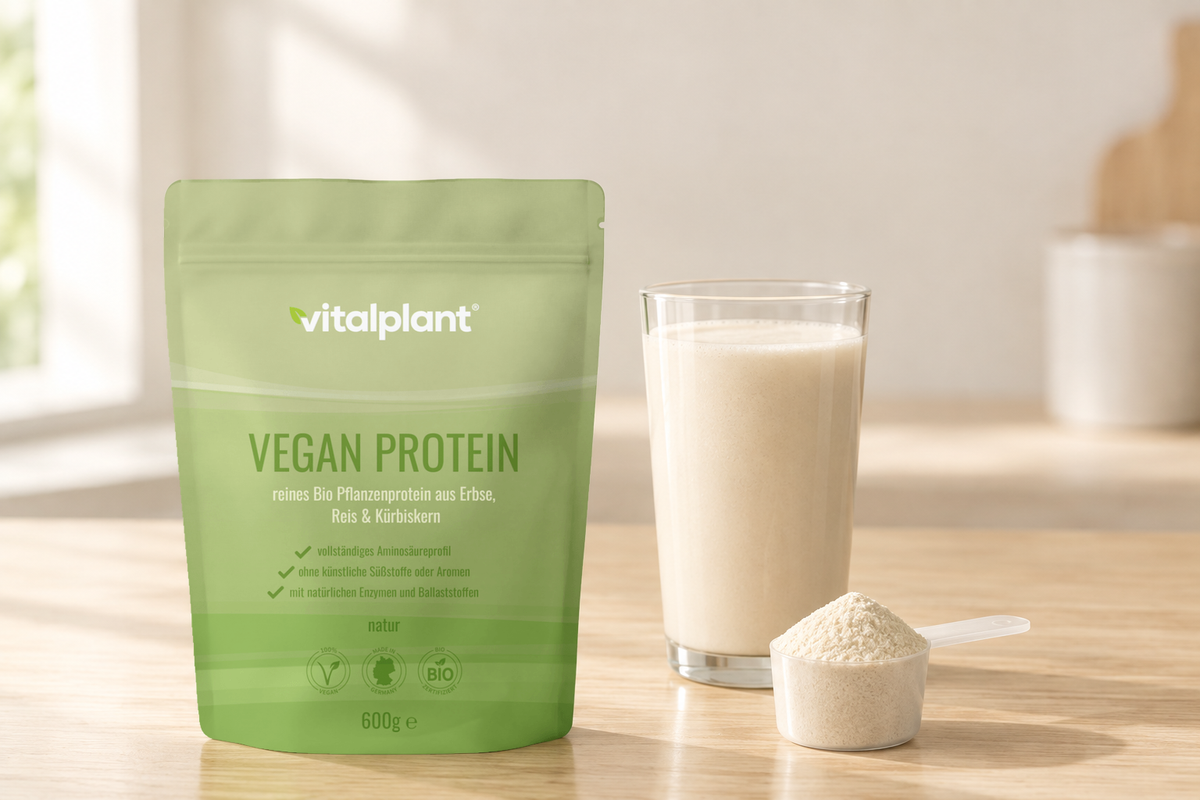
Organic vegan protein powder by Vitalplant in green packaging with pea protein, rice protein, and pumpkin seed protein.
€39,90 €29,90
€39,90 €29,90

Raw material, content and serving

  • Bio Vegan Protein Pulver - Erbse, Reis und Kürbiskern

    Pea, rice and pumpkin seed

  • Bio Vegan Protein Pulver - 70,75 g Protein je 100 g

    70.75 g of protein per 100 g

  • Bio Vegan Protein Pulver - 30 g in 300 ml Flüssigkeit

    30 g in 300 ml of liquid

Product reviews

Aus eigener Herstellung

  • Christian Lazar, Apotheker bei Vitalplant
    Vom Apotheker entwickelt Christian Lazar stellt jede Rezeptur selbst zusammen.
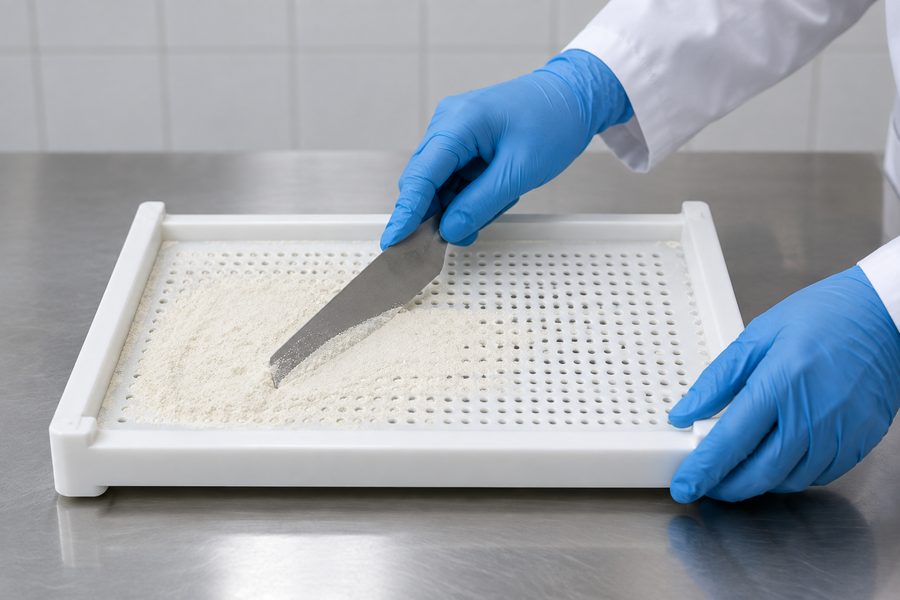
  • Pulver wird von Hand über die Kapselplatte abgestrichen
    Von Hand abgefüllt Kleine Chargen, jede Platte einzeln abgestrichen.
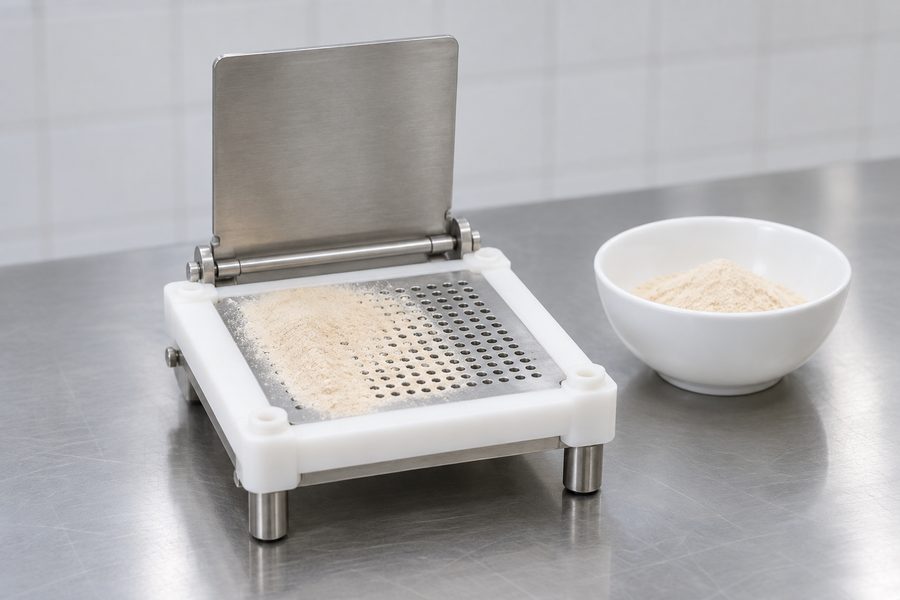
  • Kapselfüllgerät in der Herstellung
    Mechanisch dosiert Gleiche Menge in jeder einzelnen Kapsel.
  • Ohne künstliche ZusätzeKeine künstlichen Süßstoffe, Aromen oder Farbstoffe.
  • Geprüfte RohstoffeUnabhängig laborgeprüft, Analysenzertifikat auf jeder Seite.
  • Lichtgeschützt verpacktBraunglas oder blickdichter Beutel, je nach Produkt.
  • Kurze ZutatenlisteWas nicht hineingehört, steht auch nicht drin.

Frequently Asked Questions

30 g Pulver, also zwei Dosierlöffel, mit 300 ml Flüssigkeit mischen. Wir empfehlen Hafer- oder Nussdrink, weil der Geschmack damit runder ausfällt als mit Wasser. Auch für Smoothies, zum Kochen und zum Backen geeignet.

21.23 g per serving of 30 g. The powder contains 70.75 g of protein per 100 g, meaning around three quarters of the energy comes from protein. It clearly meets the criteria for the claim high protein content, as well as those for high fiber content. With 0.37 g of sugar per 100 g, it is also low in sugar.

Three authorised claims: Protein contributes to an increase in muscle mass. Protein contributes to the maintenance of muscle mass. Protein contributes to the maintenance of normal bones. These claims apply to protein as a nutrient, regardless of whether it comes from plants or animals.

Because they complement each other. Pea protein is rich in lysine and comparatively low in the sulfur-containing amino acids methionine and cysteine. Rice protein is the opposite: lots of methionine, little lysine. That is why they form the base in this recipe, at 50 and 25 percent, supplemented with 15 percent pumpkin seed protein for a slightly nutty note.

Acacia fiber is a soluble source of dietary fiber and explains why the powder contains 9.1 g of fiber per 100 g despite its high protein concentration. Bromelain is an enzyme mixture derived from pineapple. Both are listed with their position in the ingredients list.

Mild and distinctly plant-based. The powder contains no flavors, no sweeteners, and no thickeners, which is why it tastes different from a flavoured product from the sports shelf. Mixed into oat milk or nut milk, the taste is smoother than in water.

Yes, the recommended use expressly mentions cooking and baking. Note that plant proteins bind liquid: anyone replacing part of the flour should plan for a little more liquid. The bromelain it contains loses its enzyme activity when heated, like all enzymes.

The bag contains 600 g and is enough for 20 servings at 30 g per serving. The protein sources and the acacia fiber come from certified organic cultivation. Purely plant-based and therefore vegan. Store in a cool, dry place; do not freeze.

General ratings from our customers