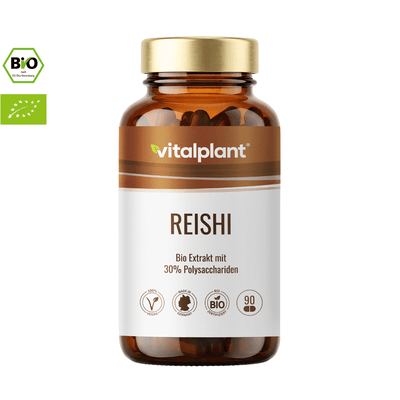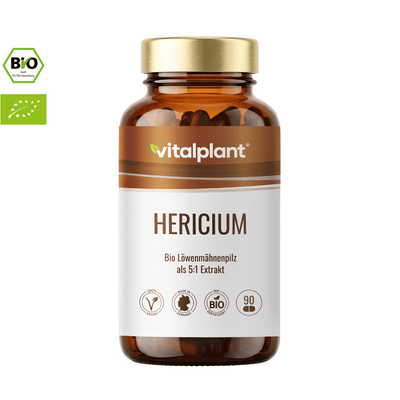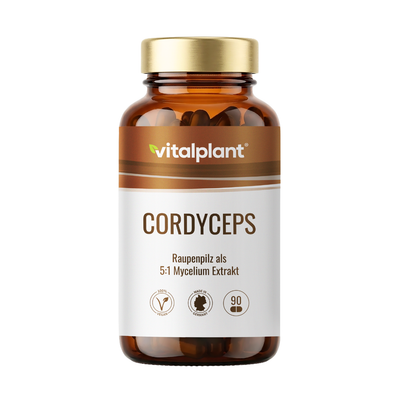


A few years ago, a customer sat down at the counter with my father Christian, who was still running Stern Apotheke in Memmingen at the time. She had brought two jars of functional mushroom supplements, bought online for well under 15 Euro per pack, and asked why she hadn't noticed any effects. My father studied the labels, considered both manufacturers, and gave her an honest answer: The capsules probably contained hardly anything she could notice.
That encounter was one of the reasons Vitalplant exists today. In over 35 years as a pharmacist, my father saw too many poor-quality supplements to look the other way. Functional mushrooms were one of the areas where the gap between trustworthy and questionable products was particularly wide. It still is.
In this guide, I'll show you what really matters when buying functional mushrooms. Not according to marketing claims, but according to the pharmaceutical standards my father and I apply. If you want to make a shortlist after reading, you'll find our single-mushroom supplements and blends together in the functional mushrooms category. But first, the important things: What sets a good product apart from a bad one, and how can you tell from the label?
One thing up front: I'm not going to tell you that any mushroom can heal you or cure a specific illness. That would be legally impermissible and professionally dishonest. What I will give you is the criteria for a good product. What you do with them is up to you.
Das Wichtigste in Kürze
- The form of the raw material matters: choose a fruiting body extract with a stated extraction ratio, such as 10:1, rather than plain mushroom powder or mycelium grown on grain.
- A trustworthy label states the mushroom's Latin name, the part used, the extraction ratio and the beta-glucan content as a percentage.
- Fillers such as magnesium stearate, maltodextrin or microcrystalline cellulose offer no added benefit.
- Mushrooms absorb heavy metals from their growing substrate. Independent laboratory testing is therefore essential.
- Based on our market research, reputable single-mushroom supplements typically cost 20 to 35 euros per month.
Five Common Mistakes When Buying Functional Mushrooms
When I hear from customers at our facility who have bought functional mushrooms before and been disappointed, it's almost always because of the same five mistakes made beforehand. The good news: All five can be avoided if you know what to look for.
Mistake 1: Focusing on Price Instead of Contents
Functional mushroom capsules for 9.90 Euro per jar sound tempting. But if you calculate what it costs to buy high-quality mushroom extract, it becomes clear that at that retail price, the capsules can hardly contain a meaningful amount of active compounds. With functional mushrooms, you can't separate quality from quantity. A little of the good stuff is better than a lot of the bad.
Mistake 2: Confusing Mushroom Powder with Extract
This is the most common mistake and the one with the biggest consequences. Many cheap products advertise pure mushroom powder, sometimes even as a mark of quality. In reality, ground mushroom material is an inferior raw ingredient because our digestive system can barely break down the chitin that encases its compounds. A good extract costs considerably more to produce, but it makes those compounds available in the first place.
💡 Good to know: Chitin is the same material that makes up the outer shell of insects. Our digestive system can barely break it down. That's why extraction is so important for functional mushrooms.
Mistake 3: Unknowingly Buying Mycelium Grown on Grain
Many functional mushroom products are made in the USA. A common growing method there involves cultivating mushroom mycelium on an oat or rice substrate and then grinding everything together. Much of what you buy is therefore grain flour grown through with mushroom mycelium. The label often just says Mushroom Powder, sometimes Full Spectrum. What it doesn't tell you is that it isn't a fruiting body extract.
Mistake 4: Not Checking Active Compound Levels
If a jar of functional mushrooms only lists the word mushroom and a milligram amount, that tells you almost nothing. Two figures matter: the extraction ratio (for example, 10:1) and the beta-glucan content. Without them, the milligram figure means little. 500 mg of mushroom powder is entirely different from 500 mg of 10:1 extract with 25 percent beta-glucan.
Mistake 5: Ignoring Additives
Magnesium stearate, cellulose, rice flour, maltodextrin: These are the most common fillers in functional mushroom capsules. They aren't toxic, but they don't add any value for you either. They're included because they make machine production easier and the capsules cheaper. Quality-focused manufacturers consistently leave them out, even though that makes production more involved. At Vitalplant, that's one of our central decisions.

The Cost of Quality Functional Mushrooms: A Realistic Overview
To give you an idea of the price range for reputable functional mushroom products, here's an overview based on our market research. Prices are rounded monthly costs at the recommended dosage.
Monthly price range |
What you typically get |
Raw ingredient form |
Laboratory testing |
Under 10 Euro |
Discount functional mushrooms, often drugstore own brands |
Mushroom powder or mycelium on substrate |
Rarely transparent |
10 to 20 Euro |
Mid-range products, often with marketing claims |
Mixed, often mycelium + powder blends |
Occasional |
20 to 35 Euro |
Reputable single-mushroom supplements, high-quality fruiting body extracts |
Fruiting body extract, often 10:1 or more concentrated |
Standard, with a batch certificate |
Over 50 Euro |
Premium brands, often with a brand markup |
High-quality extract, sometimes with exaggerated concentration claims |
Common |
The honest assessment: Below 15 Euro per month, it's hard to deliver reputable functional mushroom quality without cutting corners somewhere. Above 50 Euro per month, you're usually paying for the brand name rather than the contents. For most mushrooms, the honest sweet spot is between 20 and 35 Euro a month. That's exactly the range our Vitalplant products fall into.
The Eight Most Important Quality Criteria
From a pharmaceutical perspective, there are several ways to objectively distinguish good functional mushroom products from bad ones. These aren't matters of taste, but measurable criteria. Here are the eight most important, in the order I personally consider them.
Criterion 1: Fruiting Body Extract from Certified Raw Ingredients
This is by far the most important point. A functional mushroom has two main parts: the mycelium (the underground network) and the fruiting body (the actual mushroom we see above ground). Most traditionally valued compounds are concentrated in the fruiting body. When you buy functional mushroom capsules, the label should list fruiting body extract as the source material, not mycelium or full-spectrum mushroom.
We source our mushroom extracts from certified growing regions that we know and have personally approved. For us, organic certification is only the minimum requirement, not a promise of quality. We also check the specific growing conditions, the substrate (always plant-based, never grain), and the extraction method. A good organically grown Reishi extract can reach beta-glucan levels of over 25 percent when processed correctly. In cheap mushroom powder, you'll often find levels below 5 percent.

Criterion 2: No Unnecessary Additives
Take a look at the ingredient list on the capsules in your cupboard. Many supplements contain a whole range of substances that have nothing to do with the active ingredient: magnesium stearate, microcrystalline cellulose, maltodextrin, silicon dioxide, sometimes colourings. These substances aren't toxic, but they don't add any value for you either.
Why We Reject Magnesium Stearate
Magnesium stearate is an anti-caking agent and lubricant. It prevents powder from clumping in the capsule machine and allows the machine to run faster. From a production standpoint, it's a convenient solution. From a pharmaceutical standpoint, it's a substance that has no place in a capsule if you can avoid it. During his time as a pharmacist, my father repeatedly saw sensitive customers experience stomach reactions to magnesium stearate. That's why we deliberately take the harder route at our facility, run machines more slowly, accept higher production costs, and avoid this anti-caking agent entirely.
The same applies to cellulose fillers. If a capsule package lists 500 mg of mushroom and 200 mg of microcrystalline cellulose, less than three quarters of the capsule is what you're paying for. We don't bulk out our capsules. When our label says 500 mg of mushroom extract, that's what's inside: 500 mg of mushroom extract and nothing else.
What We Consistently Leave Out
- No magnesium stearate
- No maltodextrin
- No microcrystalline cellulose as a filler
- No colourings or flavourings
- No artificial preservatives
- No animal gelatin capsule shells (our capsules are HPMC, which is plant-based)
Criterion 3: Independently Laboratory-Tested Quality
Mushrooms are accumulators. They absorb everything contained in their substrate. That's biologically fascinating, but it poses a challenge for product quality. Heavy metals, pesticides, moulds: Any of these can end up in a poor-quality batch. Independent laboratory testing is therefore not a luxury for functional mushrooms, but a necessity.
We don't have our own laboratory. We have our mushroom extracts tested by the independent BAV Institut in Offenburg. They are tested for the heavy metals lead, cadmium and mercury against the maximum levels in EU Contaminants Regulation (EU) 2023/915.
💡 Good to know: Fixed maximum levels for lead, cadmium and mercury in food supplements apply across the EU. They are set out in Regulation (EU) 2023/915, which also forms the basis for a test report.
If you can't find out whether and how a functional mushroom supplier tests its products in a laboratory, that's a warning sign. High-quality products are transparent about their quality assurance.

Criterion 4: Transparent Ingredient Information
A good functional mushroom package should list the following: the exact mushroom species by its Latin name, the part used (fruiting body or mycelium), the extraction ratio (for example, 10:1), and the beta-glucan content as a percentage. Ideally, it should also state the extraction solvent (water, ethanol-water mixture, dual extraction).
What you shouldn't find: vague claims such as highly concentrated without a figure, premium mushroom blend without a breakdown of the individual proportions, or full spectrum without an explanation. Full spectrum sounds like a mark of quality, but it's often a way of saying that the entire substrate, including mycelium and grain, has been processed together.
What to look for on the label |
What makes a trustworthy declaration |
Part used |
A clear statement: fruiting body, mycelium, or both. Avoid products without this information. |
Extraction ratio |
A specific figure, such as 10:1. This means 10 kg of mushrooms yield 1 kg of extract. |
Beta-glucan content |
A percentage for each batch, ideally over 20 percent for pure fruiting body extract. |
Polysaccharides |
Be careful: Polysaccharides alone tell you little, since starch from carrier substrates also counts. |
Ingredient amount per capsule |
In milligrams, clearly attributed to the extract, not the total capsule contents. |
Latin mushroom name |
A precise botanical identification, such as Ganoderma lucidum rather than just Reishi. |
💡 Good to know: Lion's mane is Hericium erinaceus, Reishi is Ganoderma lucidum, and Chaga is Inonotus obliquus. Only the Latin name makes it clear exactly which mushroom is in the capsule.
Criterion 5: Traceable Origin and Manufacturer
Who's behind the product? This question is especially relevant for functional mushrooms because the market is full of white-label suppliers who buy in Asia, relabel in Germany and sell under changing brand names. That's not inherently bad, but it makes it difficult to establish accountability if a batch raises concerns.
Vitalplant is a family-run manufacturer based in Memmingen. My father Christian worked as a pharmacist for over 35 years before we founded the business together. Today I run the operations, while my father remains involved in product development. You'll find our address in the legal notice, and anyone can contact us personally. This kind of accessibility has become genuinely rare in the supplement industry.
What you can check before buying: Does the legal notice name a specific facility or manufacturer? Are there real people behind the company, or does the supplier hide behind a brand-only website with no names or faces? Who stands behind the quality, and how long has the company been around?
Criterion 6: Organic Certification as a Minimum Standard
Organic certification matters for functional mushrooms for several reasons. First, conventional growing uses pesticides that can accumulate in the mushroom. Second, organic certification also regulates the substrate and growing conditions. Third, most reputable functional mushroom growing regions now follow organic standards anyway.
With the exception of Cordyceps, our mushroom extracts carry the EU organic logo and the German state organic seal. The organic inspection body is named in the legal notice, and the certificates can be traced. But we don't consider organic certification the end goal, just the starting requirement. Beyond organic certification, the processing steps matter: extraction method, drying, storage and encapsulation. All of these have to be right.
Criterion 7: A Meaningful Recommended Daily Dose
A functional mushroom capsule with 100 mg of extract may sound highly concentrated, but for most mushrooms it's simply too little to reach a meaningful dose. Typical daily amounts in traditional use range from 500 mg to several grams per day, depending on the mushroom and extract quality. If you have to swallow six or more capsules a day to reach that amount, it isn't practical for everyday use.
We size our capsules so that the typical recommended daily dose can be reached with 1 to 3 capsules. For some of our products, that means capsules with 500 mg of extract; for more concentrated mushrooms, it's less. Check the recommended daily dose and calculate how much extract you actually take per day. Only then do you have a comparable figure.
Criterion 8: Packaging and Shipping
Functional mushroom extracts are sensitive to light and moisture. Good packaging is therefore not cosmetic, but a matter of quality assurance. We use amber glass containers with screw-top lids and built-in protection against loss of aroma and moisture. Plastic jars aren't inherently bad, but they're the poorer choice if the product will be stored for several months.
When shipping, we make sure parcels reach you quickly and safely. Shipping is free on orders of 60 Euro or more; below that, a modest flat shipping fee applies. Delivery within Germany usually takes 2 to 3 working days.
Label Check: A Specific Example
To make all of this less abstract, here's a direct comparison. Imagine you're looking at two functional mushroom products in an online shop or drugstore. Both advertise Reishi, and both cost about the same per jar. What sets them apart?
Label A (Caution) |
Label B (Trustworthy) |
Ingredients: Reishi powder, capsule shell (hydroxypropyl methylcellulose), anti-caking agent: magnesium salts of fatty acids |
Ingredients: Reishi extract 10:1 from the fruiting body (Ganoderma lucidum, organically grown), plant-based cellulose capsule shell (HPMC) |
Per capsule: 500 mg Reishi powder |
Per capsule: 500 mg Reishi extract with over 25 percent beta-glucan, including at least 125 mg beta-glucan according to analysis |
No extraction ratio stated, no beta-glucan figure |
Extraction ratio 10:1, beta-glucan content documented for each batch |
Contains magnesium stearate |
No magnesium stearate, fillers or colourings |
Origin: not stated |
Made at the Memmingen facility, independently laboratory-tested for heavy metals |
Manufacturer: importer, white-label |
Manufacturer: Family-run facility with an address, named people and a pharmacy background |
When you put the two labels side by side, the difference is obvious. Label A isn't inherently harmful to your health, but it isn't a product that delivers the compounds in a usable form either. Label B is considerably more expensive to produce, transparent in its declarations, and consistent in its choice of raw ingredients.
Where Is the Best Place to Buy Functional Mushrooms?
Today, functional mushrooms are typically sold in three places: pharmacies, drugstores and online shops. Each has advantages and disadvantages worth knowing before you decide.
Pharmacy
A pharmacy is traditionally a place where you can get advice. My father spent his pharmacy career advising customers honestly, even when that sometimes meant not selling a product. That quality of advice has real value. The downside: Pharmacy selections are often limited, and not every pharmacy stocks functional mushrooms. Prices also tend to be in the upper third because the pharmacy needs its margin.
Drugstore
Drugstores offer attractive prices and are easy to access. However, based on our market research, the quality of own-brand functional mushroom products at major drugstore chains is usually at the lower end. Mushroom powder instead of extract, magnesium stearate as an anti-caking agent, no transparent ingredient figures. You can find good products in a drugstore if you check the label very carefully, but you should know that average quality isn't high.
Online Shop
Online shops offer the widest selection and the most detailed product information. That's their strength if you want to do your research beforehand. Look at product pages, check the label information, read the About Us page, and see who's behind the company. Reputable suppliers will provide addresses, names and background information. With questionable operators, much remains vague. We've deliberately made our About Us page personal and specific so you can get a sense of who you're dealing with.

How We Produce at Vitalplant
Finally, here's a brief summary of what sets us apart as a family-run manufacturer in Memmingen. Not because this is an advertisement, but because these points relate directly to the criteria I've described above. If another supplier meets all these criteria, they're a good supplier too. We're simply giving you the tools to assess them.
What sets us apart |
What that means in practice |
Natural food supplements without unnecessary additives |
The ingredient list contains only mushroom extract and the HPMC capsule shell, nothing else. No anti-caking agents, fillers or colourings. |
Family-run manufacturer in Memmingen |
We're not a corporation or an importer. Christian and I personally know every batch, every delivery and every machine at our facility. |
The best raw ingredients from nature |
Our mushroom extracts come from certified organic cultivation (except Cordyceps), always as fruiting body extract, typically at ratios of 10:1 or more concentrated. |
No unnecessary additives |
In particular, no magnesium stearate. We accept a more involved production process because we consider magnesium stearate unnecessary in supplement capsules. |
Independently laboratory-tested |
The independent BAV Institut in Offenburg tests our mushroom extracts for the heavy metals lead, cadmium and mercury. |
Over 35 years of pharmacy experience |
My father Christian was a licensed pharmacist for over 35 years. That pharmaceutical mindset shapes our entire operation and our product decisions. |
Free shipping from 60 Euro |
Within Germany, your order usually reaches you within 2 to 3 working days, with free shipping on orders of 60 Euro or more. |
If you'd like to take a closer look at our functional mushrooms now, you'll find them together in the functional mushrooms category. If you're unsure about a mushroom or blend, feel free to write to us. A real person answers enquiries personally, usually within one working day.

Quick Buying Checklist
If you're looking at a functional mushroom product and want to quickly decide whether it deserves a closer look, go through these seven questions. If the answer to all of them is a clear yes, there's a good chance it's a quality product.
- Does the label state fruiting body extract with an extraction ratio (for example, 10:1)?
- Is the beta-glucan content given as a percentage?
- Is the ingredient list free from anti-caking agents, fillers and magnesium stearate?
- Is the origin of the raw ingredient traceable?
- Is there organic certification with an inspection body number?
- Is the manufacturer identifiable, with an address, named people and background information?
- Is the monthly price within a realistic range (typically 20 to 35 Euro per mushroom)?
If you hesitate over any of these questions, put the product back or take a closer look. Functional mushrooms aren't something you should compromise on quality for: The price difference between poor and good products isn't large, but the difference in the product is enormous.
Conclusion: Buying Functional Mushrooms Is a Matter of Trust
Functional mushrooms are an area where, as a consumer, you're well advised to read labels more closely than you would for most other food supplements. Quality differences are enormous, while price differences between good and bad products are comparatively small, making the market difficult to navigate.
The criteria you've taken from this guide should help you make a better shortlist, regardless of the supplier. Look for fruiting body extracts with a clear extraction ratio and stated beta-glucan levels. Look for products free from magnesium stearate and other fillers. Look for independent laboratory testing and a manufacturer you can contact.
If, after all that, you choose Vitalplant, we'll naturally be delighted. If you choose another supplier that meets all these criteria, that's fine too. What matters is that you don't fall into the trap of cheap discount functional mushrooms, where you get neither quality nor reliability. Feel free to browse our functional mushroom overview, take your time comparing, and if you have questions, we're here to help.
Food Supplement NoticeFood supplements are not a substitute for a balanced and varied diet and a healthy lifestyle. Do not exceed the recommended daily intake. Functional mushrooms are foods, not medicines. They are not intended to treat diseases. This article does not replace medical advice. If you have health concerns, existing medical conditions or are taking medication, please consult a doctor or pharmacist before use. Keep out of reach of young children.