Collagen Powder

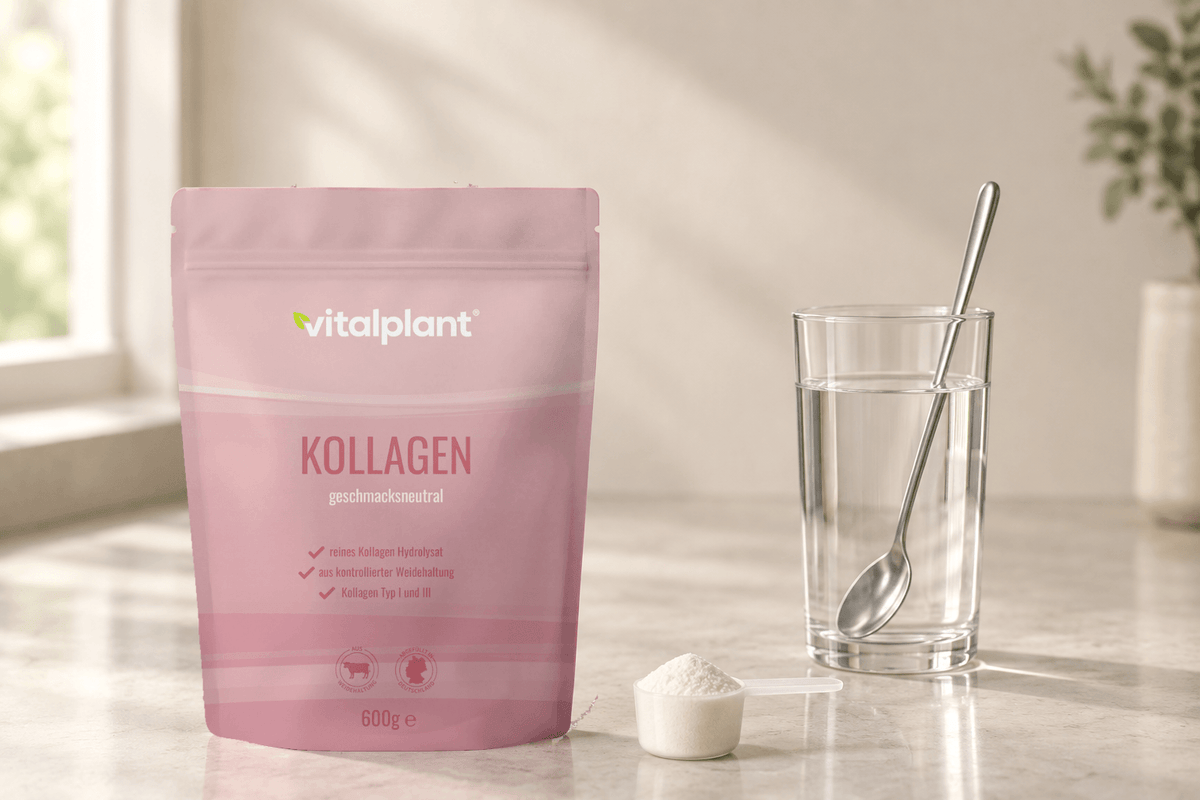
Collagen powder contains hydrolyzed bovine collagen for stirring into water, coffee, juice, or other liquids. One serving provides 10 g powder with 9.2 g protein. 600 g is enough for 60 servings. Lab-tested from the pharmacy manufactory in Memmingen.

€29,90

€49,83 kg
Tax included.
Shipping calculated at checkout.

Out of stock

Size: 600g

Pay securely with PayPal Klarna Visa Mastercard Apple Pay Google Pay American Express

All payment methods

  • PayPalPayPal
  • KlarnaKlarna
  • Visa Visa
  • Mastercard Mastercard
  • Apple Pay Apple Pay
  • Google Pay Google Pay
  • American Express American Express
  • BizumBizum
  • EPS eps
  • iDEAL WeroIdeal
  • MaestroMaestro
  • SatispaySatispay
  • Shop Pay Shop Pay
  • Union PayUnionPay

Payment is SSL encrypted via Shopify Checkout.

One ingredient, ten grams per serving

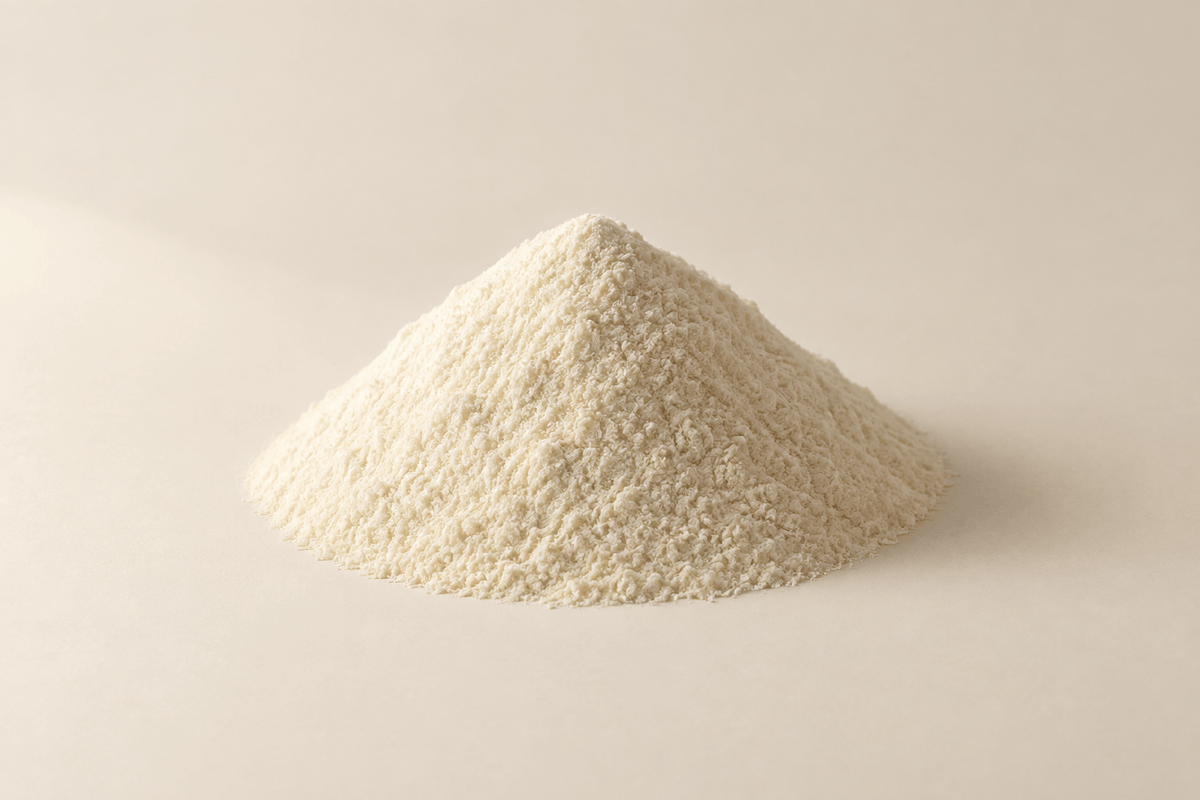
Vitalplant collagen powder is made from hydrolyzed bovine collagen. No flavors, no sweeteners, no fillers. The ingredients list has exactly one item.

What hydrolysis means for collagen

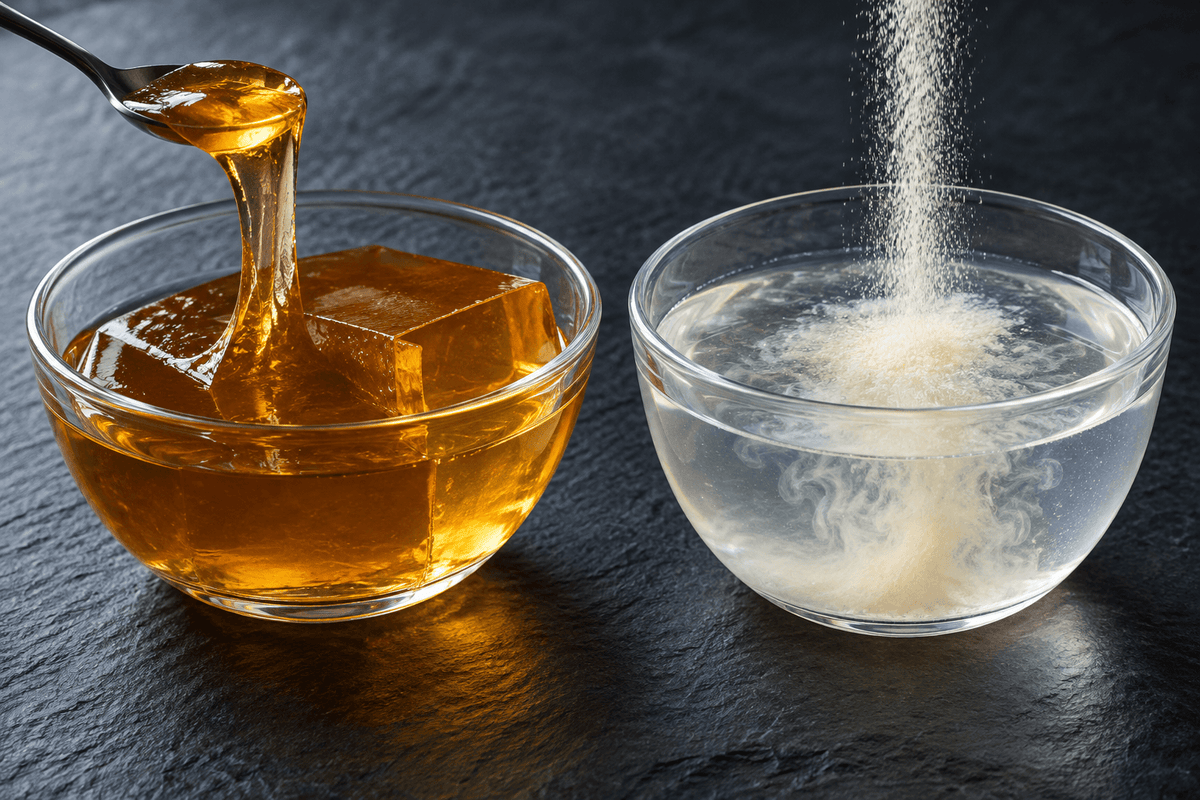
In its original state, collagen exists as a triple helix: three protein strands wound around each other. In this form, it is tough and hardly soluble in water. Anyone who has ever let beef broth cool knows the result as a firm jelly.

Enzymatic hydrolysis breaks this structure down into short peptides. The gelling raw material becomes a powder that dissolves in both cold and hot water and does not swell up afterward.

The amino acid profile is characteristic. Around one third of the collagen molecule consists of glycine, the smallest of all amino acids. It also contains proline and hydroxyproline. Hydroxyproline occurs in significant amounts almost exclusively in collagen and is therefore used in food analysis as evidence of it.

Collagen, Move, or Shine

We carry three collagen products side by side. This one is the quantity-focused option: ten grams per serving, twice as much as Kollagen Move and Kollagen Shine, but without a defined peptide fraction.

Move and Shine instead rely on branded raw materials with a defined manufacturing process, but provide five grams per serving. Quantity on one side, a specified raw material on the other: that is the difference.

Origin and processing

The powder is flavor-neutral and can also be stirred into hot coffee without changing its aroma. As a raw material of animal origin, collagen is neither vegan nor vegetarian.

It is filled into a resealable stand-up pouch. Store in a cool, dry place, do not freeze, and protect from direct sunlight.

Behind Vitalplant is Christian Lazar, a licensed pharmacist with over 35 years of professional experience at the Stern Pharmacy.

Inhalte zuletzt geprüft am

Hydrolyzed bovine collagen

Nährwerte

header: Nutritional informationper 100 g
Energy1.540 kJ / 368 kcal
Fat0 g
of which saturated fatty acids0 g
Carbohydrates0 g
of which sugars0 g
Protein92 g
Salt0,71 g

Recommended use: Stir 10 g (1 heaped measuring spoon) into 250 ml of liquid of your choice daily, e.g. water, coffee, or juice, and consume.

Important notes: Food supplements are not a substitute for a balanced and varied diet and lifestyle. The stated recommended daily intake must not be exceeded. Keep out of reach of small children.

Allergens: According to the raw material specification, it contains no allergens requiring declaration in accordance with Annex II of Regulation (EU) No. 1169/2011.

Storage: Store in a cool, dry place, do not freeze, and protect from direct sunlight.

Gelatin and collagen peptides are related

Both are made from the same raw material and using the same process, just taken to different degrees. When native collagen is partially broken down, gelatin is formed: it dissolves in hot water and gels as it cools.

If the breakdown is then continued enzymatically, the chains become so short that they can no longer form a network. The result no longer gels and also dissolves in cold water. Collagen peptides are, put simply, gelatin taken one step further.

Where the raw material comes from

Bovine collagen is obtained from hides and bones, i.e. from material that is already produced in the meat industry and would otherwise hardly be used. The hide is soaked for weeks in lime milk, washed, and neutralized before the collagen is extracted.

Only then does enzymatic hydrolysis follow, after which filtration, decolorization, and spray drying are carried out. In this way, a tough, strongly odorous starting material is turned into a white, odorless, and tasteless powder.

Types I, II and III

Collagen is not a single substance, but a family of around twenty-eight described types. Three of them play the main role in terms of quantity: type I in skin, bones, and tendons, type II in cartilage, and type III in blood vessels and organs, usually alongside type I.

Material from bovine hide consists mainly of type I with a proportion of type III. Type II products, by contrast, usually come from chicken sternum cartilage and are often not hydrolyzed, but used in native form, in correspondingly smaller amounts. So when a product names a type, it also says something about its origin.

Beef, fish, and the question of vegan collagen

Alongside beef, fish is the second common source, obtained from skin and scales. Marine collagen contains less hydroxyproline, which is why it breaks down at lower temperatures than that from land animals. Other factors are usually decisive when choosing: fish for people who do not eat beef, beef for people with a fish allergy.

There is no vegan collagen, though. Collagen is an animal structural protein and does not occur in the plant kingdom. Products offered under this name do not contain collagen, but rather mixtures of other nutrients. That is not a judgment, but a matter of terminology.

Collagen - 600g bag with flavorless collagen hydrolysate from sustainable pasture-raised farming

€29,90

€49,83 kg

€29,90

€49,83 kg

What's inside the bag

  • Eine Zutat, sonst nichts, Kollagen Pulver

    One ingredient, nothing else

  • Hydrolysiert zu Peptiden, Kollagen Pulver

    Hydrolyzed into peptides

  • Kollagen Pulver - 10 g in 250 ml einrühren

    Stir 10 g into 250 ml

Product reviews

Aus eigener Herstellung

  • Christian Lazar, Apotheker bei Vitalplant
    Vom Apotheker entwickelt Christian Lazar stellt jede Rezeptur selbst zusammen.
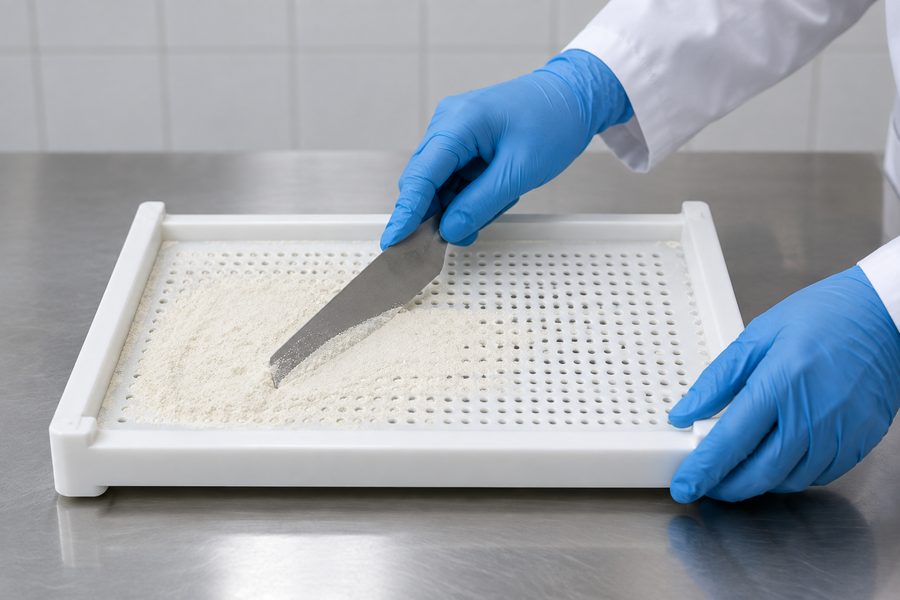
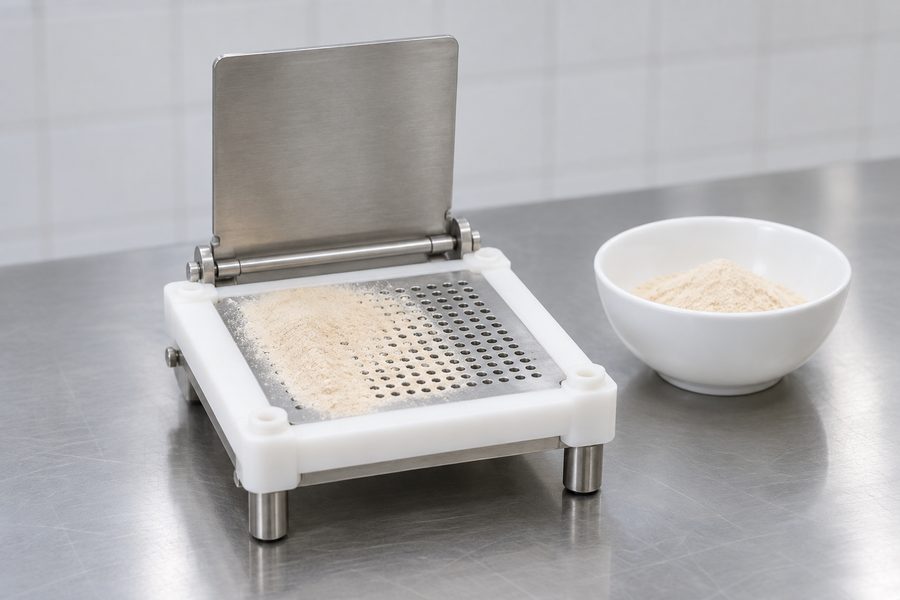
  • Pulver wird von Hand über die Kapselplatte abgestrichen
    Von Hand abgefüllt Kleine Chargen, jede Platte einzeln abgestrichen.
  • Kapselfüllgerät in der Herstellung
    Mechanisch dosiert Gleiche Menge in jeder einzelnen Kapsel.
  • Ohne künstliche ZusätzeKeine künstlichen Süßstoffe, Aromen oder Farbstoffe.
  • Geprüfte RohstoffeUnabhängig laborgeprüft, Analysenzertifikat auf jeder Seite.
  • Lichtgeschützt verpacktBraunglas oder blickdichter Beutel, je nach Produkt.
  • Kurze ZutatenlisteWas nicht hineingehört, steht auch nicht drin.

Frequently Asked Questions

Stir 10 g daily, i.e. one heaped measuring spoon, into 250 ml of your preferred liquid. Water, coffee, tea, or juice all work equally well. A set time helps more than the time itself.

Ja, und ohne das Aroma zu verändern. Genau das ist der Vorteil der Hydrolyse: Unbehandeltes Kollagen geliert und würde im Kaffee Fäden ziehen, hydrolysiertes löst sich in kaltem wie in heißem Wasser rückstandsfrei auf und quillt nicht nach. Wer schon einmal Rinderbrühe hat kalt werden lassen, kennt den Unterschied.

Kollagen liegt im Ausgangszustand als Tripelhelix vor, also als drei umeinander gewundene Proteinstränge. In dieser Form ist es zäh und in Wasser kaum löslich. Die enzymatische Hydrolyse zerlegt diese Struktur in kurze Peptide. Aus dem gelierenden Rohstoff wird dabei ein feines, gut lösliches Pulver.

Dieses Produkt ist das mengenorientierte: 10 g je Portion, doppelt so viel wie bei Move und Shine, dafür ohne festgelegte Peptidfraktion. Kollagen Move enthält 100 Prozent Fortigel, Kollagen Shine 100 Prozent VERISOL, beides eingetragene Markenrohstoffe mit definiertem Herstellungsverfahren, dafür mit 5 g je Portion. Menge auf der einen Seite, ein spezifizierter Rohstoff auf der anderen.

Neither. Collagen is a structural protein of animal origin, in this case from cattle. There is no plant-based collagen: plants simply do not produce this type of protein. Products that advertise vegan collagen usually contain nutrients involved in collagen metabolism, but no collagen.

About a third of the molecule consists of glycine, the smallest of all amino acids. In addition, there is proline and hydroxyproline. Hydroxyproline is particularly revealing: in significant amounts, it occurs almost exclusively in collagen and is therefore used in food analysis as proof of its presence.

It is flavor-neutral, so it blends discreetly into coffee or smoothies. The ingredients list has exactly one item: hydrolyzed bovine collagen. No flavors, no sweeteners, no fillers.

The pouch contains 600 g and, at 10 g per day, lasts for 60 servings, or two months. Packed in a resealable stand-up pouch. Store in a cool, dry place, do not freeze, and reseal well after each use.

General ratings from our customers