Organic Vital Greens Powder

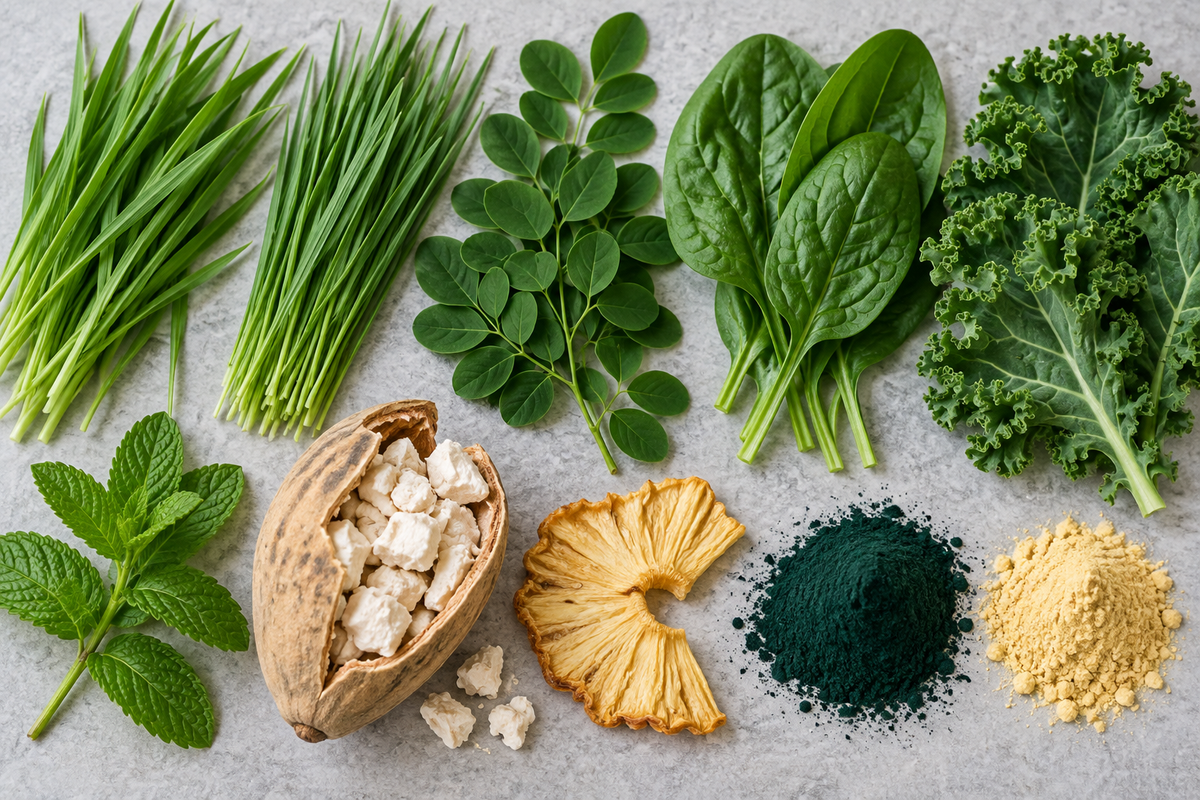
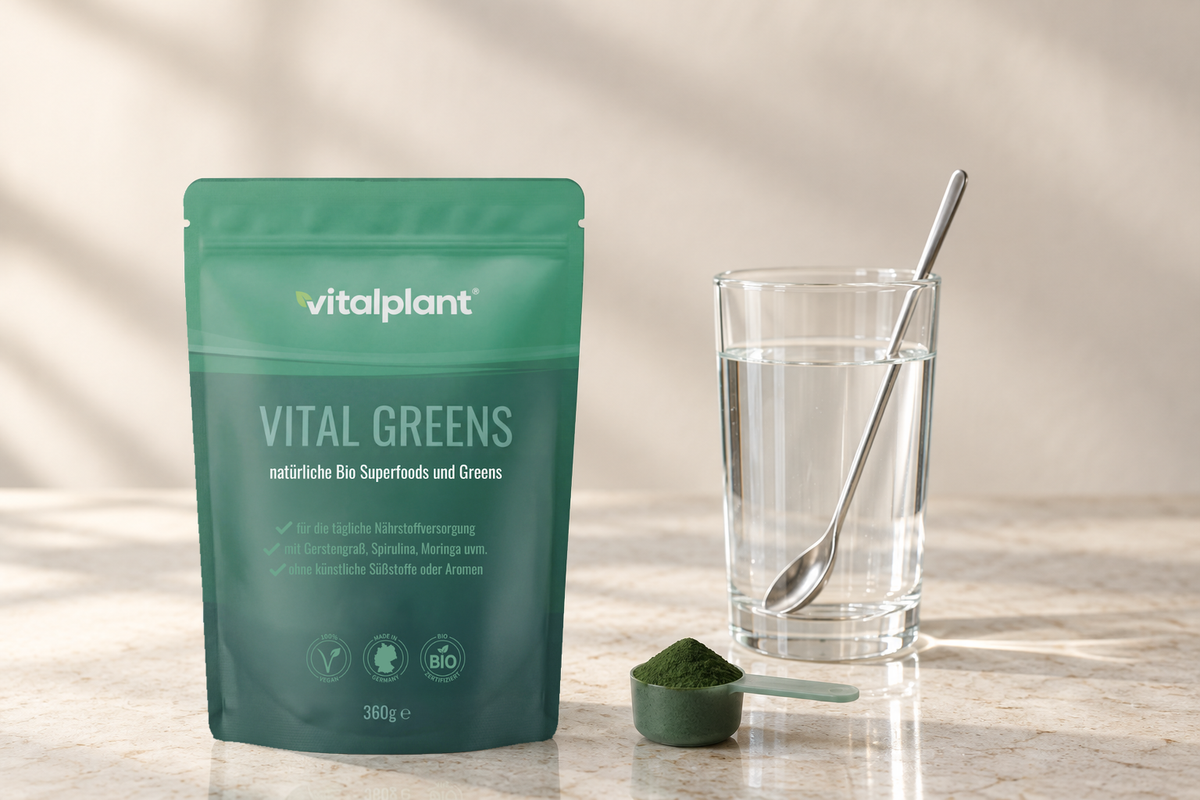
Bio Vital Greens Powder combines baobab, barley grass, wheat grass, spirulina, lucuma, spinach, moringa, kale, and peppermint leaf from organic cultivation. 12 g per serving to stir into water or juice. 360 g for 30 servings. Lab-tested from the Memmingen pharmacist manufacturer.

€34,90

Tax included.
Shipping calculated at checkout.

In stock - Arrives in 2-3 working days!

Size: 360g

Pay securely with PayPal Klarna Visa Mastercard Apple Pay Google Pay American Express

All payment methods

  • PayPalPayPal
  • KlarnaKlarna
  • Visa Visa
  • Mastercard Mastercard
  • Apple Pay Apple Pay
  • Google Pay Google Pay
  • American Express American Express
  • BizumBizum
  • EPS eps
  • iDEAL WeroIdeal
  • MaestroMaestro
  • Shop Pay Shop Pay
  • Union PayUnionPay

Payment is SSL encrypted via Shopify Checkout.

Eleven organic ingredients, including a bacterium

Bio Vital Greens from Vitalplant combines baobab, barley grass, wheat grass, spirulina, pineapple, lucuma, spinach, gluten-free oat flour, moringa, kale, and peppermint leaf. Strictly speaking, one of these ingredients is not a plant at all.

The blend in detail

Spirulina is commonly called blue-green algae, but it belongs to the cyanobacteria. It is a bacterium that carries out photosynthesis, and has done so for around three billion years.

Baobab makes up the largest share by volume. The pulp of the African baobab tree dries on the branch while the fruit is still hanging. It therefore does not need to be dried afterward, but can be ground directly.

Barley grass and wheat grass are harvested as young grass, long before ears form. Lucuma is a South American fruit with a flavor somewhere between caramel and maple syrup, pineapple adds acidity. The remaining leafy ingredients, spinach, moringa, kale, and peppermint, give the blend its green color and herbal base note.

What the nutritional values show

With 26,34 g of fiber per 100 g, the powder meets the requirement for the claim high fiber content. Baobab and the two grasses account for the lion’s share. The protein content is 19,79 g per 100 g.

To be clear: pineapple and lucuma naturally contain sugar, 15,72 g per 100 g. Based on a 12 g serving, that comes to 1,89 g. None has been added.

Origin and storage

All ingredients come from certified organic cultivation, inspection body number DE-ÖKO-039, origin EU and non-EU agriculture.

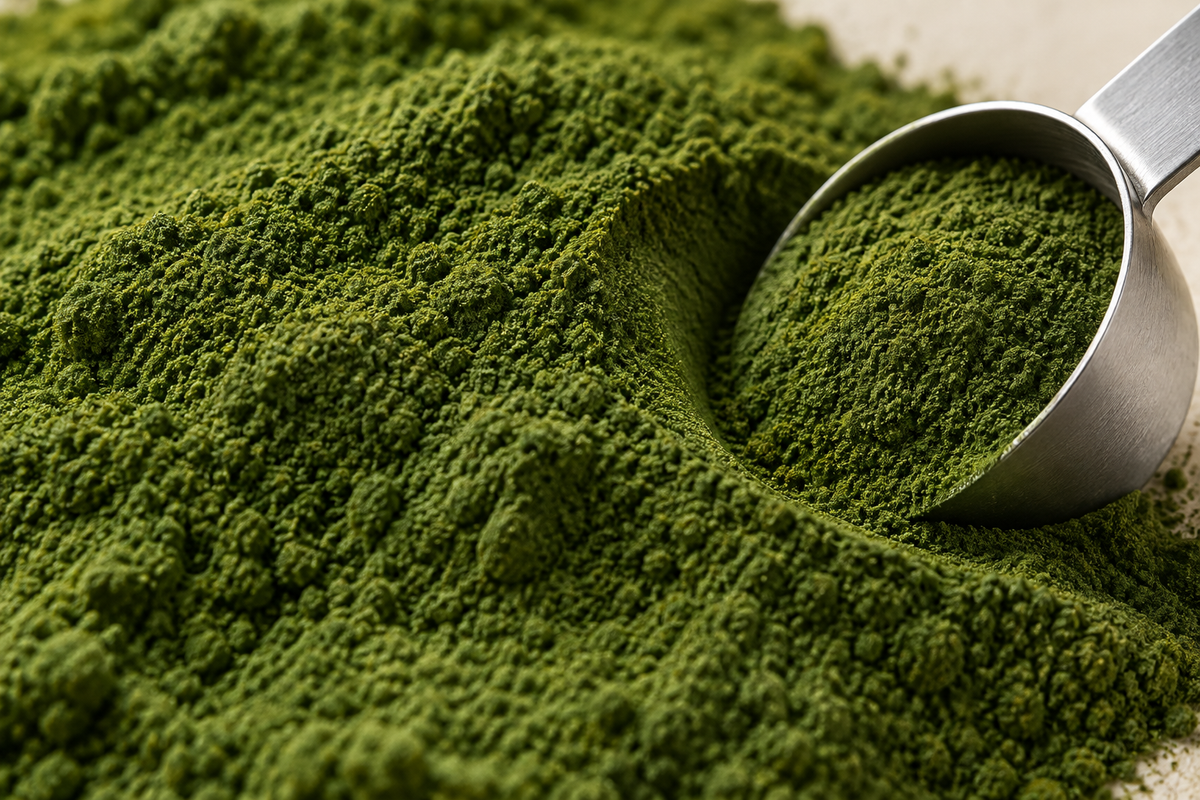
The powder is unsweetened and tastes distinctly herbal. If you prefer it milder, stir it into juice instead of water. Without anti-caking agents, it tends to clump, so close the bag carefully after each use and store it in a dry place.

Behind Vitalplant is Christian Lazar, a licensed pharmacist with over 35 years of professional experience at the Stern Apotheke.

Inhalte zuletzt geprüft am

Baobab powder*, barley grass powder*, wheat grass powder*, spirulina*, pineapple powder*, lucuma*, spinach powder*, oat flour (gluten-free)*, moringa leaf powder*, kale powder*, peppermint leaf powder*.

*From controlled organic cultivation.

Nährwerte

Header: Nutritional informationper 100 g
Energy1.370,03 kJ / 327,32 kcal
Fat3,26 g
of which saturates1,03 g
Carbohydrates37,68 g
of which sugars15,72 g
Fibre26,34 g
Protein19,79 g
Salt0,30 g

Recommended use: Stir 12 g (1 slightly heaped measuring spoon) into 250 ml of water, milk, or juice daily and consume immediately. Also suitable as an addition to smoothies or porridge.

Important information: Food supplements are not a substitute for a balanced and varied diet and healthy lifestyle. The stated recommended daily intake must not be exceeded. Keep out of reach of small children.

Allergens: May contain traces of tree nuts, celery, mustard, sesame, soy, and cereals containing gluten.

Storage: As this natural product tends to clump quickly without artificial additives, we recommend sealing it carefully after each use and using it up promptly. Store in a cool, dry place, do not freeze, and protect from direct sunlight.

The tree that stands on its head

The baobab tree, Adansonia digitata, stores water in its trunk and sheds all its leaves during the dry season. Its bare, widely branched crown then resembles a root system, which has earned it the nickname upside-down tree. Some specimens are over a thousand years old.

Its fruits hang in hard, velvety shells from the branches and dry out there while still on the tree. As a result, the pulp is already available as dry, floury material and only needs to be separated from the seeds and sifted. One drying step is completely eliminated. It is mostly harvested by hand from trees owned by a village community.

Why grass is not grain

Barley and wheat grass do come from grain plants, but they are cut at the young leaf stage, long before a stem elongates or an ear forms. Gluten is a storage protein in the grain; as long as no grain exists, there is no gluten.

The crucial factor is therefore the cutting time. If harvesting is too late, the first grain formation enters the crop. A gluten declaration on a grass product is therefore not a given, but the result of disciplined harvesting and analysis.

Spirulina grows where almost nothing else grows

Arthrospira thrives in highly alkaline water with pH values around ten, as found in soda lakes, such as Lake Chad or formerly Lake Texcoco in Mexico. For most other organisms, such an environment is uninhabitable, and that is exactly what makes cultivation in open ponds possible in the first place: there is no competition.

It is harvested by fine sieving and then gently dried. The name comes from the spiral shape of the cell filaments, which is easy to see under the microscope. Because cyanobacteria from uncontrolled waters can form unwanted by-products, supervised cultivation with batch analysis is not a formality for this raw material.

Why green powders clump and darken

Fruit powders such as lucuma and pineapple naturally contain sugar, and sugar draws water from the air. Without anti-caking agents, the fine particles therefore bind together into lumps. This is not spoilage, but the result of a formula without technical additives.

The color also changes over time. Chlorophyll is sensitive to light and heat and turns olive-brown in the process. Kept cool, dark, and tightly sealed, the powder stays fresh green much longer.

Organic Vital Greens Powder

€34,90

€34,90

Mix and drink

  • Elf grüne Bio-Zutaten, Bio Vital Greens Pulver

    Eleven green organic ingredients

  • 26 g Ballaststoffe je 100 g, Bio Vital Greens Pulver

    26 g fiber per 100 g

  • Bio Vital Greens Pulver - 12 g in 250 ml einrühren

    Stir in 12 g in 250 ml

Product reviews

Aus eigener Herstellung

  • Christian Lazar, Apotheker bei Vitalplant
    Vom Apotheker entwickelt Christian Lazar stellt jede Rezeptur selbst zusammen.
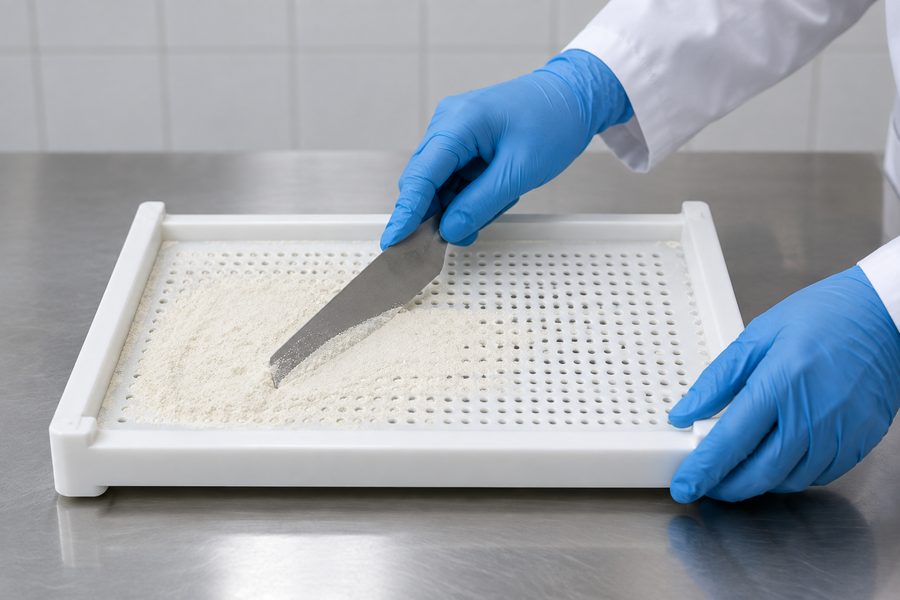
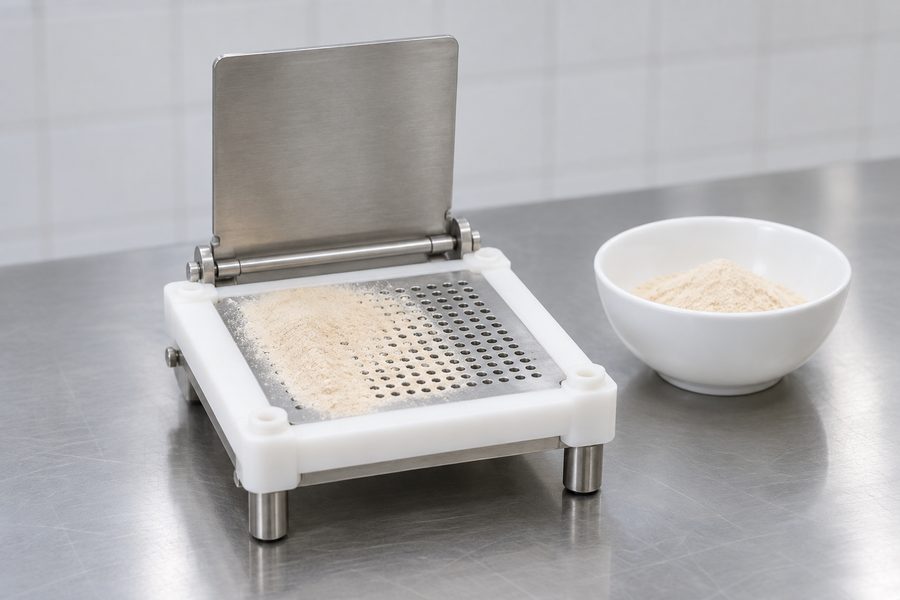
  • Pulver wird von Hand über die Kapselplatte abgestrichen
    Von Hand abgefüllt Kleine Chargen, jede Platte einzeln abgestrichen.
  • Kapselfüllgerät in der Herstellung
    Mechanisch dosiert Gleiche Menge in jeder einzelnen Kapsel.
  • Ohne künstliche ZusätzeKeine künstlichen Süßstoffe, Aromen oder Farbstoffe.
  • Geprüfte RohstoffeUnabhängig laborgeprüft, Analysenzertifikat auf jeder Seite.
  • Lichtgeschützt verpacktBraunglas oder blickdichter Beutel, je nach Produkt.
  • Kurze ZutatenlisteWas nicht hineingehört, steht auch nicht drin.

Frequently Asked Questions

Täglich 12 g, also einen leicht gehäuften Messlöffel, in 250 ml Wasser, Milch oder Saft einrühren und sofort verzehren. Auch als Zusatz für Smoothies oder Porridge geeignet. Sofort ist hier wörtlich gemeint, denn das Pulver setzt sich sonst ab.

Baobab, barley grass, wheatgrass, spirulina, pineapple, lucuma, spinach, gluten-free oat flour, moringa, kale and peppermint leaf, all from certified organic farming. Strictly speaking, one of them is not a plant at all: spirulina is colloquially called blue-green algae, but belongs to the cyanobacteria.

With 26.34 g of fibre per 100 g, the powder meets the requirement for the claim of high fibre content, which starts at 6 g. Baobab and the two grasses account for the lion's share of this. The protein content is 19.79 g per 100 g. To be honest: pineapple and lucuma naturally contain sugar, 15.72 g per 100 g, which works out to 1.89 g per serving. No sugar has been added.

One point that is too often overlooked: the included oat flour is gluten-free, but the powder as a whole is not. It is therefore not suitable for people with celiac disease. You can find the full details on possible traces in the Usage and Important Information tab.

Distinctly herbal and unsweetened, as you would expect from green plant powders. Pineapple and lucuma soften it, with lucuma adding a note somewhere between caramel and maple syrup. If you prefer a milder taste, stir the powder into juice instead of water; the recommended way of taking it expressly allows this.

Because it already does that on the tree. The pulp of the African baobab dries out while the fruit is still hanging. So it does not need to be dried afterward, but can be ground directly. Baobab makes up the largest share by quantity in this blend.

Because it does without anti-caking agents. Silicon dioxide, which ensures free-flowing powders in many products, is not included here. The trade-off is that the powder absorbs moisture from the air. So close the bag carefully after each use and store it in a dry place.

The bag contains 360 g and, at 12 g per day, provides 30 servings, so one month. All ingredients come from certified organic farming, inspection body number DE-ÖKO-039, origin EU and non-EU agriculture. Store in a cool, dry place, do not freeze.

General ratings from our customers