

OPC from grape seed extract is one of the most popular plant compounds on the supplement shelf. And few questions come up more often at the pharmacy counter than the one about OPC effects. What is really behind the oligomeric proanthocyanidins from grapes? In this guide, you’ll get an honest, well-founded answer: from the definition to tradition and research, all the way through to intake, quality, the role of vitamin C, and possible side effects.
My name is Robert Lazar. I grew up among the wooden drawers of the Stern Pharmacy, my father’s family business, and today I develop dietary supplements at Vitalplant in Memmingen. I’ll say one thing up front: I’m not promising miracles. No health claims are approved in the EU for this extract. That’s exactly why you’ll get facts here instead of promises of a cure.
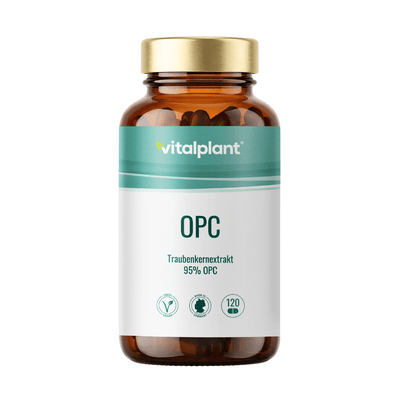
Would you like to take it as a capsule? Our OPC Grape Seed Extract Capsules provide 440 mg of grape seed extract per capsule, standardized to 70 percent, which means 308 mg of pure OPC. They also contain a little black pepper extract to aid absorption. We manufacture them in our family-run factory, with lab testing. Stay with me — I’ll explain what’s behind it.
What is OPC? Oligomeric proanthocyanidins from grape seeds
OPC stands for oligomeric proanthocyanidins. These are secondary plant compounds from the polyphenol group. They occur naturally in many plants, but are especially concentrated in grape seeds. Plants produce them as a kind of protection against environmental influences.
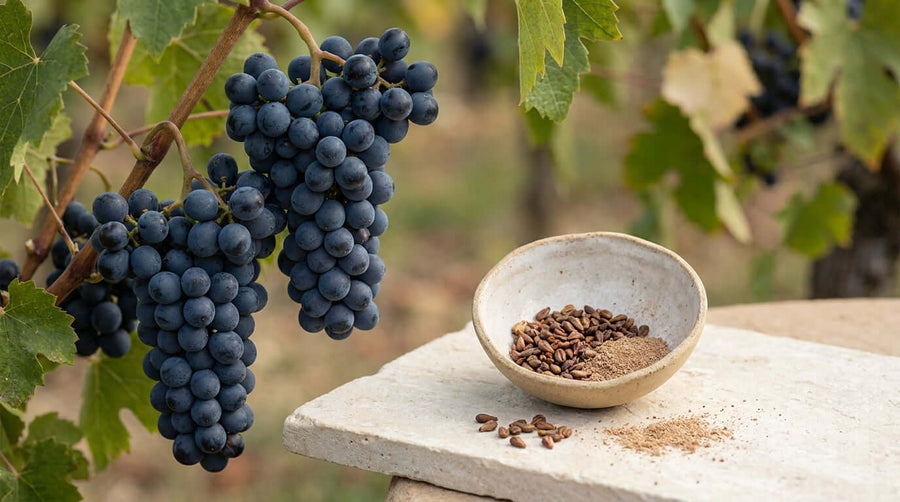
There is only a small amount of them in the flesh of the grape. The real treasure lies in the seeds. That’s exactly why it is extracted as grape seed extract. In addition to OPC, such an extract contains other plant compounds.
Secondary plant compounds are substances that a plant does not need for survival alone, but for protection, color, and defense. It belongs to this large group. Polyphenols like OPC are also found in berries, apples, or green tea, for example. As a single plant compound, it is not exotic, but part of a healthy diet.
By far the best-known source is grape seeds. But OPC is also found in aronia berries, pine bark, or the skins of peanuts. OPC is especially concentrated there. OPC is extracted from grape seeds. If you only want to get it through your diet, though, the amounts from food are small.

OPC effects: between research and the legal framework
Now to the big question: what about its effects? I’m honest with you here. No health claims are approved in the EU for the extract. So I can’t promise you any specific effect. What I can do is describe what research is investigating and where the legal framework sets clear limits.
Free radicals, antioxidants, and oxidative stress explained simply
To put this into context, here are the basics. Free radicals are constantly produced in your body, for example through metabolism, UV radiation, or smoking. If free radicals predominate, this is called oxidative stress. Antioxidants are substances that can neutralize free radicals.
Damage caused by free radicals is linked, among other things, to cell aging. That’s where nutrients come in for which there are solid and, above all, approved claims.
Cell protection against oxidative stress: the role of vitamin C and E
This is the legally sound part, and it’s important. Vitamin C and vitamin E, as antioxidants, help protect cells from oxidative stress.
Vitamin C also contributes to normal collagen formation for normal skin function. If this aspect matters to you, look for a combination with this nutrient. Our product itself does not contain any vitamin C, so I want to make that clear.
What research is investigating about OPC
And the extract itself? Its antioxidant properties are certainly a topic of research. Among other things, a possible antioxidant effect is being studied. In studies, OPC is often described as a strong antioxidant that can neutralize free radicals. The important thing is the context: many of these studies are small and were conducted in the lab or in animals.
An anti-inflammatory effect is also being discussed in research. However, the effectiveness of OPC in humans has not been proven. Such studies do not allow an approved claim to be made for a product like this. The fact that OPC has occupied researchers for years does not change that.
How does OPC work in the body?
Whether OPC works and how it is absorbed in the body depends greatly on the form. It is water-soluble, but bioavailability is considered limited. That’s why some manufacturers, like us, combine it with a black pepper extract that can improve absorption.

Taking OPC: capsules, dosage, and combinations
Let’s move on to practical use. Capsules are the easiest way because the dose is exact. Many people take it in the morning on an empty stomach, with some distance from protein-rich meals such as cheese or eggs.
How to take OPC capsules correctly
When it comes to OPC capsules, one simple rule applies: follow the recommended intake on the package. For our capsules, that is two per day, ideally split into two doses. Take the capsule with plenty of liquid.
How much OPC per day? Amounts and mg
There is no fixed recommendation. In practice, 1 to 2 mg of OPC per kilogram of body weight is often mentioned. At 70 kilograms, that would be around 70 to 140 mg per day. For a short-term course, some sources also mention higher amounts of up to around 400 mg per day.
Our capsules provide 308 mg of that per capsule. Two capsules easily cover even higher amounts. Still, don’t overdo it. More does not automatically mean better.
Combining OPC with vitamin C
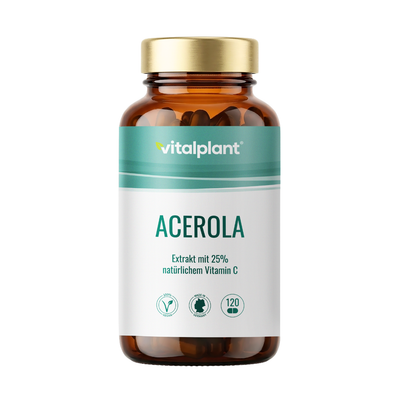
A common tip is to combine it with vitamin C. The reason is simple: unlike the plant compound, this nutrient has approved claims around cell protection and collagen. Antioxidants like vitamin C can therefore be advertised in a legally sound way. Products such as grape seed extract with vitamin C are also available. You can find the nutrient, for example, in our selection of Vitamins and Minerals.
Buying OPC: how to recognize good quality
Now I’m in my element, because the quality differences are huge. When I buy a batch for us, I always look at the same criteria. I’m happy to give them to you as a checklist.
- OPC content: Look at the declared OPC percentage, not just the mg of grape seed extract. Standardized extracts clearly state both.
- Polyphenol content: A high total polyphenol content points to a high-quality product.
- Lab testing: Content and purity should be independently tested, ideally using an HPLC method.
- Purity: The shorter the ingredient list, the better. No one needs unnecessary fillers or additives.
- Packaging: Light protection in amber glass helps preserve the sensitive ingredients.
One point that is often overlooked: OPC is legally a food, more precisely a dietary supplement. For such a product, health claims are strictly regulated. Advertising promises like protecting against this or that disease are simply not allowed here. Anyone making such promises is legally on very thin ice.

Side effects, interactions, and safety
OPC is generally well tolerated. Still, there are a few points you should know, especially at higher amounts from a supplement.
Is OPC well tolerated?
In usual amounts, side effects are rare. Occasionally, mild gastrointestinal discomfort is reported, especially on an empty stomach. If that happens, just take it with a small meal.
Interactions: caution with blood-thinning medication
One really important point is interactions. OPC may theoretically intensify a blood-thinning effect. If you take blood-thinning medication, are due for surgery, or have a medical condition, clarify this with your doctor beforehand.
Who should not take OPC
Pregnant and breastfeeding women should avoid OPC as a high-dose supplement, because the evidence is too limited. Such products are also not intended for small children. When in doubt, as always: it is better to ask your doctor once too often.
OPC grape seed extract from Vitalplant
Finally, a quick look at our product, without any marketing fluff. Our grape seed extract provides 440 mg extract with 70 percent OPC per capsule, plus 5 mg black pepper extract for absorption. Each batch is independently lab-tested, the capsules are vegan, and free from unnecessary additives.
Many people who want to benefit from OPC combine it with a vitamin C supplement. That makes sense, because the approved cell protection claim applies to vitamin C, not to the extract. That way, you combine both honestly, without any unauthorized promises.
→ Discover OPC Grape Seed Extract Capsules
→ Discover Vitamins & Minerals
Related topics
- All plant compounds at a glance
- Cell protection & well-being topic world
- More knowledge in the Vitalplant magazine
Note: Dietary supplements are not a substitute for a varied, balanced diet and a healthy lifestyle. No health claims are currently approved in the EU for OPC.
Frequently asked questions about OPC
What is OPC?
OPC is the abbreviation for oligomeric proanthocyanidins. These are secondary plant compounds from the polyphenol group that are especially concentrated in grape seeds.
What is the effect of OPC?
No health claims are approved in the EU for OPC. Research is investigating antioxidant properties, but this does not prove an effect.
What is the best way to take OPC?
Many people take it in the morning on an empty stomach with plenty of fluids, with some distance from protein-rich meals.
How much OPC per day?
There is no fixed recommendation. In practice, 1 to 2 mg per kilogram of body weight is often mentioned. Follow the recommended intake on the package.
Should OPC be combined with vitamin C?
That is quite popular, because this nutrient has approved claims for cell protection and collagen formation. The extract itself does not.
Is OPC an antioxidant?
OPC is often described as a strong antioxidant. However, in the EU, approved claims exist only for nutrients like vitamin C and vitamin E.
Does OPC have side effects?
In usual amounts, it is unproblematic. Occasionally, mild gastrointestinal discomfort occurs, especially on an empty stomach.
Are there interactions with medication?
OPC may intensify the effect of blood-thinning medication. If you take blood thinners, you should have this clarified by a doctor beforehand.
What is grape seed extract made from?
Grape seed extract is made from the seeds of the grape. There is much more of it there than in the flesh.
Is OPC a medicine?
No. As grape seed extract, OPC is a food or dietary supplement and is not intended to treat diseases.